Chimney safety
What keeps a fireplace or wood stove safe the South Sound: the yearly inspection, the local weather and ground, and the burning rules that apply here — each with its source.
A chimney does two jobs every time it is used: it carries smoke, with the creosote that condenses out of it, and it carries combustion gases such as carbon monoxide out of the house. When the flue is dirty, cracked or blocked, the risks are a chimney fire and carbon monoxide indoors. The Washington State Fire Marshal, citing the U.S. Fire Administration, reports that fires in chimneys, flues or fuel burners caused 77% of residential building heating fires in 2024.
Three local conditions add to that. The housing is old in places: about 27% of Tacoma's homes were built in 1939 or earlier, and 74% of Fircrest's predate 1980. The ground moves: the 2001 Nisqually earthquake damaged chimneys across the region. And burning is regulated: Puget Sound Clean Air Agency calls burn bans in the county and enforces a wood stove rule specific to Tacoma and Pierce County. None of it is a reason for alarm — a yearly inspection and a few timely repairs handle most of it.
Start here
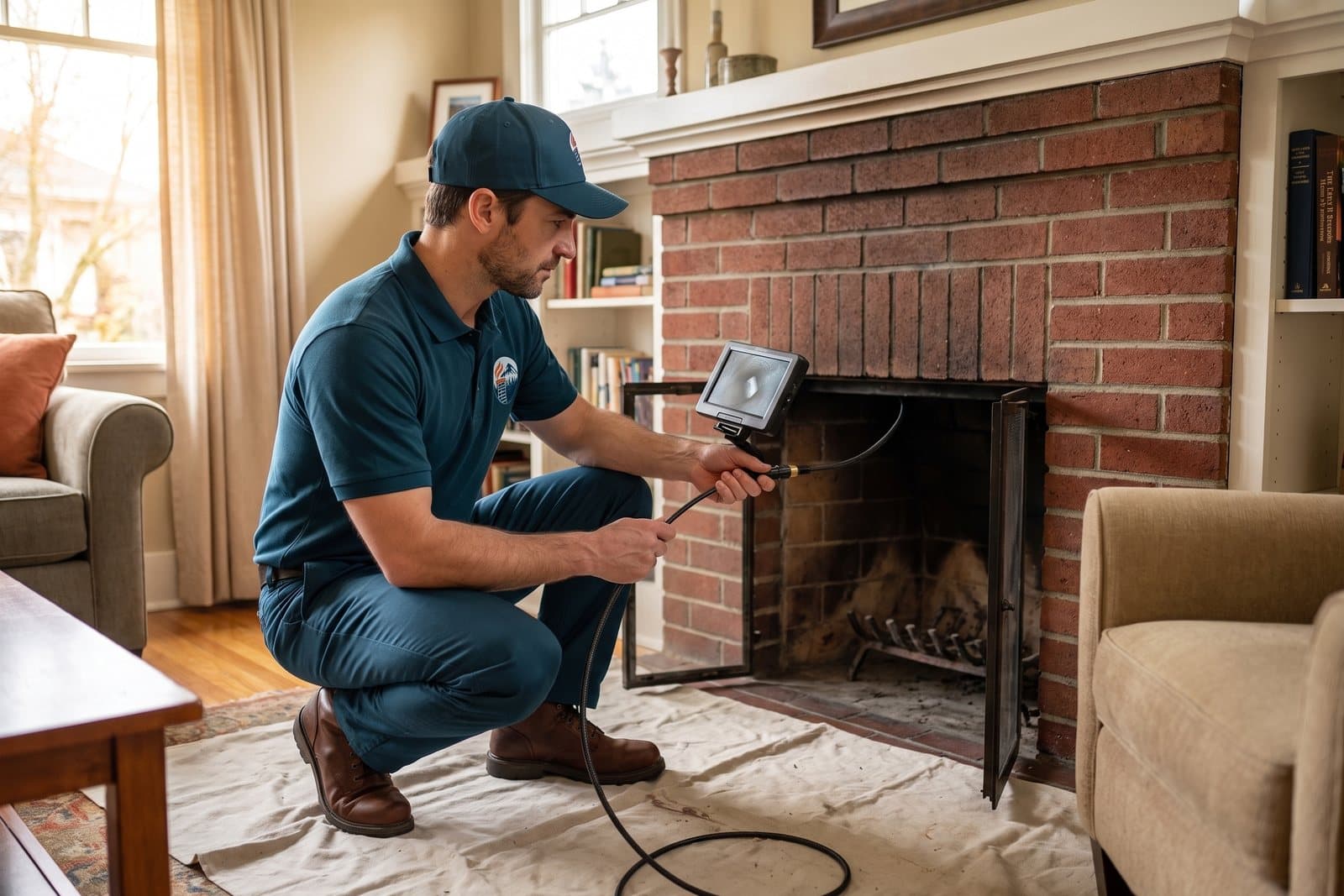
NFPA 211 asks for chimneys, fireplaces and vents to be inspected at least once a year for soundness, deposits and clearances. The standard defines three levels: Level I goes with routine yearly cleaning; Level II covers every accessible part, attic and crawl space included, with a camera scan of the flue; Level III opens concealed areas only where needed.
Book a chimney inspection before the heating season. On a pre-war Tacoma house, the Level II triggers — a sale, a new insert, a relining — come up more often than owners expect.
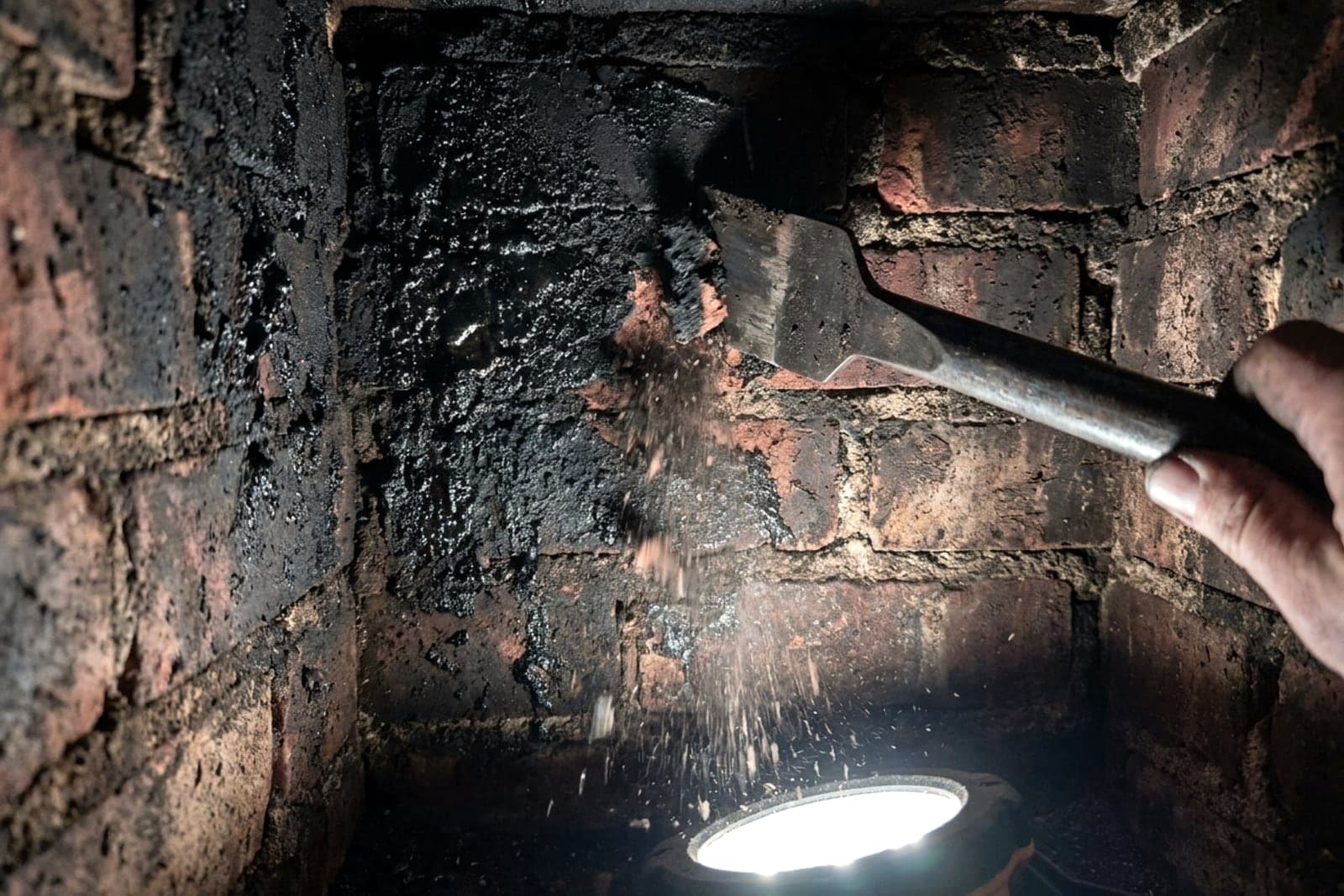
What fuels a chimney fire
As smoke cools on its way up, it leaves creosote on the flue wall. The deposit hardens as it builds, and every stage of it burns. A glazed flue that catches fire burns hot enough to crack a clay liner.
Washington rules also shape what goes into the firebox: only dry, seasoned wood or manufactured logs may be burned, and garbage, treated wood and plastics are prohibited. Wet wood smolders and coats the flue faster. Regular sweeping, and creosote removal once the deposit has glazed, take the fuel away.
No color, no smell, no warning. Carbon monoxide gets out safely only through a clear flue with a sound liner, so that path deserves the same attention as the fire, along with a working CO alarm on every level.
Carbon monoxide, in practice
Anything that burns fuel and vents up the chimney makes carbon monoxide — a wood stove, a gas insert, an oil furnace or water heater sharing the flue. Normally the gas rises and leaves. It turns back into the house when the flue is blocked by a nest or debris, narrowed by creosote, or cracked so that gas leaks into the walls. Because nobody can smell it, the answer is layered: a clean flue of the right size, an intact liner, and a CO alarm on each floor and near the bedrooms, tested twice a year. If you think the flue is blocked, do not light the appliance until it has been checked.
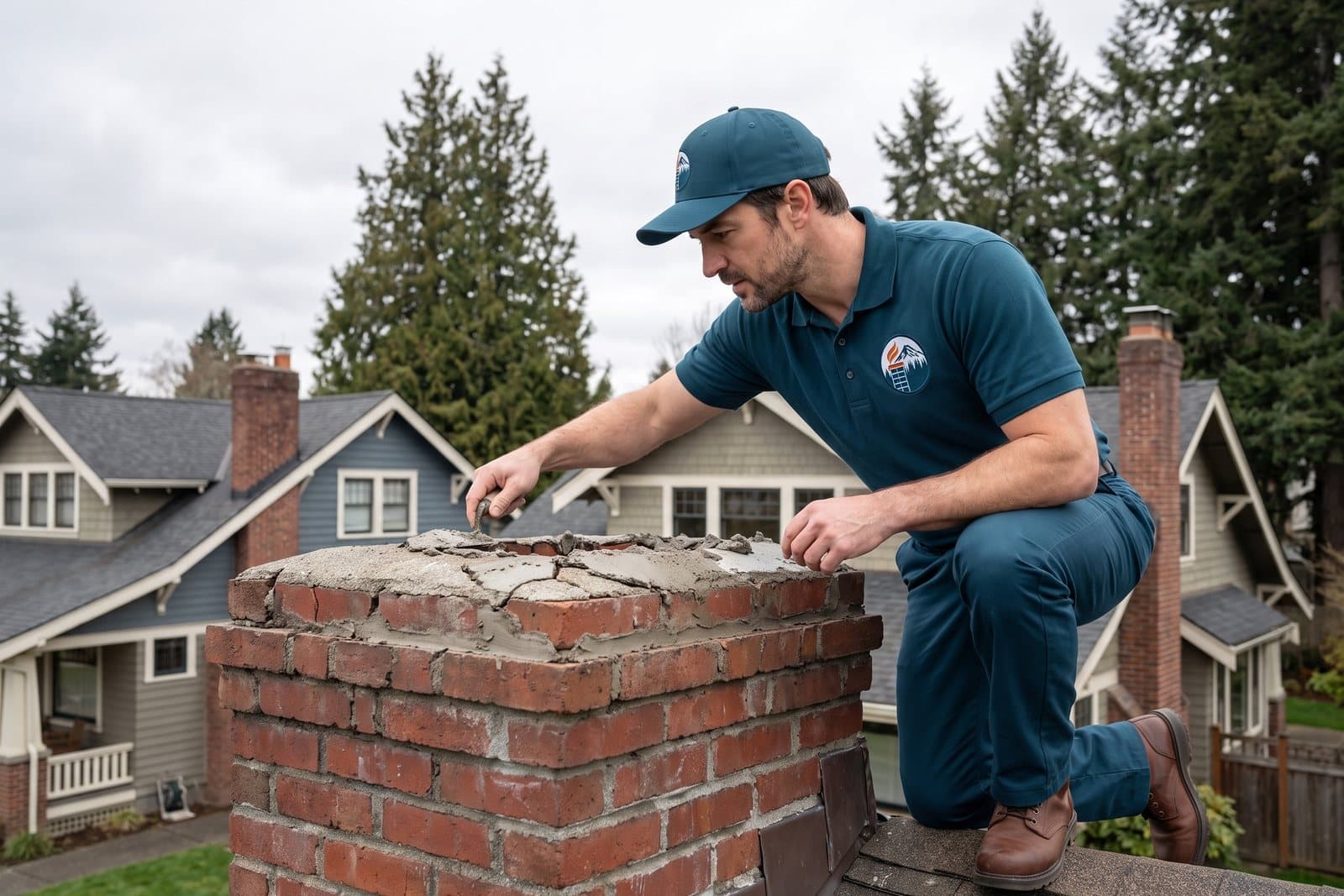
South Sound weather
The Tacoma #1 weather station averaged just under 40 inches of precipitation a year from 1982 to 2016, with November the wettest month, and about 32 days a year with a low at or below freezing. The Puyallup valley station counted more than twice as many freezing days over its record. Porous brick and mortar take on water all winter; when it freezes it expands, and the freeze-thaw cycle opens the masonry from the inside.
Oregon State University Extension notes that roof moss in the moist Pacific Northwest traps debris that holds water and can lift shingles — right where the roof meets the chimney. Caught early, the fix is modest masonry repair, and a breathable waterproofing treatment slows the cycle.
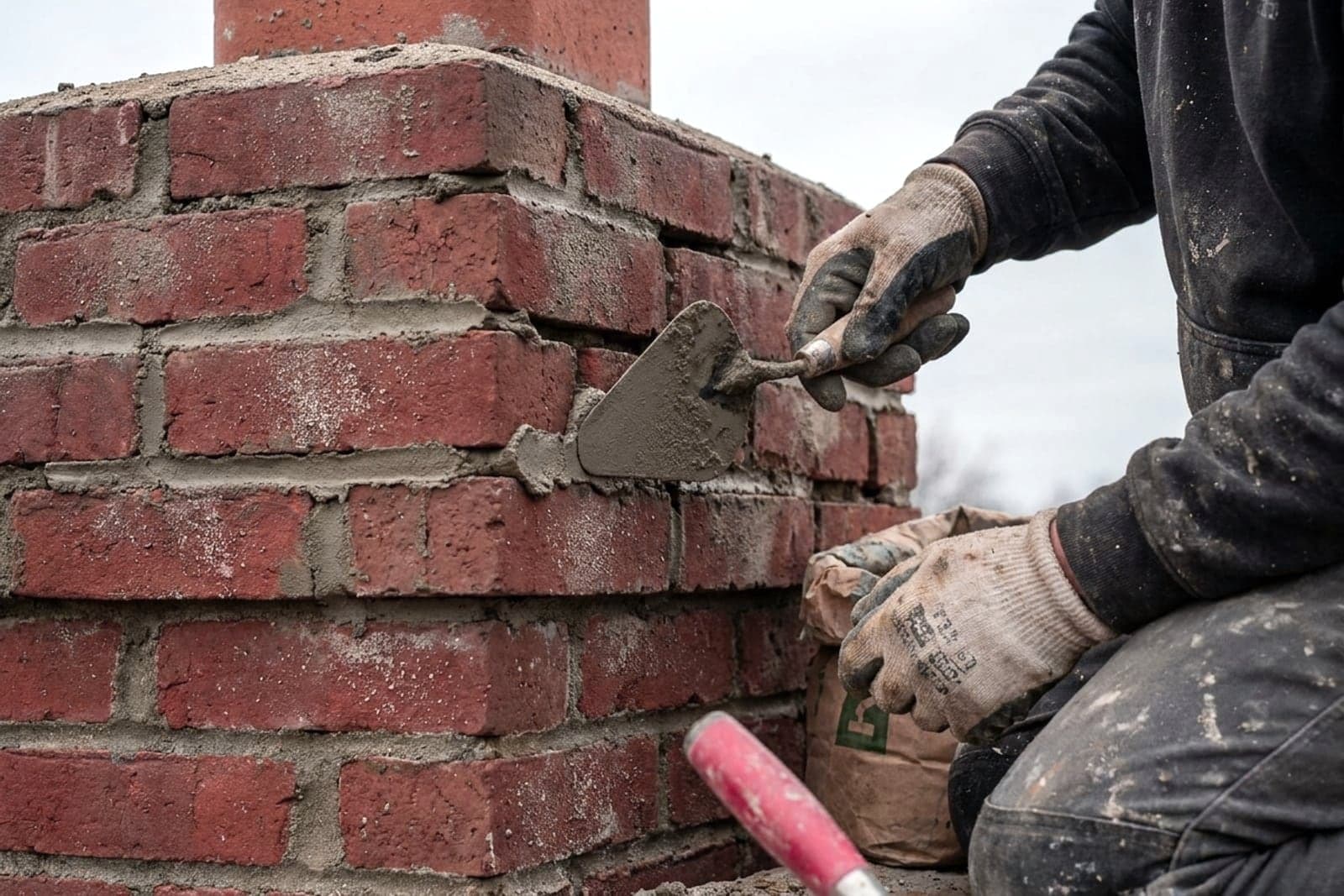
Ground that moves
After the magnitude 6.8 Nisqually earthquake of February 28, 2001, FEMA records showed that one-third of the 30,000 homes it inspected had chimney damage. Washington Emergency Management's scenario for a magnitude 7.1 quake on the Tacoma fault zone expects unreinforced masonry buildings to be prone to partial or full collapse.
A tall brick stack is exactly that kind of masonry. After any noticeable quake, have the flue and the attic section checked before the next fire: cracked flue tiles and loosened joints rarely show from the ground. Where the stack is damaged, chimney repair comes first.
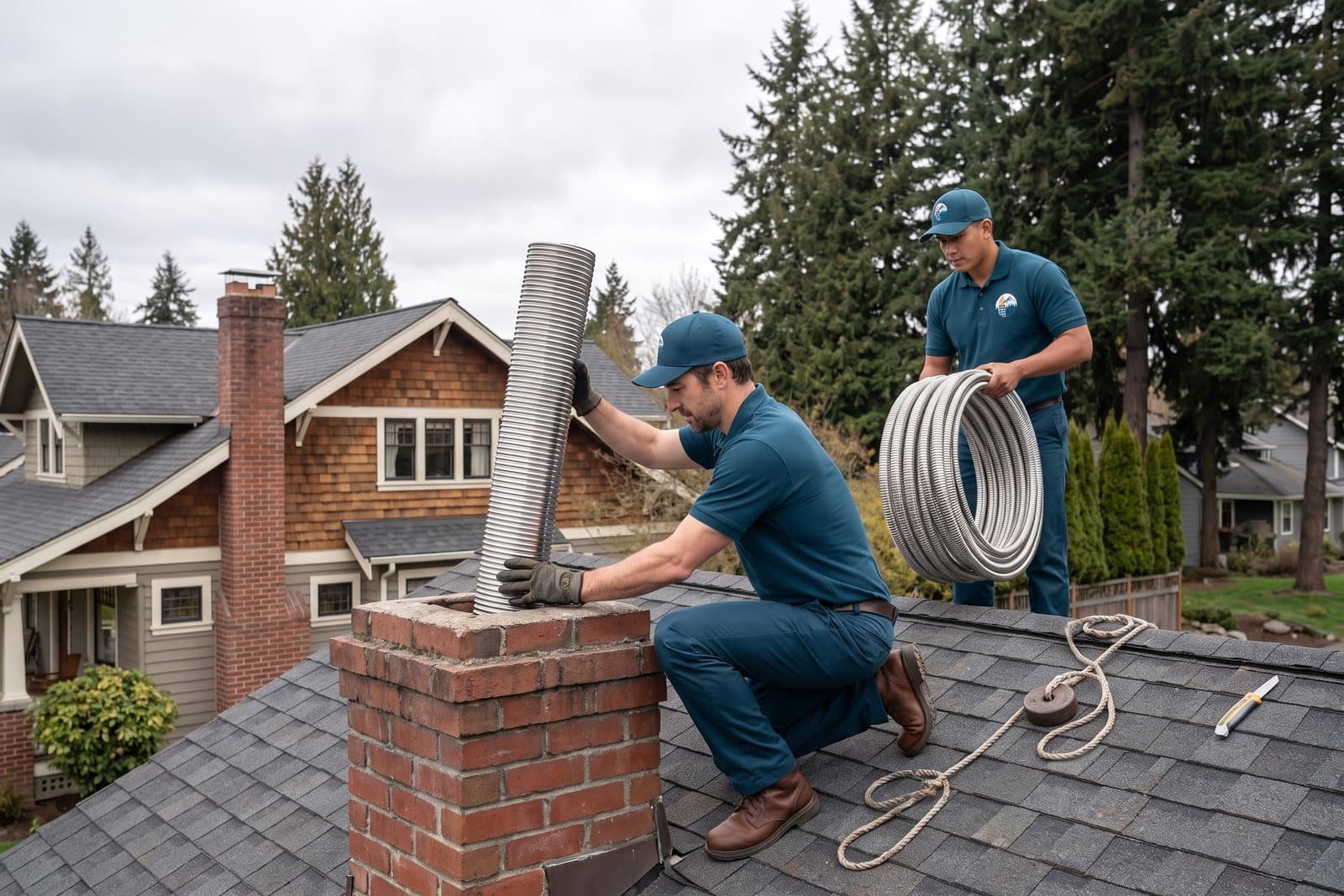
The inner sleeve
The 2021 Washington State Residential Code requires masonry chimneys to be lined — clay liners, listed lining systems or other approved materials — and keeps combustible framing at a set distance from the chimney. In Tacoma, a building permit is required before any wood stove, fireplace, pellet stove or masonry heater is installed, and an appliance going into an existing masonry chimney needs that chimney lined.
Clay liners in older houses crack with age and with any chimney fire, and a cracked liner can pass heat to framing or let gases into the walls. When an inspection finds it, chimney relining with a stainless liner sized to the appliance restores the barrier.
Keep the water out
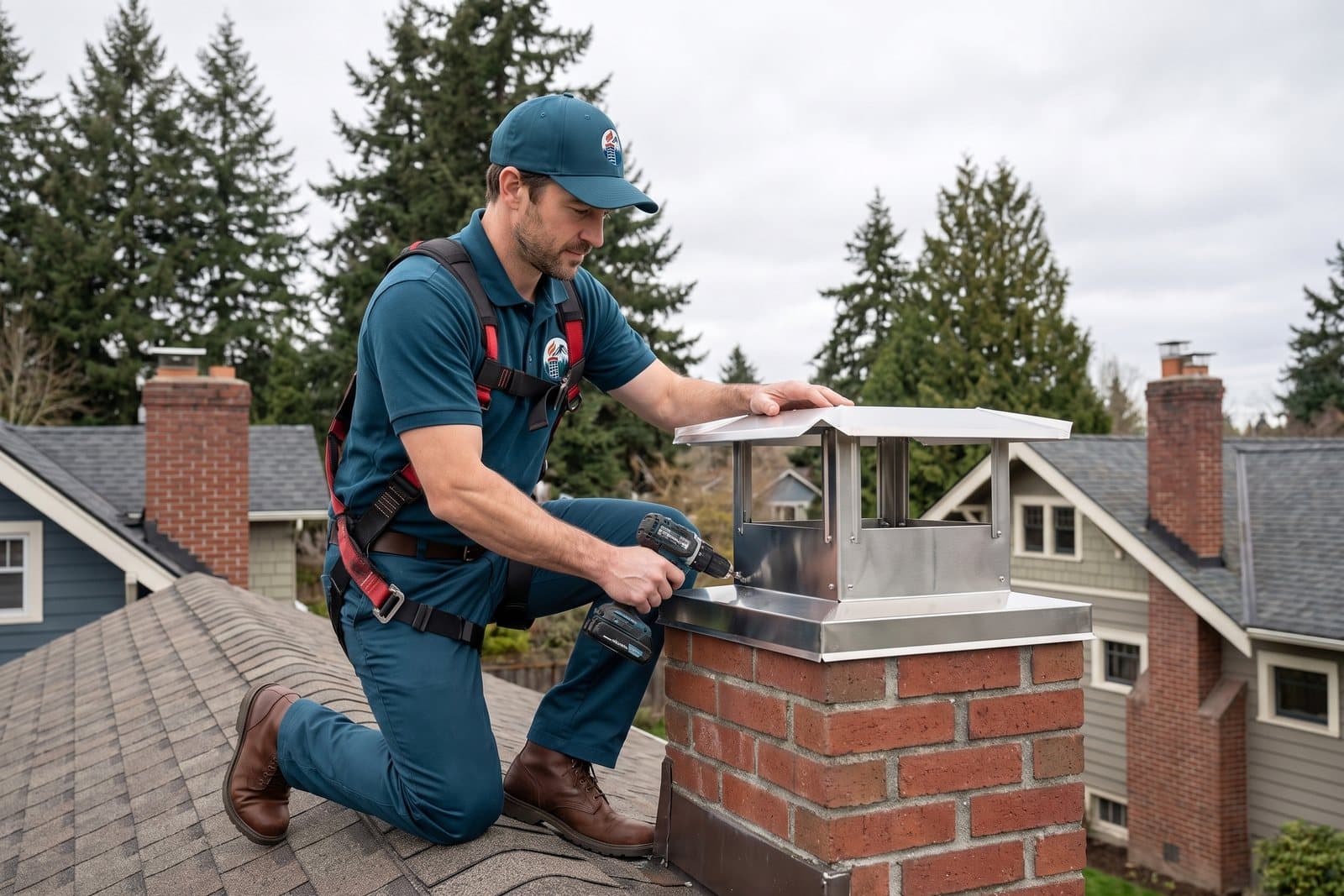
Water does most of the damage to chimneys here. An open flue lets rain fall straight onto the damper and liner; failed flashing sends it into the ceiling and walls around the stack. A stainless chimney cap sheds the rain and keeps nesting birds out. Where a spark arrestor screen is fitted, the Washington code sets its mesh size and requires it to be removable for cleaning.
The same code requires a cricket — a small ridge that diverts water — behind any chimney wider than 30 inches that does not sit on the roof ridge, and a masonry chimney must rise at least 3 feet above the roof and 2 feet above anything within 10 feet.
Burning rules in Pierce County
Puget Sound Clean Air Agency sets when and what you can burn. Check the ban status before lighting a fire from fall to spring.
Burn bans. During a Stage 1 ban, wood fireplaces and uncertified wood stoves and inserts may not be used; during a Stage 2 ban, no wood fireplace, wood stove or insert — certified or not — and no pellet stove may be used. The only exception is a home whose device is its only adequate heat source and whose exemption was approved beforehand.
Uncertified stoves. Since October 1, 2015, it has been illegal to buy, sell, give away, reinstall or operate an uncertified wood stove or insert in the Tacoma-Pierce County Smoke Reduction Zone. The agency publishes the zone as a map; check your address against it. EPA- and Oregon-certified stoves are not affected.
Replacing an old stove. The agency pays $500 to Pierce County homeowners who recycle a working uncertified wood stove or insert, or a certified one that does not meet the 2020 EPA standards. The owner removes the unit and takes it to an approved recycler.
Who does what
A few habits between visits make a real difference. The inside of the flue, the roof and anything connected to gas are work for someone with the tools and the training.
Before the burning season
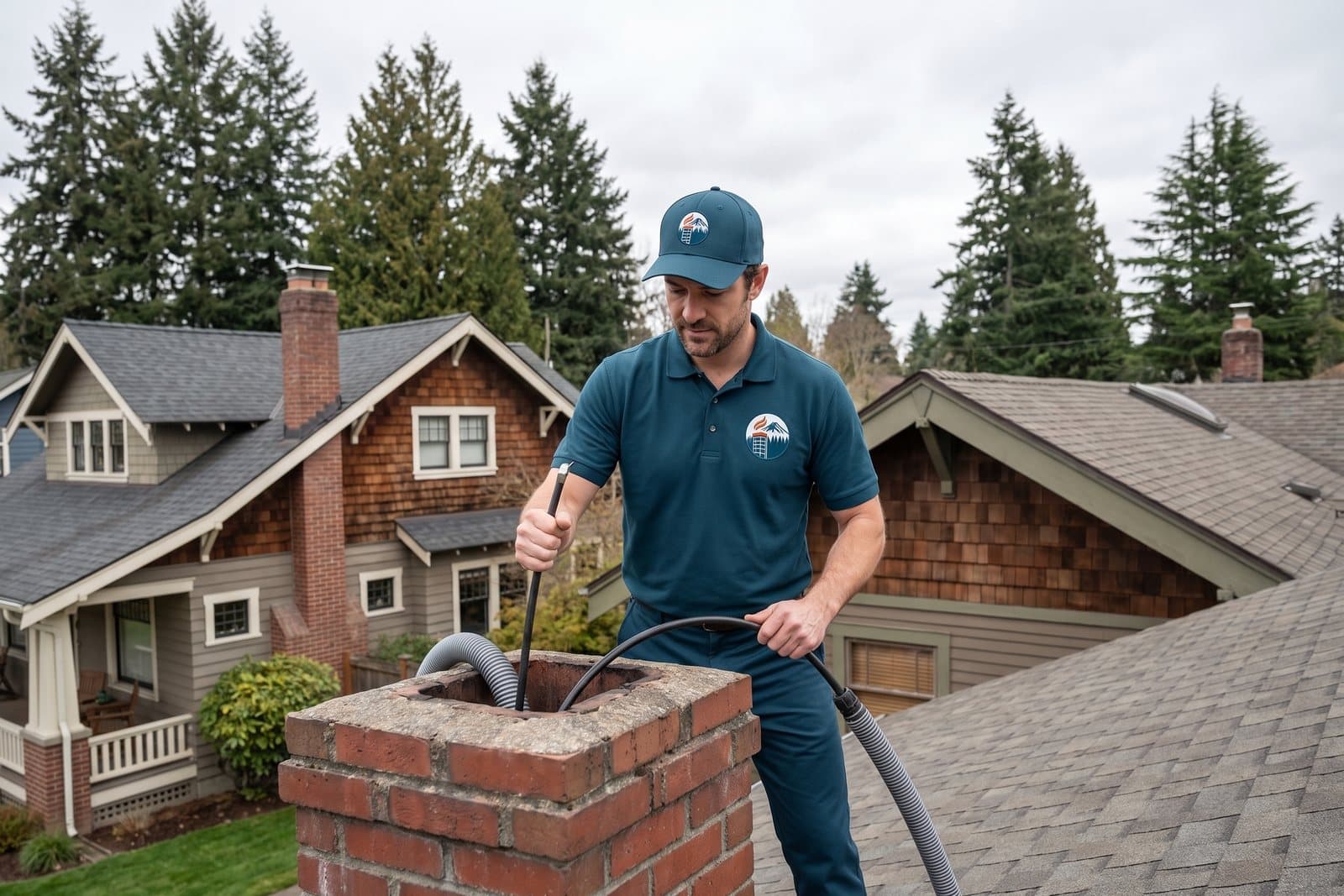
Before the wet months and the fall rush — so any repair is finished before the first cold night.
Clear last winter's creosote so the chimney starts the season clean and drawing well.
Cap in place, crown uncracked, flashing sealed, and no moss or debris packed against the stack.
If there is no EPA certification label, find out whether you are inside the Smoke Reduction Zone before using it.
Fresh batteries in every smoke and CO alarm, and firewood split, covered and dry.
Keep reading
Practical articles on keeping an old chimney sound and a newer fireplace working, written for the houses of Tacoma and Pierce County.
Common questions
Sources
The local facts on this page come from these pages, consulted on September 24, 2026.
Choose an actual open slot in the crew's schedule. Tacoma Chimney Pros photographs what it finds, you pay nothing to book, and the $99 plus tax is deducted from the repair when you approve the quote.