Chimney crown repair in Tacoma, WA costs $150–$250 for elastomeric sealing of hairline cracks, $350–$800 for resurfacing moderate damage, and $400–$1,500 for a full crown replacement — and in Pierce County's rain-heavy climate, delaying one season can turn a $200 crack seal into a $3,000 flue relining. The crown is the concrete cap that seals the top of your chimney's masonry against the near-constant October-through-February rainfall Tacoma averages across 38 inches per year, the wind off Puget Sound, and the repeated freeze-thaw cycles that fracture aging concrete every winter. If you own an older Craftsman or brick home in the North End, Proctor, or Stadium District, your crown was likely built with a thin mortar mix rather than reinforced concrete — a standard practice before the 1950s that produces crowns that crumble rather than merely crack. Caught early, crown repair is one of the most affordable chimney services we offer. Here is exactly what drives the price and what Tacoma homeowners should expect.
What Does Chimney Crown Repair Actually Cost in Tacoma?
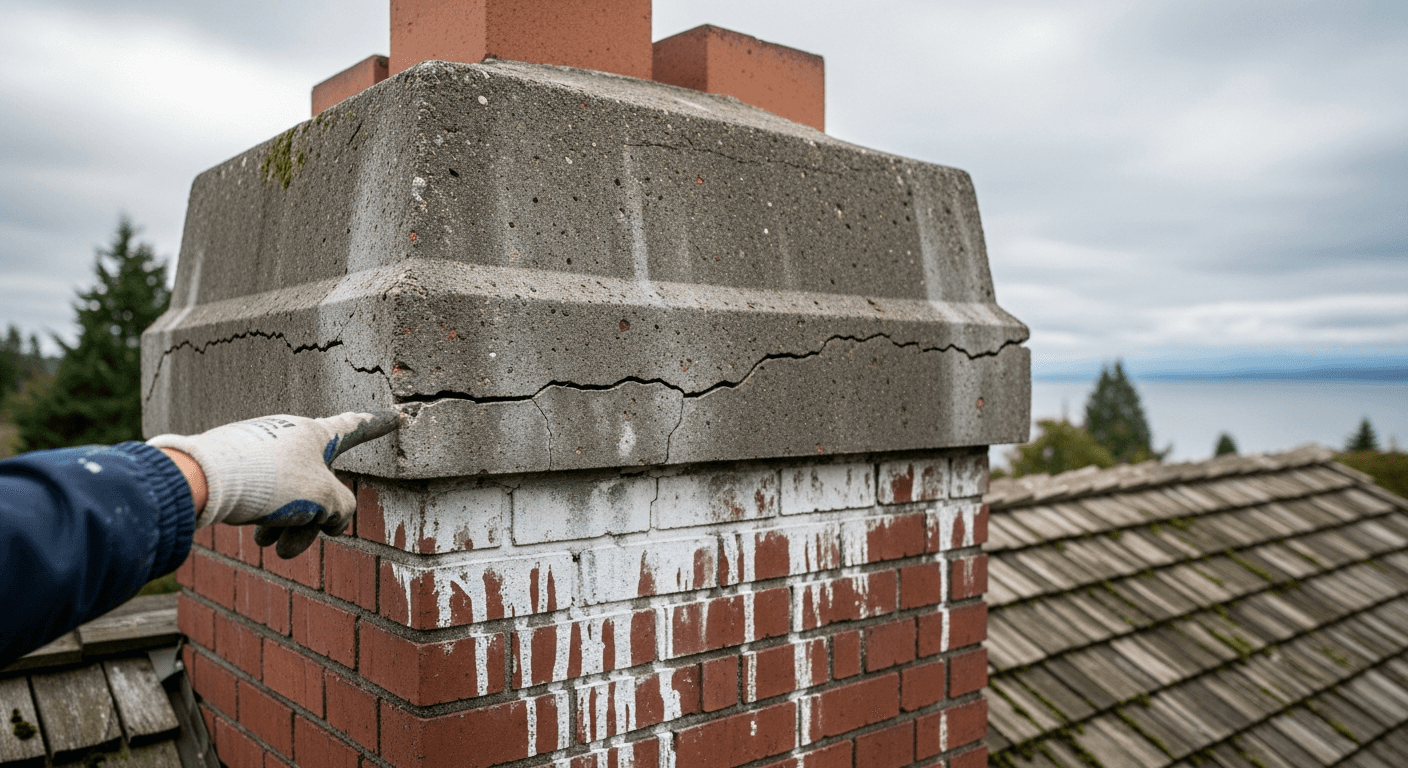
The price depends almost entirely on how far the damage has progressed. A hairline crack caught during an annual inspection can be sealed with a flexible elastomeric crown coating for $150–$250, labor included. That coating bonds to existing concrete, sheds water, and flexes with temperature swings — critical given that Tacoma temperatures cross the freezing mark multiple times each November through March.
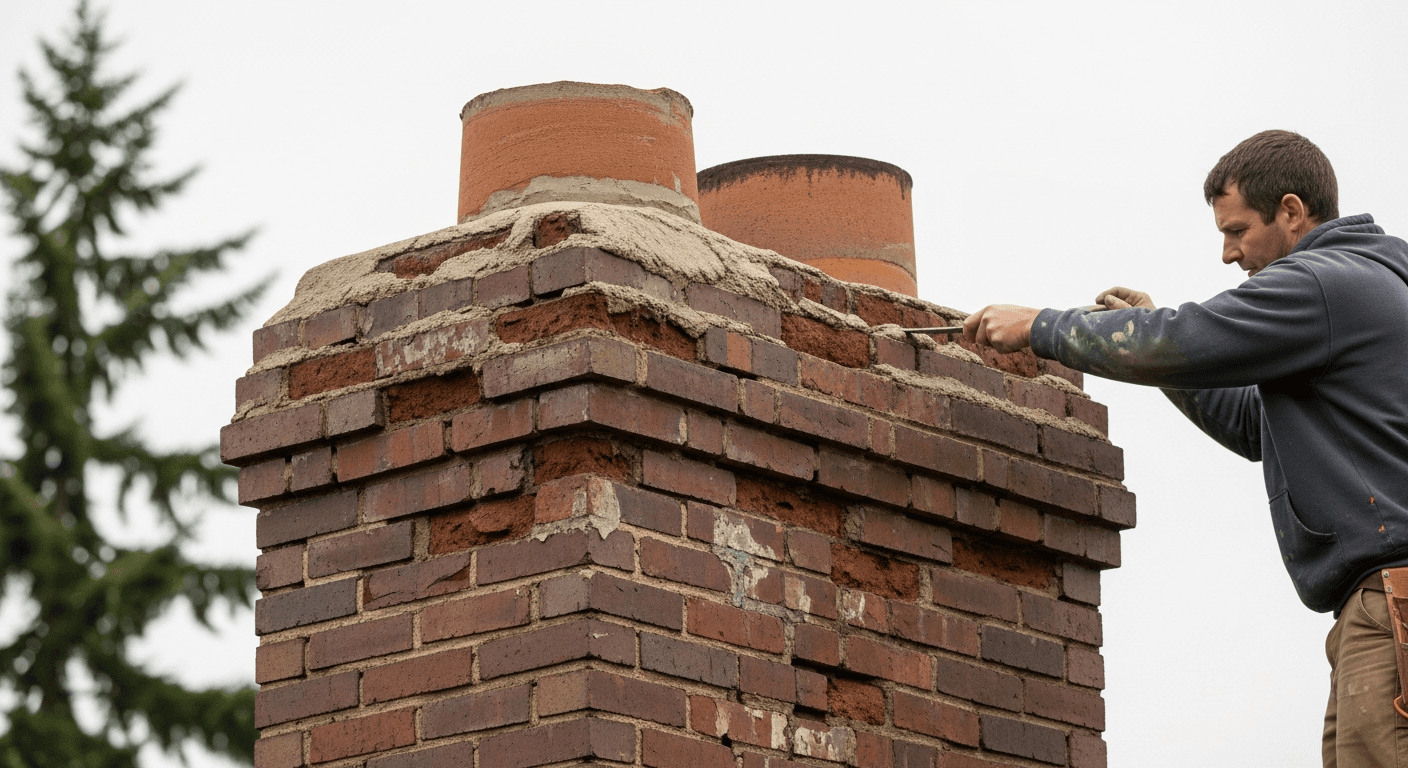
Moderate damage — spalling edges, missing chunks, or cracks wider than a quarter inch — requires rebuilding the crown surface with a properly mixed concrete mortar sloped to drain away from the flue. That work runs $350–$800. Full crown replacement, where the old crown is demolished and a new one formed and poured, falls between $400 and $1,500 depending on chimney size and roof access. A wide double-flue chimney on a steep-pitch roof in the Stadium District costs more than a single-flue on a flat-roof ranch in South Tacoma.
Water that has already penetrated the crown and reached the flue liner is a separate cost entirely. Relining a cracked clay tile flue — the most common liner type in Tacoma homes built before 1970 — runs $1,500–$4,500 for stainless steel or cast-in-place liner. That downstream cost is the core reason crown repair timing matters.
| Repair Type | Typical Tacoma Cost | Best For | Estimated Lifespan Added |
|---|---|---|---|
| Elastomeric crown sealer (hairline cracks) | $150 – $250 | Cracks under 1/8 inch, crown body otherwise intact | 5 – 10 years |
| Crown resurfacing / partial rebuild | $350 – $800 | Spalling, missing chunks, cracks 1/4 inch or wider | 10 – 15 years |
| Full crown replacement (new reinforced pour) | $400 – $1,500 | Crumbling, structurally failed, or improperly built original | 20 – 30+ years |
| Crown repair + penetrating waterproofer | $500 – $1,100 | Post-repair moisture protection in high-exposure locations | 15 – 25 years |
| Crown repair + stainless chimney cap | $550 – $1,300 | Chimneys with no existing cap, adding direct rain exclusion | Ongoing |
Warning Signs and What Causes Them: A Symptom-to-Cause Guide for Tacoma Homeowners
Most Tacoma homeowners first notice a crown problem not on the roof but inside the house — a water stain near the fireplace, white mineral streaking on the chimney's exterior brick, or a damp smell when the fireplace is in use. Each of those symptoms points to a specific failure mode, and identifying the right one determines whether a $200 seal or a $1,500 replacement is the appropriate response.
Efflorescence — the white crystalline streaking common on older brick chimneys in the North End and Stadium District — is a reliable early indicator. It appears when water moves through masonry and carries dissolved salts to the surface as it evaporates. By the time efflorescence is visible, water has already been penetrating the masonry for at least one rainy season. A roof-level inspection at that point typically reveals a cracked or separated crown as the entry point.
Interior water stains near the fireplace represent a more advanced stage: water has already traveled through the crown, past the flue liner, and into the surrounding structure. That path almost always means the liner deserves inspection alongside the crown repair, since sustained moisture contact degrades clay tile faster than any other single factor.
| Visible Symptom | Likely Cause | Urgency Level | Typical Next Step |
|---|---|---|---|
| White streaking (efflorescence) on chimney brick | Water moving through masonry due to crown gap or crack | Moderate — act before next rainy season | Roof-level crown inspection; check for perimeter separation |
| Ceiling or wall stains near fireplace after rain | Crown crack or gap allowing water into flue system | High — interior penetration already occurring | Full Level 2 chimney inspection including liner assessment |
| Spalling or flaking brick near chimney top | Freeze-thaw cycling of moisture that entered through crown | Moderate-to-high depending on extent | Crown repair plus tuckpointing evaluation |
| Visible chunks missing from crown surface | Advanced surface deterioration; original mortar mix failing | High — resurfacing or replacement needed before winter | Partial rebuild or full replacement depending on structural integrity |
| Crown visibly separated from brick on one or more sides | Original crown built without overhang; thermal movement over decades | High — water channeling directly into mortar joints | Full crown replacement with proper overhang and drip edge |
| Rust stains below chimney cap or on damper | Sustained moisture inside flue from compromised crown | Moderate — damper damage likely; liner check warranted | Crown repair plus interior inspection for liner and damper condition |
| Cracks running through full crown thickness | Structural failure; freeze-thaw or settlement | High — replacement, not patching, required | Full crown demolition and reinforced concrete pour |
Why Tacoma's Climate Accelerates Crown Deterioration
Tacoma's 38 inches of annual rainfall arrives mostly October through February — exactly when chimneys are in heaviest use. Every storm that contacts a cracked crown pushes water into the masonry below, where it migrates through brick joints, behind flashing, and into the flue. When temperatures fall to the upper 20s and low 30s — a routine occurrence multiple times each Pierce County winter — that trapped water expands as it freezes and mechanically widens cracks with each cycle.
Homes within a mile or two of Commencement Bay or the Narrows face an additional factor: salt-laden marine air accelerates deterioration of both mortar and concrete. Properties in Ruston, Old Town, and along the Waterfront District can see crown degradation 20–30 percent faster than comparable homes farther inland. Salt is hygroscopic — it continuously draws moisture into the concrete matrix — and it chemically attacks the calcium compounds that hold mortar together.
The practical implication: an annual chimney inspection in September or early October, before the rainy season, is the single most cost-effective maintenance decision a Tacoma homeowner can make. It is the difference between finding a $200 crack seal and discovering a $1,500 resurfacing job after a winter of unchecked water intrusion.
A Tacoma Homeowner's Story: Catching It Just in Time
Consider a hypothetical but representative scenario: a North End homeowner calls in late September after noticing white streaking — efflorescence — running down the brick face of their 1924 Craftsman's chimney. They assume it is cosmetic. On the roof, the technician finds the crown has separated from the brick on all four sides, leaving a gap of nearly half an inch around the entire perimeter. Water has been channeling directly into the mortar joints below the crown for at least two rainy seasons.
The original crown is plain mortar construction with no measurable overhang past the chimney face — standard for that era, and genuinely inadequate. The repair scope includes demolishing the old crown, forming and pouring a new reinforced concrete crown with a proper 2.5-inch overhang and cast-in drip edge, then applying an elastomeric waterproof coating after a 48-hour cure. A Level 2 inspection confirms the clay tile liner inside is intact. Total cost in this scenario: $875.
That liner would have been barely intact after one more wet winter, which would have added $2,000–$3,000 in relining costs. A stainless steel chimney cap installed during the same visit — the chimney had never had one — completes the protection. The result is a fully protected, code-compliant chimney for under $1,000, illustrating how early action keeps costs at the low end of the range.
Repair vs. Replace: How to Decide
Repair makes sense when the crown's structural body is sound and cracking is limited to the surface layer. A well-mixed original crown — even 30 or 40 years old — can often be restored with resurfacing and sealer and will perform reliably if the repair is properly executed. Our field threshold: if more than 30–40 percent of the crown surface is delaminating, spalling, or missing, full replacement is more cost-effective over a five-year horizon than repeated patching.
Replacement is the right call when the original crown was built with plain mortar instead of concrete (extremely common in Tacoma homes predating 1950), when it has no overhang past the chimney face, or when it has cracked all the way through in multiple locations. A patched crown with a flawed original design will fail again within a few seasons regardless of repair quality.
On DIY repairs: elastomeric crown sealers are sold at hardware stores and can extend the life of a lightly cracked crown. The problems are access and prep. Reaching a chimney crown on a two-story Craftsman safely requires correct ladder positioning and a roof walk that is genuinely hazardous without training. The repair surface must be completely dry and above 40°F with temperatures rising, and crack edges must be cleaned and mechanically opened before sealer is applied. A sealant applied over a damp or dirty surface traps moisture rather than excluding it. Failed DIY crown patches — a common finding during Tacoma Chimney Pros inspections — frequently accelerate the damage they were meant to stop.
How to Get an Accurate Crown Repair Quote in Tacoma
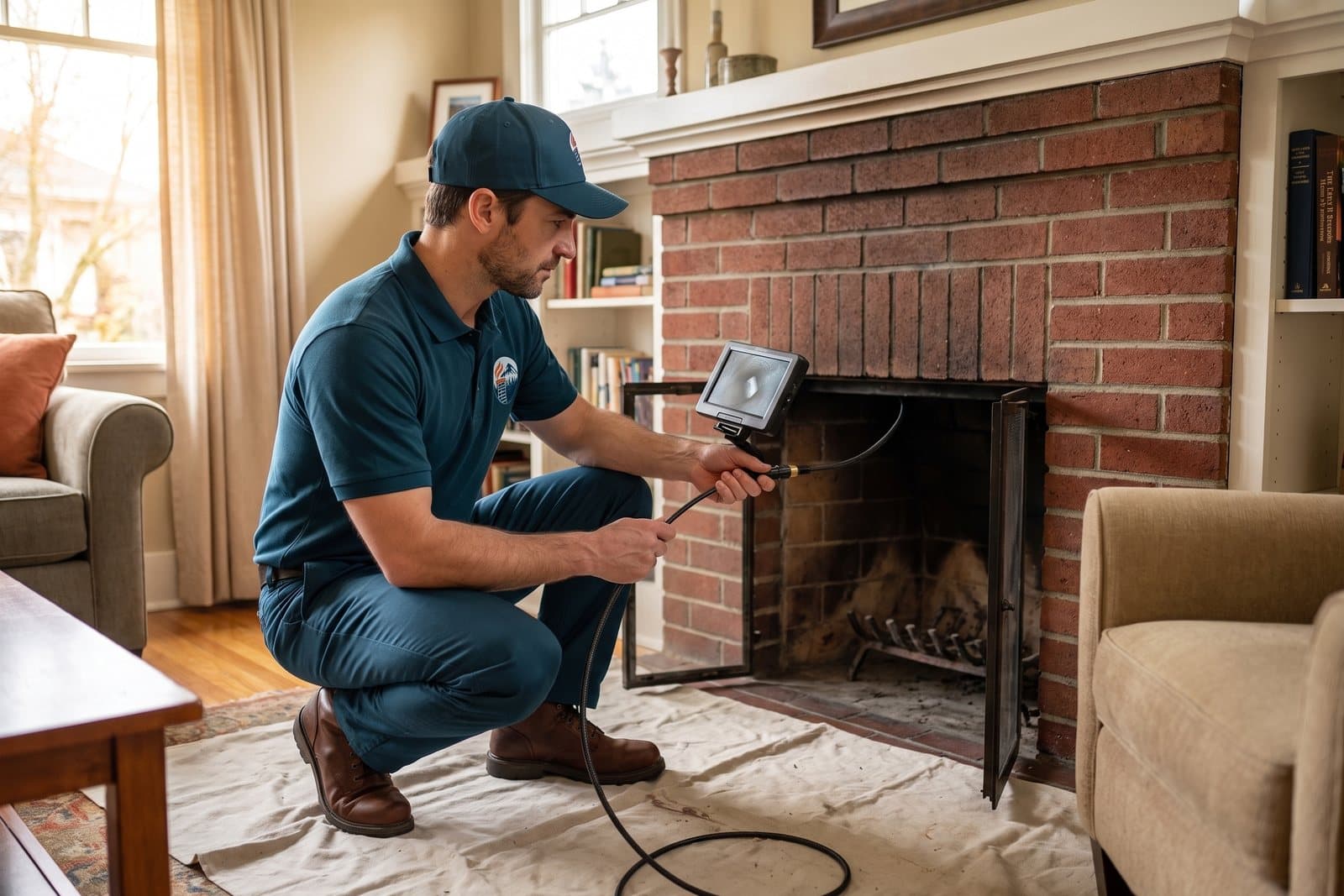
Any honest estimate starts with a technician on your roof looking at the crown directly. A phone estimate based on chimney age or home size is a guess. At Tacoma Chimney Pros, every chimney inspection includes a roof-level visual assessment of the crown, flashing, and cap so homeowners understand exactly what they are dealing with before committing to any work.
When you call for an estimate, be ready to share: the approximate age of your home, whether you have seen water stains on ceilings or walls near the fireplace, and whether any chimney work has been done in the past decade. That context lets us scope the job accurately and flag whether a liner inspection should be included in the same visit.
Schedule your inspection in August or September. Crown repairs completed during dry weather cure properly and last as specified. Work done in November rain compromises both the concrete pour and the elastomeric coating cure. Getting ahead of Tacoma's rainy season by six to eight weeks is the most reliable way to keep crown repair costs at the low end of the range.
Frequently asked questions
How long does chimney crown repair take in Tacoma?
Chimney crown repair in Tacoma typically takes two to four hours on-site for elastomeric sealing or surface resurfacing. A full crown replacement — demolition, forming, and a fresh concrete pour — takes three to five hours, then requires 24–48 hours of curing before the waterproof coating can be applied. Work must be done on a dry surface with air temperatures above 40°F and climbing, which in Tacoma means late spring through early October is the reliable window.
Will homeowner's insurance cover chimney crown repair in Tacoma?
Washington homeowner's policies cover sudden, accidental damage to a chimney crown — a tree branch that shatters the crown, for example. They do not cover deterioration from freeze-thaw cycles, age, or deferred maintenance, which accounts for nearly all of the crown damage found on Tacoma chimneys. Check your specific policy, but plan to pay out of pocket for typical chimney crown repair in Pierce County.
What happens if I ignore a cracked chimney crown?
Ignoring a cracked chimney crown in Tacoma allows water to enter the masonry and flue system every time it rains. In Pierce County's climate that means progressive spalling of brick, deteriorating mortar joints, rust damage to the damper assembly, and eventual cracking of the clay tile flue liner. A cracked liner is a life-safety issue — combustion gases including carbon monoxide can escape into living space. A $200 crack seal ignored through two or three wet Pierce County winters can realistically become a $1,500–$5,000 repair.
Do older Tacoma homes need a different approach to crown repair?
Yes, frequently. Pre-1950s Tacoma chimneys commonly have crowns built with plain mortar, no reinforcement, and little or no overhang past the chimney face. These crowns are not candidates for patching — the underlying design is wrong. Proper chimney crown replacement on an older Tacoma home uses a concrete mix with a low water-cement ratio, steel mesh reinforcement, a minimum 2.5-inch overhang on all sides, and a formed drip edge that directs runoff clear of the brick face.
Is chimney crown repair the same as tuckpointing?
No. Chimney crown repair addresses the concrete cap at the top of the chimney. Tuckpointing — also called repointing — replaces deteriorated mortar between the brick courses on the chimney's sides and above the roofline. Both are common needs in Tacoma's older masonry chimneys, and water intrusion through a failed crown often accelerates joint deterioration below it, so both issues are frequently identified in the same inspection. They are separate scopes with separate costs.
Related services