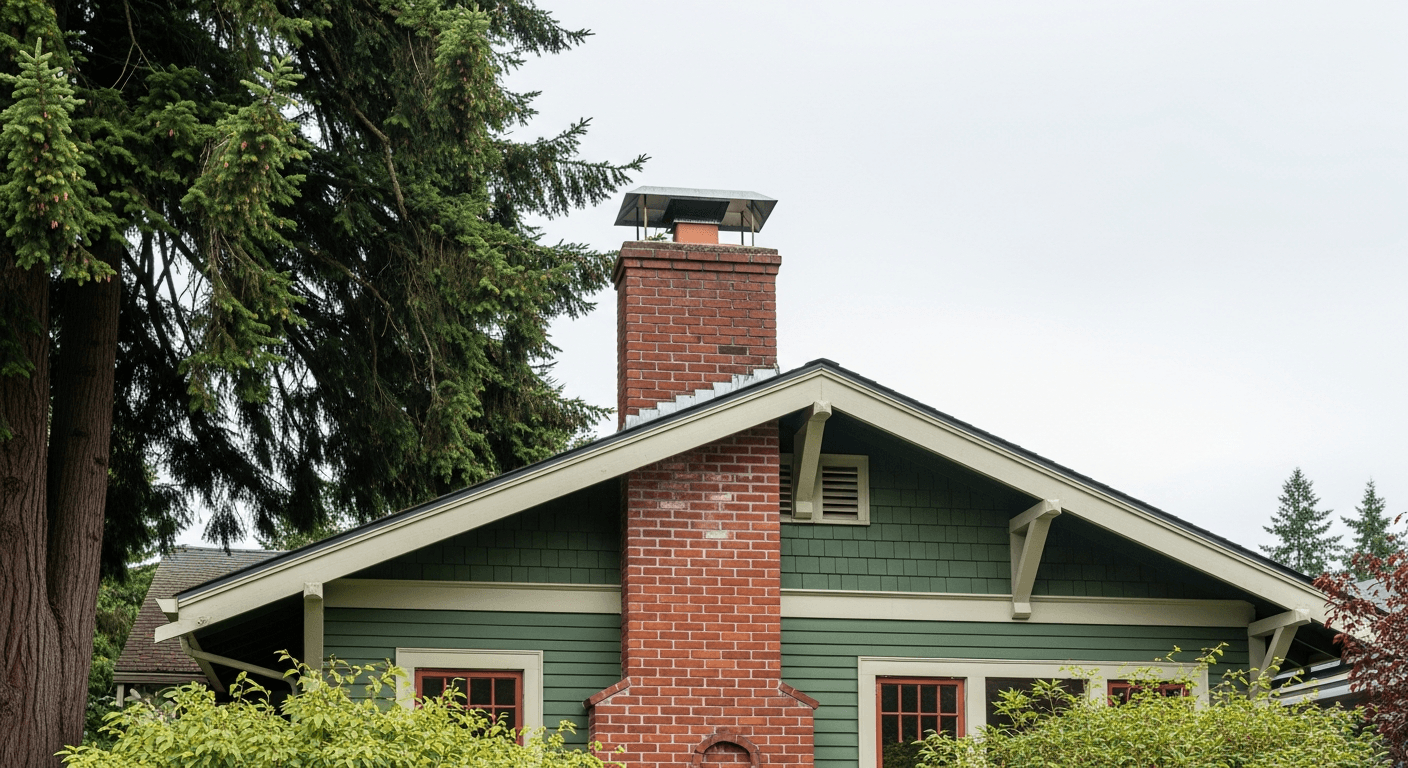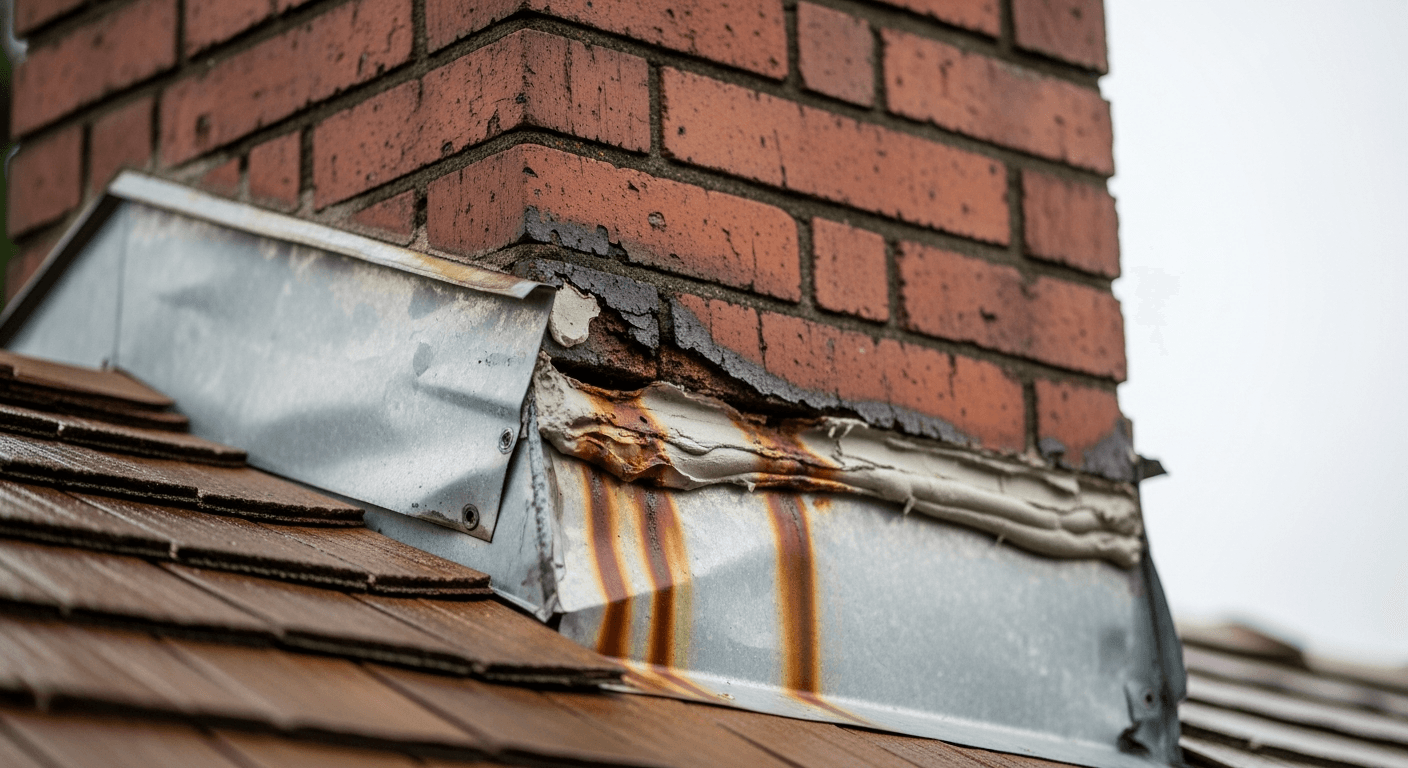
Chimney flashing repair in Tacoma, WA costs $250–$900 for a professional re-seal or partial replacement, and $600–$1,800 for a complete tear-out and reinstallation — all labor and materials included. If your flashing is separating from the chimney, showing rust streaks on the brick, or you're seeing a ceiling stain near the fireplace, scheduling a repair before October is the difference between a $500 fix and a $4,000 water-damage remediation bill. Tacoma averages 38 inches of rain annually, concentrated in a six-month wet season that runs October through April. The older masonry chimneys on the Craftsman bungalows and brick foursquares common throughout the North End, Proctor, and Stadium District were built with lead or thin galvanized flashing that was never engineered to last a century. On top of age, salt air drifting inland from Commencement Bay corrodes exposed metal faster than it would in an inland climate, and Pierce County's repeated freeze-thaw cycles — temperatures hovering near freezing on most winter nights — work mortar joints and lap seams loose season after season. What shows up as a hairline gap in September can be an open channel by January.
What chimney flashing is and why it fails faster in Tacoma than in drier climates
Chimney flashing is the metal seal that bridges the joint between your chimney's masonry and your roof deck. It works in two interdependent layers: step flashing — small L-shaped pieces of metal — is woven into each shingle course alongside the chimney as the roof is built. Counter-flashing is bent down from a slot cut into a mortar joint above, lapping over the step flashing to cap the seam. When both layers work together, water sheds off the roof and away from that joint. When either layer fails, water bypasses every other layer of protection and enters your attic and wall cavity directly.
In Tacoma, three conditions combine to accelerate flashing failure beyond what manufacturers' lifespan estimates assume. First, age: a meaningful share of homes in the North End, Hilltop, and Stadium District were built between 1900 and 1945, and their original flashing has almost certainly been patched multiple times. Each patch adds a layer of caulk that eventually shrinks and cracks, and the underlying metal may be oxidized beyond the point where any sealant will bond to it reliably. Second, moisture: Tacoma's wet season is long and unrelenting — 155 or more rainy days per year — and flashing joints that stay wet for months at a time deteriorate faster than those in dry-summer climates. Third, salt: the marine air from Commencement Bay carries chlorides that accelerate corrosion on both galvanized steel and aluminum. Flashing that might last 30 years in eastern Washington can show active rust pitting in 15 years on a home within a mile of the water.
Thermal movement compounds all three. Tacoma winters rarely hit single digits, but nighttime temperatures near freezing through dozens of cycles each season cause masonry and metal to expand and contract at different rates. That constant micro-movement loosens caulk, opens lap joints, and eventually pulls counter-flashing out of mortar beds that have softened with age — usually on the back side of the chimney, the side no one looks at from the street.
What chimney flashing repair actually costs in Tacoma
The price range is wide because the right scope of work depends on what's actually failing. Re-sealing with elastomeric sealant is appropriate only when the metal is structurally sound and properly lapped. Partial replacement makes sense when damage is confined to one side of the chimney. Full replacement is necessary when the metal is corroded through, when the original installation was incorrect, or when the step flashing was never properly integrated with the shingles to begin with — a common finding on older Tacoma homes that have changed hands many times.
The table below reflects current pricing from a qualified chimney professional for the most common repair scenarios in Tacoma. These are not roofing contractor re-caulk estimates, which are a temporary measure and typically void any workmanship warranty a chimney professional would otherwise provide.
One important note about the lower end of the range: a re-seal is only appropriate when the flashing metal is still sound. If your flashing is actively rusting, has separated from the mortar joint, or was installed without proper step-flashing integration, a sealant application will buy you one more rainy season at most before the same leak returns. A full replacement — step flashing woven into the shingle courses, counter-flashing set into fresh reglet cuts in the mortar — is the repair that stops the leak permanently.
| Repair Type | What's Included | Typical Cost Range (Tacoma) | Expected Lifespan After Repair |
|---|---|---|---|
| Re-seal / caulk only | Strip old sealant, clean and prep metal and masonry, apply elastomeric flashing sealant rated for metal-to-masonry bond | $250–$450 | 3–7 years (only if metal is structurally sound) |
| Partial flashing replacement | Replace deteriorated section on one or two sides, re-integrate with existing step or counter-flashing | $500–$900 | 15–25 years |
| Full replacement — galvanized steel | Complete tear-out, new step flashing woven into shingle courses, counter-flashing set into reglet cuts | $600–$1,200 | 20–30 years |
| Full replacement — copper | Complete tear-out, new copper step and counter-flashing, reglet cut into mortar, copper is self-patinating and non-reactive with masonry | $1,100–$1,800 | 40–70 years |
| Flashing + masonry repointing | Full flashing replacement plus repointing of deteriorated mortar joints at chimney base — common on pre-1950 Tacoma brick chimneys | $900–$1,800 | 20–30 years |
| Emergency waterproof patch | Temporary waterproof membrane applied over failed flashing to stop active intrusion; not a permanent repair | $150–$300 | Temporary — 1 season maximum |
A real Tacoma scenario: the ceiling stain that revealed three layers of failed caulk
Last February, a homeowner in the North End called us after a tan watermark appeared on the ceiling of their upstairs bedroom — roughly two feet from the fireplace on the second floor of their 1928 Craftsman. A roofer had already been out, replaced a few shingles on the front slope, and billed $275 for the visit. The stain reappeared after the next storm.
When we got on the roof, the problem was on the rear face of the chimney — the side facing the alley that no one had looked at closely in years. The counter-flashing had pulled completely free of the mortar joint along that entire back run. The original lead step flashing underneath was intact but heavily oxidized, and three separate beads of caulk had been laid over the gap at different points in the home's history; all three were cracked and peeling. Water was running straight down the back face of the chimney inside the wall cavity, traveling down to the second-floor ceiling before appearing as a stain.
We replaced the rear flashing section entirely — new galvanized steel step flashing woven into the existing shingles, new counter-flashing set into fresh reglet cuts, mortar joints at the two lowest chimney courses repointed where freeze-thaw damage had opened visible gaps. Total: $1,150, completed in one day. The roofer's proposed re-caulk would have cost $275 and lasted, at best, one more wet season. The homeowner's comment when we finished: 'I wish someone had explained the difference between a chimney repair and a roof repair before I made the first call.'
How to tell whether your flashing needs repair — without getting on the roof
Most of the reliable warning signs are visible from inside your home or from the ground with binoculars. Inside, look for water stains on the ceiling within three feet of the chimney, paint bubbling on the wall alongside the chimney breast, or a musty smell in rooms above the fireplace during or after heavy rain. In the attic, a flashlight sweep around the chimney penetration immediately after a rainstorm is more informative than any visual inspection from below — wet insulation, dark staining on rafters, or any visible daylight around the chimney is a clear signal.
From the ground, use binoculars and check all four sides of the chimney where it meets the roof — including the back face. Sound flashing lies flat and tight against both the masonry and the shingles with no visible gaps or lifted edges. Rust streaks running down the brick, separated caulk that has pulled away from the metal, or any visible gap between the counter-flashing and the mortar joint all warrant a professional inspection.
The optimal window for flashing repairs in Tacoma is late August through September. That dry stretch before the fall rains allows masonry mortar to cure fully, elastomeric sealants to bond properly, and gives you a full inspection cycle before the November surge when Pierce County's chimney and roofing contractors are handling a backlog of emergency leak calls. Scheduling in September typically means same-week availability; scheduling in November may mean a two-to-three-week wait while the leak continues.
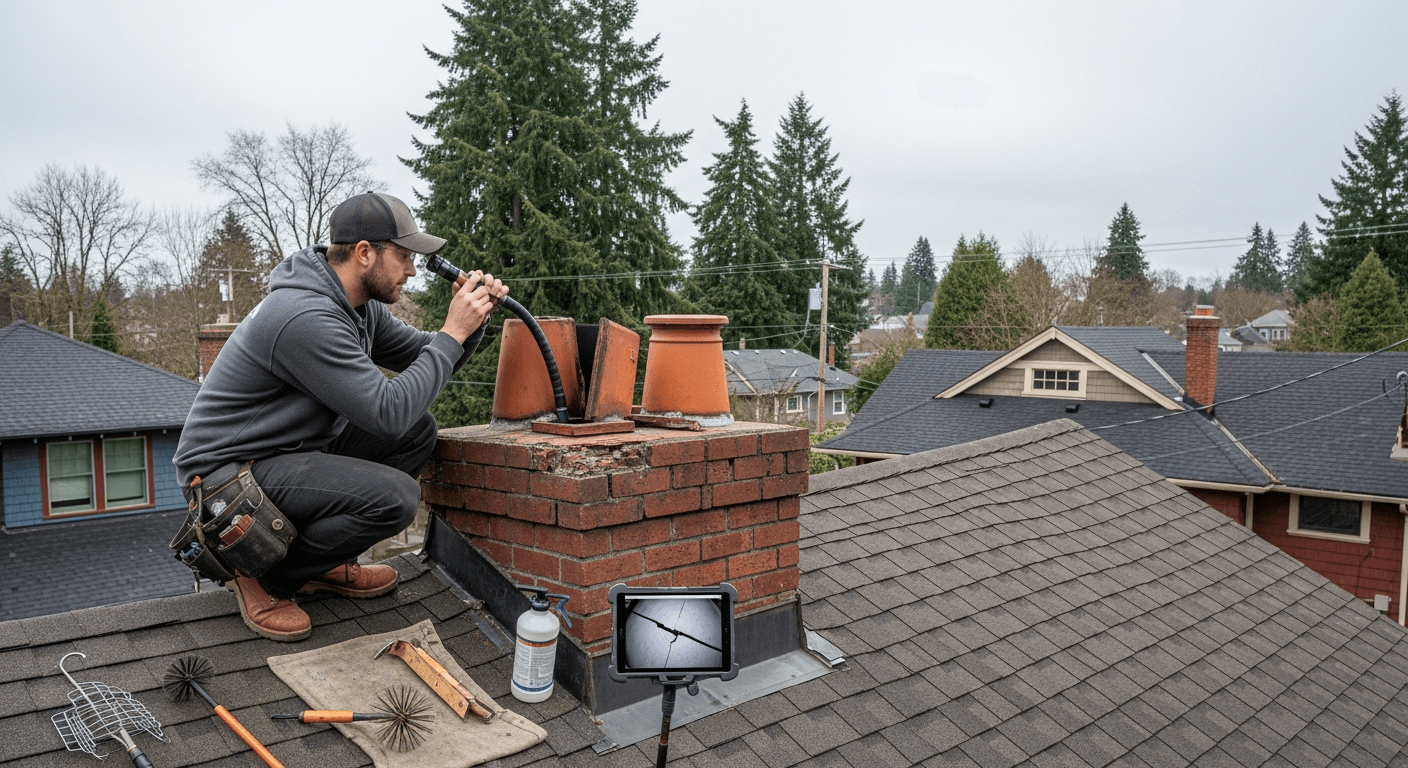
If you purchased an older Tacoma home without prior flashing documentation, a Level 2 chimney inspection — which covers the exterior of the chimney and the flashing joint — is the most efficient way to establish a baseline. At $150–$250, it is straightforward insurance against discovering a $3,000–$5,000 water-damage repair the following spring.
Roofer or chimney professional: who should repair your flashing?
Roofers are trained to waterproof roofs. Chimney professionals are trained to waterproof the chimney-roof interface — a meaningfully different problem that involves both masonry and metal. The counter-flashing that locks into the mortar joint is a masonry detail: cutting a clean reglet, packing it correctly, and choosing a material and profile that will stay embedded through years of thermal movement requires understanding how aged brick and mortar behave, not just how shingles shed water. A roofer who fills the joint with silicone caulk is solving a roofing problem. The masonry problem that caused the failure remains, and the repair will fail again.
For the pre-1950 clay brick chimneys that make up a significant share of the housing stock in Proctor, South Slope, and the North End, the flashing joint cannot be evaluated in isolation. Flashing that keeps separating from the mortar is often a symptom of soft, spalling, or deteriorated brick at the base of the chimney — brick that needs repointing or consolidation before any flashing installation will hold long-term. A chimney professional can diagnose and address both the masonry and the flashing in a single visit. Coordinating a roofer and a separate masonry contractor for the same problem typically takes longer, costs more, and creates gaps in accountability if the leak returns.
Frequently asked questions
How long does chimney flashing last in Tacoma's climate?
Galvanized steel flashing lasts 20–30 years under normal conditions, but closer to 15 years on homes near Commencement Bay where salt air accelerates corrosion. Copper flashing lasts 40–70 years and is the best long-term value on an older brick chimney. Caulk-only patches rarely hold more than 3–7 years given Tacoma's wet winters and freeze-thaw cycling.
Can I use hardware-store caulk as a temporary fix?
Standard silicone and paintable caulk do not bond reliably to wet masonry and metal, and will typically fail within one rainy season. If you need a short-term stop-gap before professional repair, use a flashing-specific elastomeric sealant rated for metal-to-masonry applications. Apply it as a bridge measure only — it will not correct failed step flashing or a counter-flashing that has pulled free from the mortar joint.
A ceiling stain appeared near my fireplace in January. Is it definitely the flashing?
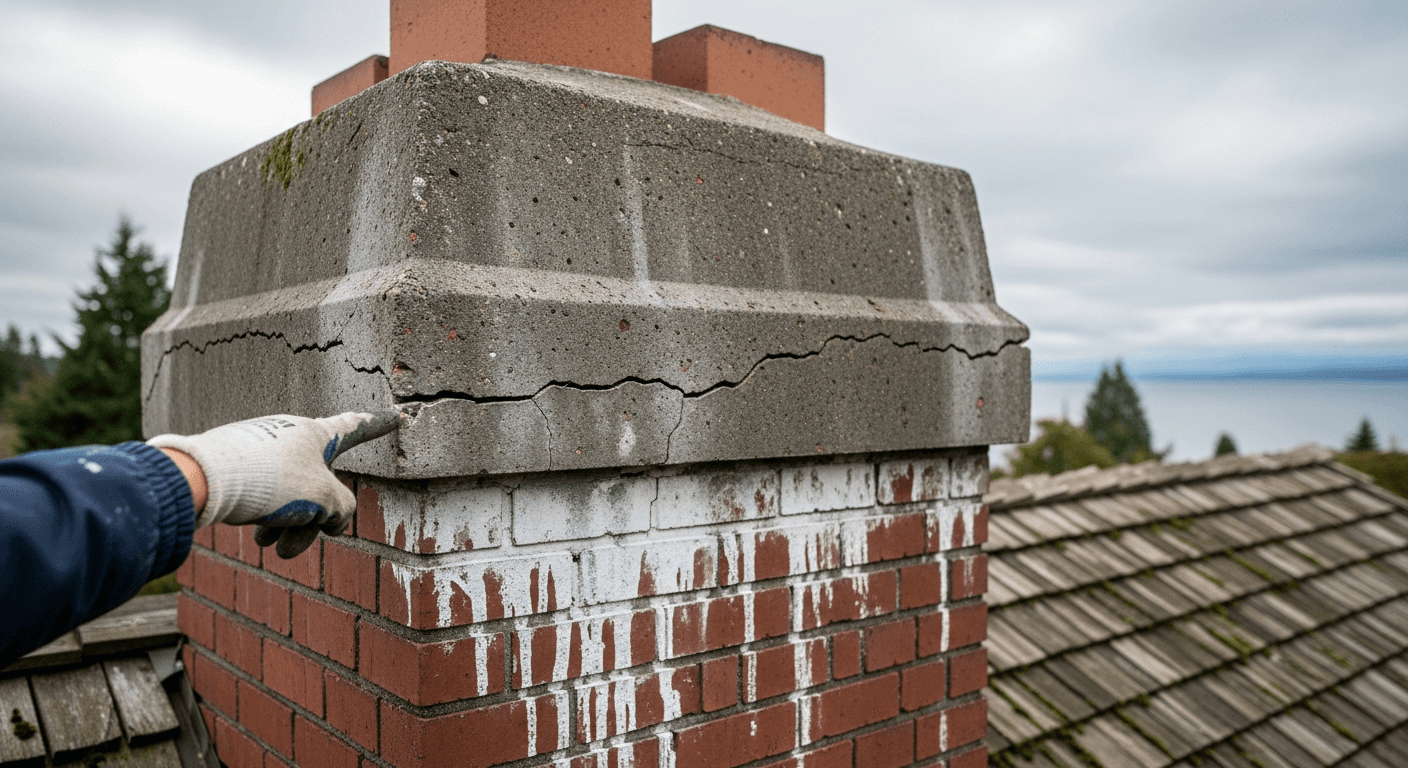
A ceiling stain near the chimney during Tacoma's wet season is most often failed flashing, but a cracked chimney crown or deteriorated mortar joints above the roofline can produce the same symptom. Water inside a wall cavity can also travel several feet horizontally before appearing as a stain, so the visible stain is not always directly below the entry point. A professional inspection is the only reliable way to trace the source.
Will homeowners insurance cover flashing repair in Washington State?
Standard Washington homeowners policies cover sudden, accidental water damage but exclude gradual deterioration and deferred maintenance — the category under which most flashing failures are classified. Storm-caused damage is the main exception: if a documented wind or hail event dislodged the flashing, photograph the damage immediately, note the storm date, and file promptly. Expect to pay out of pocket for age-related or maintenance-related failures.
How long does the repair take?
A re-seal takes 1–2 hours. A partial or full flashing replacement on a standard single-chimney home takes 3–6 hours and is typically finished in one visit. If mortar repointing is included — common on Tacoma's pre-1950 brick chimneys — plan for a full day. We do not leave a job with exposed masonry or open joints overnight.
Related services