A chimney works by exploiting a single physics principle — hot gases are less dense than cool air, so they rise — creating an upward pull called draft that draws combustion byproducts out of the flue and safely out of your home. In Tacoma, that same draft is working inside masonry chimneys that may be 80 to 100 years old, many with original clay-tile liners that have absorbed decades of Pierce County freeze-thaw cycles and salt-laden air blowing off Commencement Bay — conditions that crack tile joints and erode mortar faster than most homeowners realize.
What Exactly Is a Chimney, and What Are Its Main Parts?
In everyday use, 'chimney' refers to the entire vertical structure, not just what you see above the roofline. The flue is technically the interior gas passage, but homeowners and tradespeople routinely use the two terms interchangeably. You may also hear 'stack' or 'smokestack' for larger commercial structures.
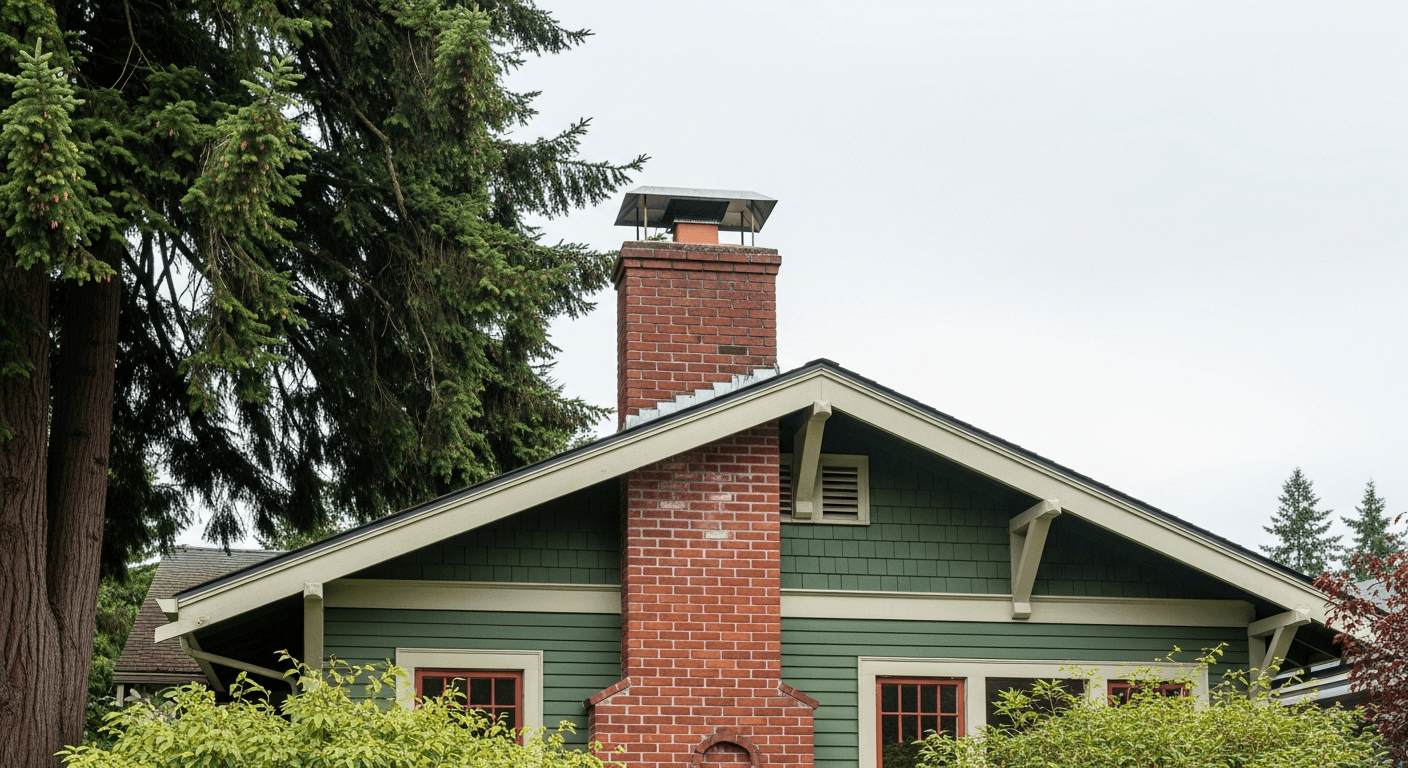
A complete masonry chimney has six functional components. The firebox is where combustion occurs. The smoke chamber and damper sit directly above, controlling airflow. The flue liner — clay tile in the vast majority of Tacoma homes built before 1960 — forms the actual gas channel. The smoke shelf catches falling debris and rain. The chimney crown is the concrete or mortar cap that seals the top of the masonry and sheds water away from the brick. The chimney cap is the metal cover over the crown that blocks rain, birds, and squirrels from entering the flue.
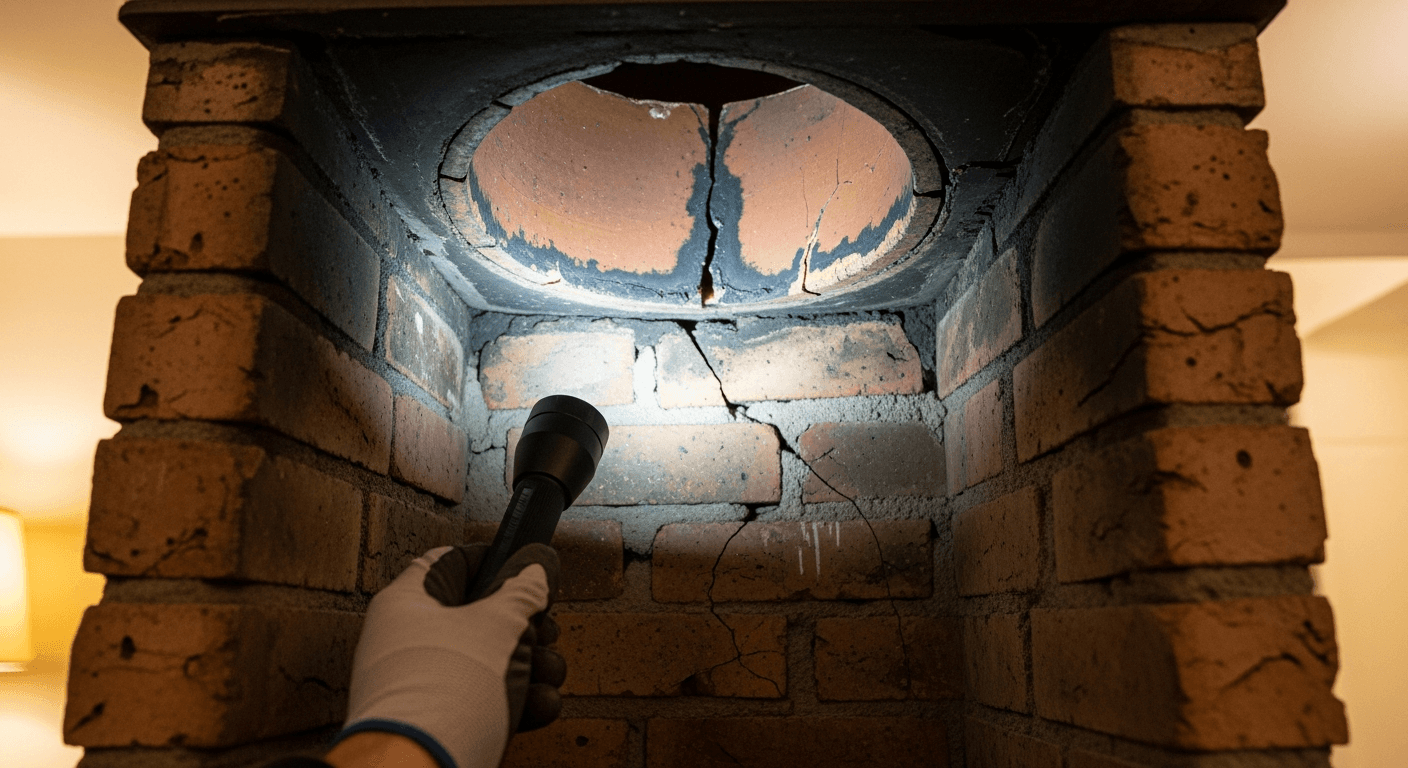
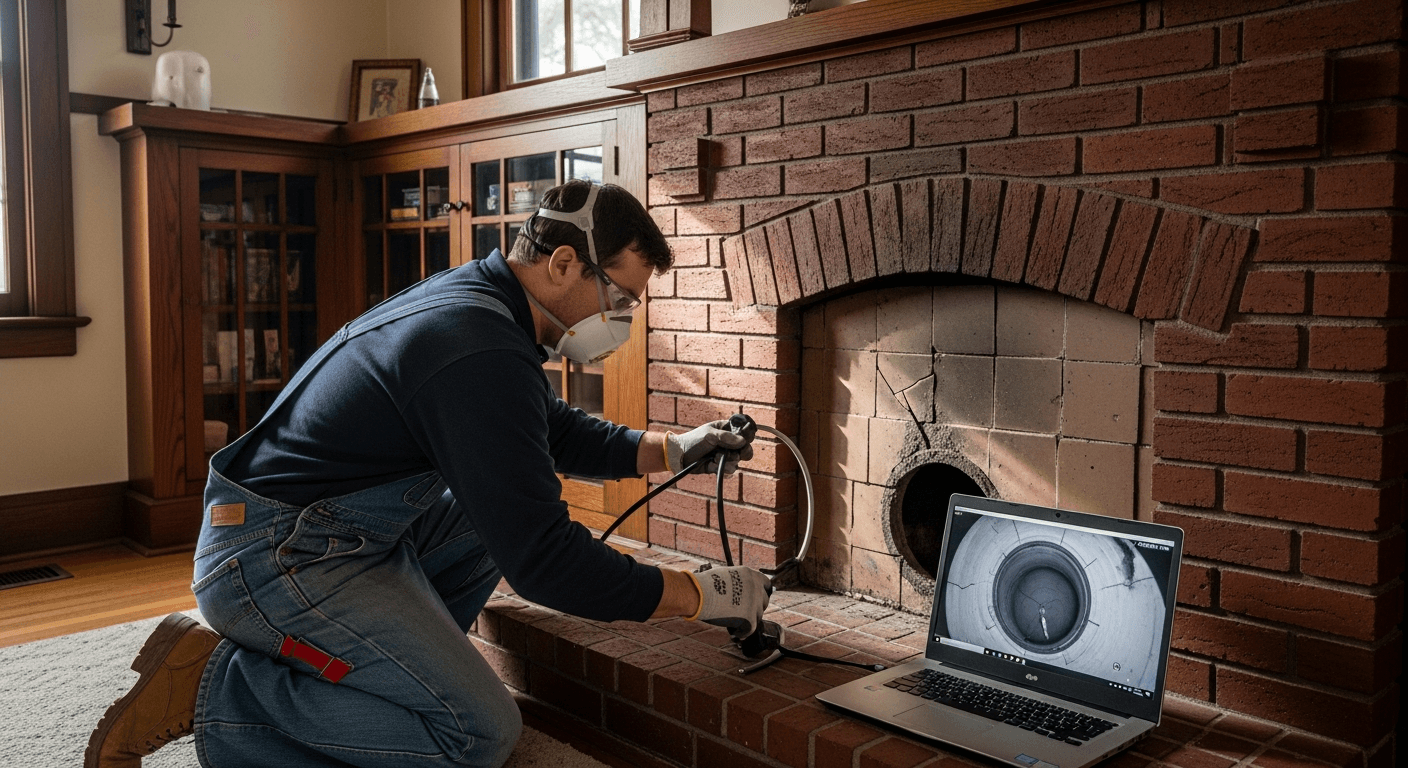
In Tacoma's older housing stock, the mortar between clay tiles degrades silently. Cracks allow heat and carbon monoxide to bleed into wood-framed wall cavities — a fire and health hazard that looks like nothing from the street and is invisible without a camera inspection.
How Does a Chimney Create Draft — and What Is the 7-Times Rule?
Draft is the pressure difference between warm air inside the flue and cooler outside air. Hot gases rise and exit at the top, pulling fresh combustion air in at the firebox. The taller the chimney and the hotter the flue, the stronger the draft. A weak or reversed draft — smoke spilling back into the room — typically signals a blocked flue, a chimney too short relative to the roofline, or a flue-to-firebox size mismatch.
That mismatch is what the 7-times rule addresses: the cross-sectional area of the fireplace opening should be no more than seven times the cross-sectional area of the flue. If the flue is undersized relative to the opening, gases cannot exhaust fast enough and backpuffing results. This is a recurring problem in Tacoma's Craftsman-era homes where firebox openings were enlarged during remodels without upsizing the original 8-inch-by-8-inch clay-tile flue.
Tightly weatherized homes present a separate draft problem. If you have upgraded windows and added insulation but still use an older wood-burning fireplace, the negative indoor pressure can fight the chimney's draw. Cracking a nearby window a half-inch before lighting a fire equalizes pressure and restores proper draft — a simple fix that avoids a service call.
What Are the Main Types of Chimneys Found in Tacoma Homes?
Knowing your chimney type tells you exactly what maintenance it requires and what repairs cost.
Masonry chimneys — brick or stone with a mortar-set clay-tile liner — dominate Tacoma's established neighborhoods: the Proctor District, North End, and Old Town. They are durable when maintained, but Tacoma's climate targets them directly. Freeze-thaw cycles fracture mortar joints, and salt air off Commencement Bay accelerates spalling on south- and west-facing brick faces.
Factory-built metal chimneys, also called prefabricated or zero-clearance chimneys, appear in homes built after roughly 1970. They use insulated double- or triple-wall stainless steel pipe and need less structural maintenance, but chase covers rust out, pipe joints corrode, and storm collars fail — problems that let water into the chase and rot the surrounding framing.
Metal insert liners are a hybrid: a wood stove or gas insert vented through a new stainless steel liner inside an existing masonry shell. This is among the most common retrofits we perform for Tacoma homeowners who want the efficiency of a modern insert while preserving the original brick exterior.
| Chimney Type | Common In Tacoma | Key Maintenance Need | Typical Lifespan |
|---|---|---|---|
| Masonry (brick + clay tile) | Pre-1960 Craftsman and bungalow homes | Repointing, crown repair, relining | 75–100+ years with upkeep |
| Prefabricated metal | Post-1970 tract and split-level homes | Chase cover and cap replacement, joint seals | 20–30 years |
| Stainless steel insert liner | Homes with retrofitted stove or gas insert | Annual sweep, connector and seal inspections | 20–25 years (liner) |
| Concrete block | Mid-century commercial-to-residential conversions | Waterproofing, crack injection | 40–60 years with upkeep |
Tacoma Chimney Repair and Service: Typical Costs by Job Type
The table below reflects the range of chimney service and repair costs Tacoma homeowners typically encounter. Figures are provided as general reference; exact pricing depends on chimney height, access, liner condition, and the extent of damage found during inspection. A Level 2 camera inspection is the starting point for any repair estimate — it identifies the true scope of work and prevents paying for repairs that are not yet needed.
Scheduling in late August or September — before the fall burning season — gives homeowners the widest window to complete repairs at a measured pace rather than on an emergency timeline.
| Service or Repair | Typical Cost Range (Tacoma) | Notes |
|---|---|---|
| Level 1 annual inspection | Included with sweep or quoted separately | Visual inspection of accessible portions per NFPA 211 |
| Level 2 camera inspection | Additional fee above Level 1 | Required when buying a home, after a chimney event, or every 3–5 years |
| Annual chimney sweep (standard) | Standard service rate | Recommended when creosote or soot reaches 1/8 inch |
| Mid-season sweep (heavy users) | Same as annual sweep rate | Advisable for households burning 3+ fires per week through a Tacoma winter |
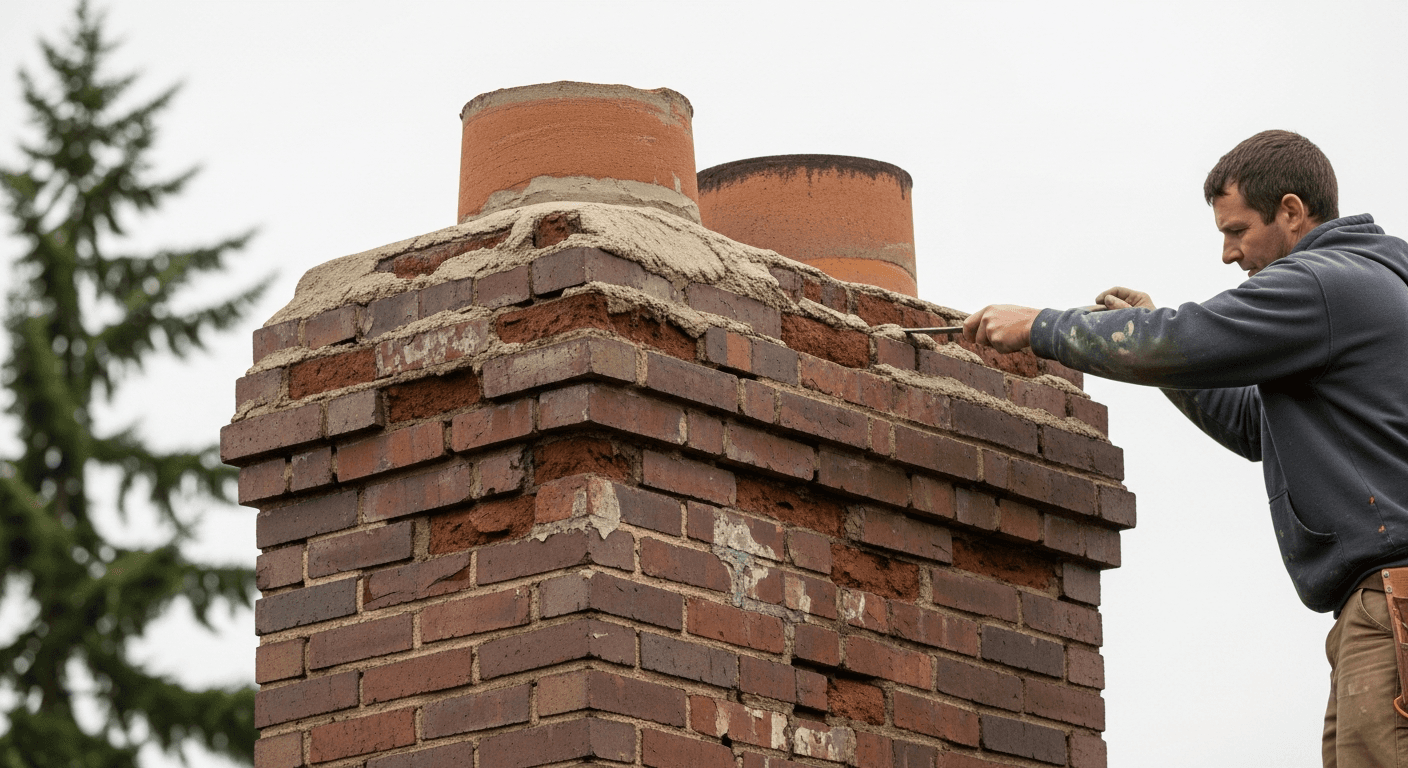
| Crown repair / rebuild | Varies by crack extent and crown size | Hydraulic cement used for gap and crack repair; hairline cracks addressed early cost less |
| Repointing (tuckpointing) mortar joints | Varies by linear footage | Waterfront Tacoma chimneys (Ruston, Point Defiance, Stadium District) need this more frequently |
| Stainless steel liner installation (insert) | Varies by flue length and liner diameter | Most common retrofit for Tacoma homes adding a wood stove or gas insert |
| Vapor-permeable waterproofing sealer | Varies by chimney size | Recommended every 4–5 years for chimneys within ~1 mile of Commencement Bay |
| Bird / animal nest removal + cap replacement | Varies by nest size and cap type | Starlings and squirrels nest regularly in Tacoma's older brick stacks |
Chimney Warning Signs: Symptom-to-Cause Reference for Tacoma Homeowners
Many chimney problems are invisible from the street or even the rooftop without a camera. The table below maps the most common symptoms Tacoma homeowners notice to their likely underlying causes, helping you decide whether the issue warrants an immediate call or can wait for a scheduled annual inspection.
No symptom in this list should be used to self-diagnose or self-repair a chimney. A professional Level 2 inspection is the only reliable way to confirm cause and scope, particularly for cracks and carbon monoxide risks.
| Symptom You Notice | Likely Cause | Urgency in Tacoma Context |
|---|---|---|
| Smoke spilling into the room when a fire is lit | Blocked flue, undersized flue (7-times rule violation), or negative indoor pressure from tight weatherization | Address before next fire; crack a window as a temporary measure |
| White staining (efflorescence) on exterior brick | Water penetrating mortar joints and leaching salts outward; accelerated by salt air near Commencement Bay | Schedule inspection; waterfront chimneys need sealer applied proactively |
| Visible cracks in the chimney crown | Freeze-thaw cycling fracturing the concrete or mortar cap; water enters, freezes at 32°F, and widens the crack | Repair before the next wet Tacoma winter to prevent water reaching the flue liner |
| Flaking or spalling brick faces | Moisture absorption and freeze-thaw expansion; south- and west-facing brick near the waterfront most affected | Repointing and waterproofing; delay worsens structural loss |
| Dripping sounds or water stains inside the firebox | Failed chimney cap, cracked crown, or corroded chase cover allowing rain entry | Inspect promptly; standing moisture softens mortar and accelerates tile joint failure |
| Odor of creosote or smoke when fireplace is not in use | Negative house pressure drawing air down the flue, or a cracked tile joint allowing gases into the living space | Urgent; cracked tile can allow carbon monoxide into wall cavities |
| Rustling or chirping sounds in the flue | Bird or squirrel nest, most commonly starlings in Tacoma's older brick stacks | Schedule removal and cap inspection before burning season |
| Damper that will not fully open or close | Corrosion, debris accumulation on the smoke shelf, or warped metal from excessive heat | Repair before lighting fires; a stuck-open damper wastes heat; stuck-closed is a carbon monoxide risk |
A Tacoma Homeowner Scenario: When a Pretty Chimney Hides a Real Problem
Consider a hypothetical but representative situation: a homeowner in Tacoma's North End calls in early November, a few weeks before they plan to start their first fire of the season. The house is a 1924 Craftsman — original brick, sound-looking from the street. When they purchased it two years earlier, the previous owner described the chimney as 'fine.'
A Level 2 inspection including a camera run up the full length of the flue finds three problems: a cracked clay-tile joint roughly eight feet above the smoke chamber, a chimney crown with a gap wide enough to admit daylight, and a partial bird nest on the smoke shelf — almost certainly built the previous spring. None are visible from the rooftop without the camera. The cracked tile means heat and combustion gases could reach the wood framing inside the chimney chase. Two wet Tacoma winters of moisture intrusion through the open crown have softened the mortar around two adjoining tile sections, setting up a larger failure.
After the nest is cleared, the crown rebuilt with hydraulic cement, and the fractured tile sections relaid with refractory mortar, the homeowner has a safe first fire by mid-November, and the total repair bill is roughly one-third of what a full stainless-steel reline would have cost. Scheduling in October — before the fall burning season and before the sweep calendar fills — makes that outcome possible. This scenario illustrates why early inspection matters, and why visible condition from the street is not a reliable indicator of flue integrity.
How to Maintain a Chimney in Tacoma: A Practical Annual Schedule
NFPA 211 requires an inspection at least once a year and a sweep whenever creosote or soot buildup reaches one-eighth of an inch. In Tacoma, aim for late August or September — before the fall burning season starts and before appointment slots disappear. Waiting until October or November means a longer lead time and potentially starting the season with an uninspected flue.
For masonry chimneys, the annual checklist should cover: the crown surface for hairline cracks (water enters, freezes at 32°F, and widens the crack through each Pierce County cold snap); mortar joints on exterior brickwork for gaps or crumbling aggregate; the damper for complete open-and-close travel; and the cap mesh for holes large enough for a starling or squirrel — both of which nest regularly in Tacoma's older brick stacks.
Every three to five years — and any time you change your heating appliance, purchase a home, or notice smoke spillback — schedule a Level 2 camera inspection. For chimneys within roughly a mile of the waterfront in Ruston, Point Defiance, or the Stadium District, we recommend applying a vapor-permeable masonry waterproofing sealer every four to five years. Salt-air exposure and the constant wet-dry cycling along the shoreline degrade mortar and brick measurably faster than conditions in Tacoma's inland neighborhoods such as South Tacoma or Parkland.
If you burn wood regularly through a Tacoma winter — three or more fires per week — consider a mid-season sweep in January or February. Heavy users accumulate creosote fast enough that a single annual sweep may not keep buildup below the one-eighth-inch threshold. Burning seasoned hardwood at a hot, sustained temperature is the single most effective way to slow creosote formation between sweeps.
Frequently asked questions
What is another name for a chimney?
'Flue' and 'stack' are the most common alternatives to the word chimney. Technically the flue is the interior gas passage of a chimney, but the terms are used interchangeably by homeowners and tradespeople alike. 'Smokestack' typically refers to industrial structures rather than residential chimneys.
What is the 7-times rule for chimneys?
The 7-times rule states that the fireplace opening area should be no more than seven times the cross-sectional area of the flue. A flue too small for the opening cannot exhaust gases fast enough, causing smoke to spill into the room. This mismatch is common in older Tacoma Craftsman homes where firebox openings were enlarged during renovations without upsizing the original clay-tile flue.
How often does a chimney need to be cleaned in Tacoma?
A Tacoma chimney needs to be cleaned at minimum once a year per NFPA 211, and more frequently — typically a mid-season sweep in January or February — if the household burns wood three or more times per week through the winter. Late August or September is the ideal scheduling window in Tacoma: before the burning season begins and before fall sweep appointments fill up.
How do I know if my chimney has a clay-tile liner or a stainless-steel liner?
Most Tacoma homes built before 1960 have original clay-tile liners. Homes with a wood stove or gas insert added after roughly 1980 may have a stainless-steel liner inside the original masonry shell. A Level 2 camera inspection is the only reliable way to confirm liner type, condition, and the integrity of individual joints in a Tacoma chimney.
Does salt air near Commencement Bay really damage chimneys faster?
Yes, salt air near Commencement Bay measurably damages Tacoma chimneys faster. Airborne chlorides accelerate mortar breakdown and brick spalling through sulfate attack and efflorescence. Chimneys within approximately one mile of the waterfront — Ruston, Point Defiance, Old Town, the Stadium District — typically show crown and mortar deterioration noticeably ahead of comparable chimneys in Tacoma's inland neighborhoods, which is why a vapor-permeable waterproofing sealer is recommended for those structures on a four-to-five-year cycle rather than waiting for visible damage.
Related services