For most Tacoma homeowners — especially those with pre-1940 Craftsman or masonry chimneys — a 316L stainless steel flexible liner is the correct choice: it handles our 38-plus inches of annual rainfall, conforms to offset and irregular flues common in century-old construction, and lasts 20 to 30 years with annual sweeping. The liner is the single most safety-critical component of your chimney, channeling combustion gases and heat out of your home; choosing the wrong type for your fuel source or flue geometry is the most common and expensive mistake we document on Tacoma inspections. Here is what you need to know before you spend a dollar.
Why So Many Tacoma Chimneys Need a New Liner Right Now
Homes in Proctor, the North End, Hilltop, and the Stadium District were overwhelmingly built between 1900 and 1940 with clay-tile-lined masonry chimneys. Those original tiles were engineered for a 50-year service life under average conditions. Pierce County does not offer average conditions.
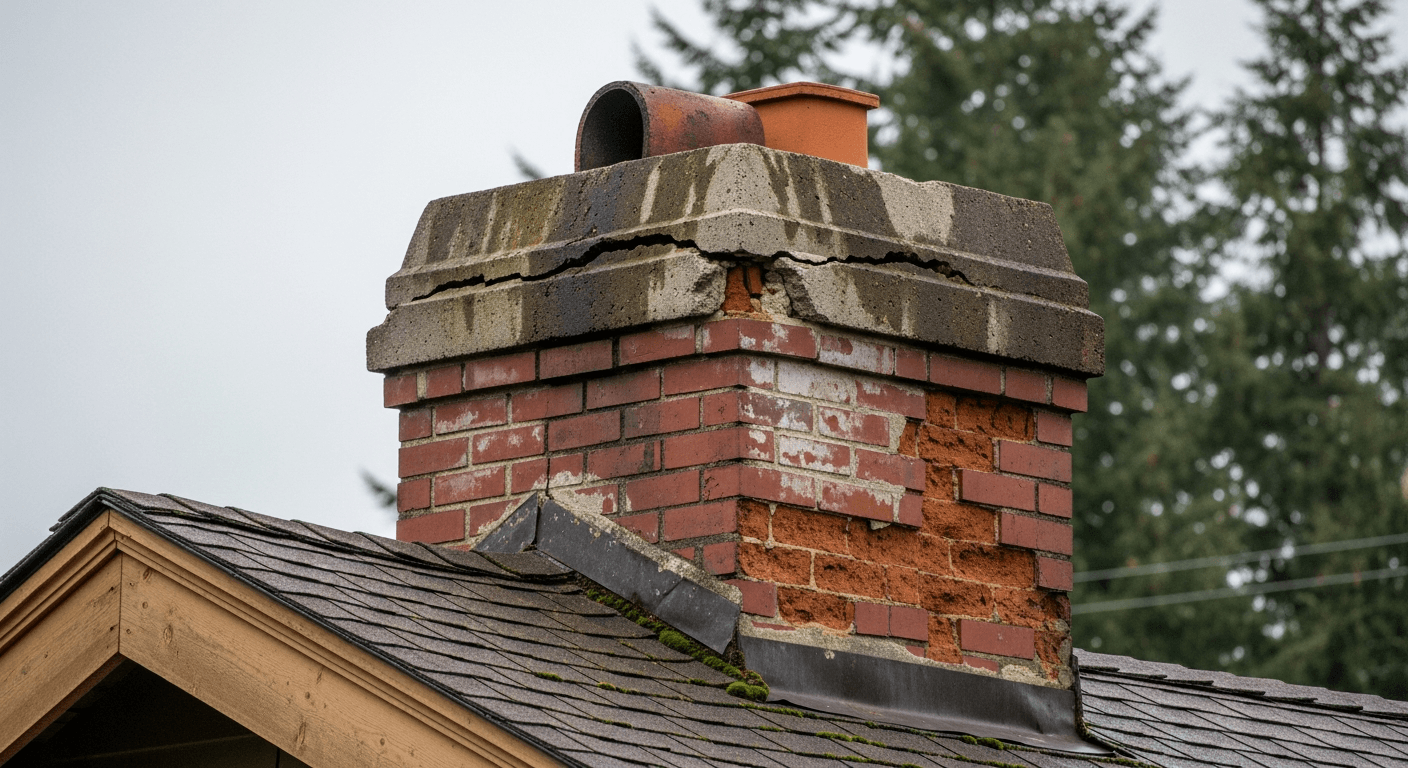
Tacoma receives roughly 38 inches of rain annually. Moisture infiltrates the mortar joints between clay tile sections, freezes during our periodic cold snaps, expands, and fractures tiles from the inside out. Once a tile cracks, combustion gases — including carbon monoxide — can migrate into wall cavities instead of exhausting above the roofline. Properties west of I-5 that face Commencement Bay compound the problem with salt-laden air that accelerates mortar erosion and brick spalling five to ten years ahead of the same deterioration we see in inland Pierce County neighborhoods.
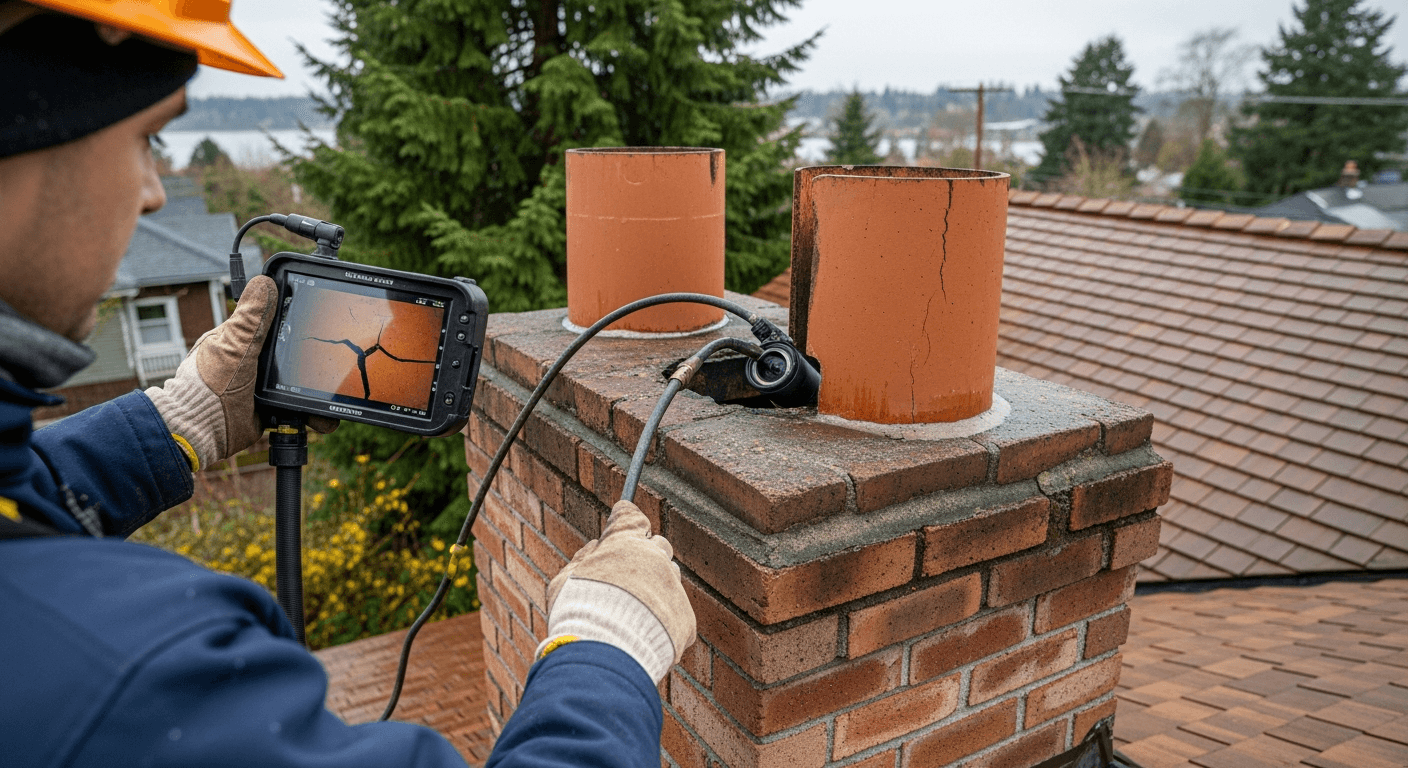
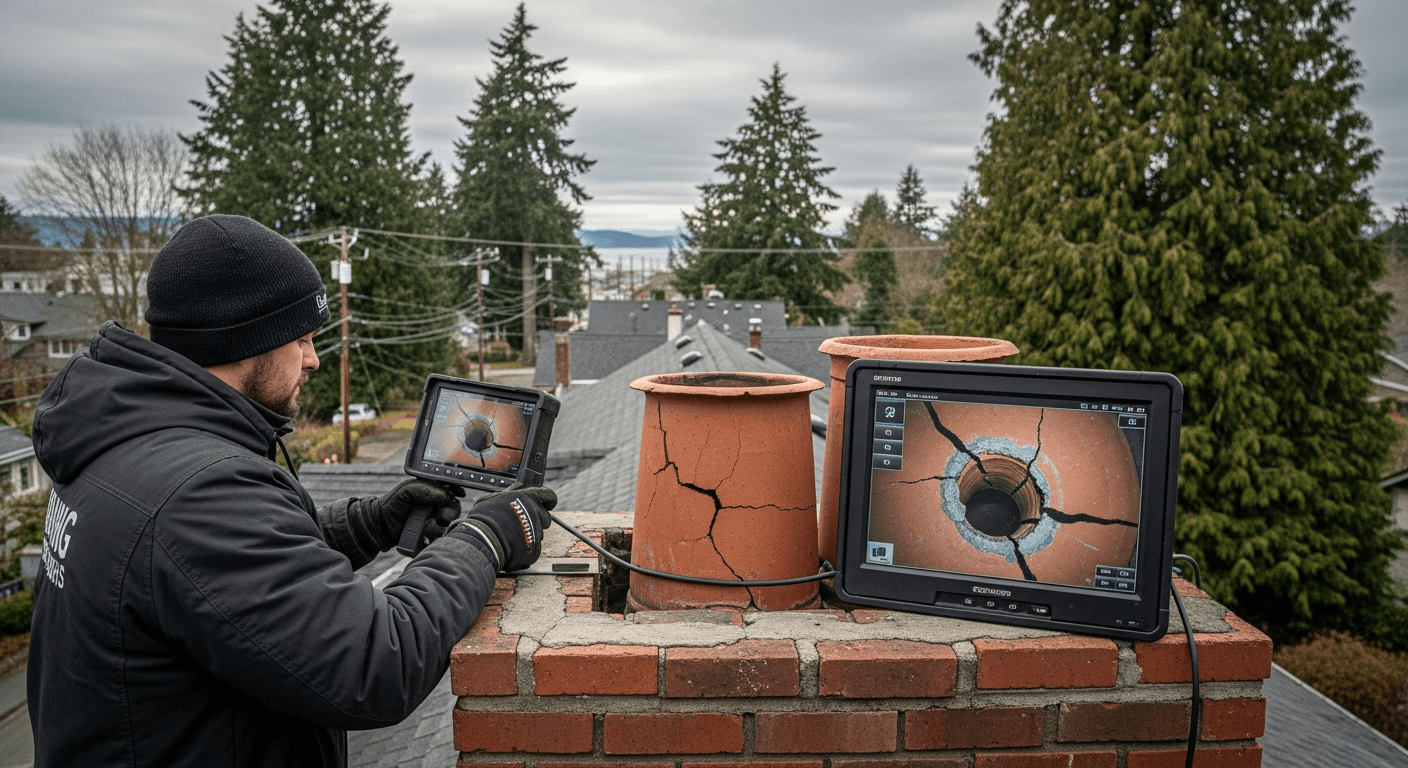
NFPA 211 — the National Fire Protection Association standard that governs chimney systems — requires any chimney with a damaged liner to be relined before further use. A Level 2 inspection, which is mandatory when you purchase a home or change your heating appliance, routinely surfaces cracked clay tiles in houses that show no exterior warning signs. Damaged liner is the single most frequent finding on our Tacoma inspection reports, and it is almost never visible without a camera run.
The Three Liner Options: A Side-by-Side Look at What Tacoma Homeowners Pay
There are three realistic relining options for a Tacoma home: clay tile section repair, stainless steel liner (flexible or rigid), and cast-in-place poured liner. Each carries a different price point, installation profile, expected lifespan, and best-fit application. The table below reflects installed costs we document in Pierce County for a standard two-story home with a flue height of approximately 20 feet.
Full clay tile replacement is rarely performed as a complete reline because it requires dismantling the chimney from the top down — a destructive, labor-intensive process in an occupied home. Isolated cracked-section repairs are done as short-term stabilization while a full stainless or cast liner installation is planned, not as a long-term solution.
Stainless steel flexible liner is the practical choice for Tacoma's older housing stock. A corrugated 316L-grade liner snakes through an offset or irregular flue — both are typical in century-old Tacoma masonry — without requiring demolition. It is code-compliant for wood-burning fireplaces, gas inserts, and oil appliances, but each fuel type demands a specific alloy grade and wall thickness. Matching the liner specification to the appliance is not optional; it is a code requirement and a safety baseline.
Cast-in-place liner systems involve pumping a refractory pourable material around an inflation form inside the existing flue, producing a seamless new liner inside the old tile. This approach is best when the tile structure is intact but compromised, because the poured liner bonds to the surrounding masonry and adds measurable structural rigidity — a meaningful benefit for historic Tacoma chimneys where the masonry itself has softened. The higher cost is often justified when significant masonry repair would otherwise be required in parallel.
| Liner Type | Best Application | Installed Cost (20-ft flue) | Expected Lifespan | Tacoma Suitability |
|---|---|---|---|---|
| Clay Tile (section repair only) | Isolated single-section cracks; short-term fix | $300–$900 per section | Variable; root cause remains | Low — Tacoma moisture and salt re-crack repaired sections within years |
| Stainless Steel Flexible 316L (wood or gas) | Offset or irregular older masonry flues; most common Tacoma reline | $2,200–$4,500 installed | 20–30 years with annual sweeping | High — handles our wet climate and century-old flue geometry |
| Stainless Steel Rigid 316L (straight flues only) | Prefab fireplaces or perfectly straight masonry flues | $1,800–$3,200 installed | 20–30 years | Moderate — most pre-1940 Tacoma flues have offsets that rule this out |
| Cast-in-Place / Poured Refractory Liner | Structurally softened masonry or badly deteriorated tile | $3,500–$6,500 installed | 50+ years | High — adds structural strength; ideal for historic Tacoma masonry |
| Aluminum Flexible (gas only, Category I or IV) | Gas-only, low-flue-temperature appliances exclusively | $900–$1,800 installed | 15–20 years | Moderate — never use with wood or oil; limited to specific gas venting categories |
What Happened When a North End Homeowner Ignored a Cracked Liner
A homeowner in Tacoma's North End called us after a newly installed gas insert began backdrafting — smoke intermittently entering the living room with the damper fully open. The home was a 1922 Craftsman bungalow with its original clay-tile flue. A previous owner had installed a gas insert roughly eight years earlier without relining, a common code shortcut that mismatches flue size and material to the new appliance.
Our camera inspection found three fractured tile sections near the smoke chamber and a fourth tile that had collapsed entirely into the flue, reducing the effective opening by nearly a third. The restricted passage caused the backdrafting. More critically, the fractures created a direct pathway for combustion gases to enter the wall cavity behind the fireplace — a carbon monoxide exposure risk the homeowner had no awareness of.
We installed a 5-inch 316L stainless steel flexible liner with a full-length insulated wrap. The insulation keeps rising flue gases above condensation temperature, which is especially important in Tacoma winters when cold exterior masonry can chill an uninsulated liner enough to kill draft. The installation took one working day. The homeowner reported a measurable drop in monthly gas costs the following heating season because the insert was finally drafting at design efficiency.
The takeaway for Tacoma homeowners: if your older masonry chimney was ever retrofitted with a gas insert or a different heating appliance — even by a previous owner — there is a real probability the liner was never properly sized or specified for that appliance. A camera inspection will confirm it in under an hour.
How to Pick the Right Liner for Your Specific Tacoma Home
Fuel type is the first filter. Wood-burning fireplaces and stoves require a liner rated for solid-fuel high-temperature use — a 316L stainless flexible liner with a minimum 0.006-inch (6-mil) wall for single-wall construction, or a double-wall insulated liner for enhanced draft. Gas appliances operating at lower flue temperatures can use aluminum (Category I only) or lighter-gauge 304 stainless, but for Tacoma's climate we specify 316L stainless across the board: the higher molybdenum content resists the acidic condensate that our wet winters promote in cooler flues. Oil appliances also require 316L due to sulfur-bearing flue gases.
Flue geometry is the second filter. Many pre-1940 Tacoma homes have a single chimney flue that historically served both a fireplace and a furnace. That shared-flue arrangement does not meet current code when both appliances are in use simultaneously; each appliance needs a dedicated liner. A camera inspection will also reveal offsets, irregular cross-sections, and obstructions that eliminate rigid liner as an option — which rules it out for the majority of older Tacoma masonry.
Flue sizing is non-negotiable and must be calculated, not estimated. An undersized liner starves draft; an oversized liner causes flue gases to cool too quickly, condensing creosote and accelerating corrosion. For a wood-burning fireplace, the liner cross-sectional area must be at least one-tenth of the fireplace opening area. A classic Craftsman fireplace with a 30-by-24-inch opening — 720 square inches — requires a minimum 72-square-inch liner, which corresponds to approximately an 8-inch round flue. Your installer should perform this calculation from your actual fireplace dimensions and appliance BTU rating before any liner is ordered.
Factor in your near-term plans before committing. If you are considering converting from wood to gas within the next few years, a correctly sized stainless liner installed now can frequently be reused for the gas appliance — sometimes requiring only a diameter reduction insert — saving you the full cost of a second reline. Lay out the five-year plan with your sweep before signing a contract.
Does Homeowners Insurance Cover Chimney Liner Replacement in Tacoma?
Straightforward answer: almost never, unless the liner was damaged by a sudden, specific event — a chimney fire, a lightning strike, or structural impact from a falling limb. Deterioration from age, Tacoma's persistent moisture, and normal combustion byproducts is classified as deferred maintenance, and standard Washington State HO-3 policies explicitly exclude maintenance-related damage.
If you experienced a chimney fire — including a low-intensity one you may not have noticed — your insurer may cover liner replacement as part of the documented fire damage. Before calling your insurer, obtain a written inspection report from a certified sweep that establishes the fire as the cause and photographs the specific damage. That report is the documentation your adjuster needs to open the claim.
Rain-related liner damage from a severe Pierce County storm could potentially fall under a water-damage or flood rider, but the baseline HO-3 policy carried by most Tacoma homeowners will not cover it. Plan for liner replacement as a maintenance capital expense, not a likely insurance recovery.
One practical note for buyers: some home warranty plans — distinct from homeowners insurance — include chimney liner repair or replacement under a structural systems rider. If you are purchasing a Tacoma home and negotiating a warranty, ask in writing whether the chimney liner is covered. The specific language in the warranty document controls, and verbal assurances from a warranty sales representative are not binding.
Frequently asked questions
How often does a Tacoma chimney need to be swept?
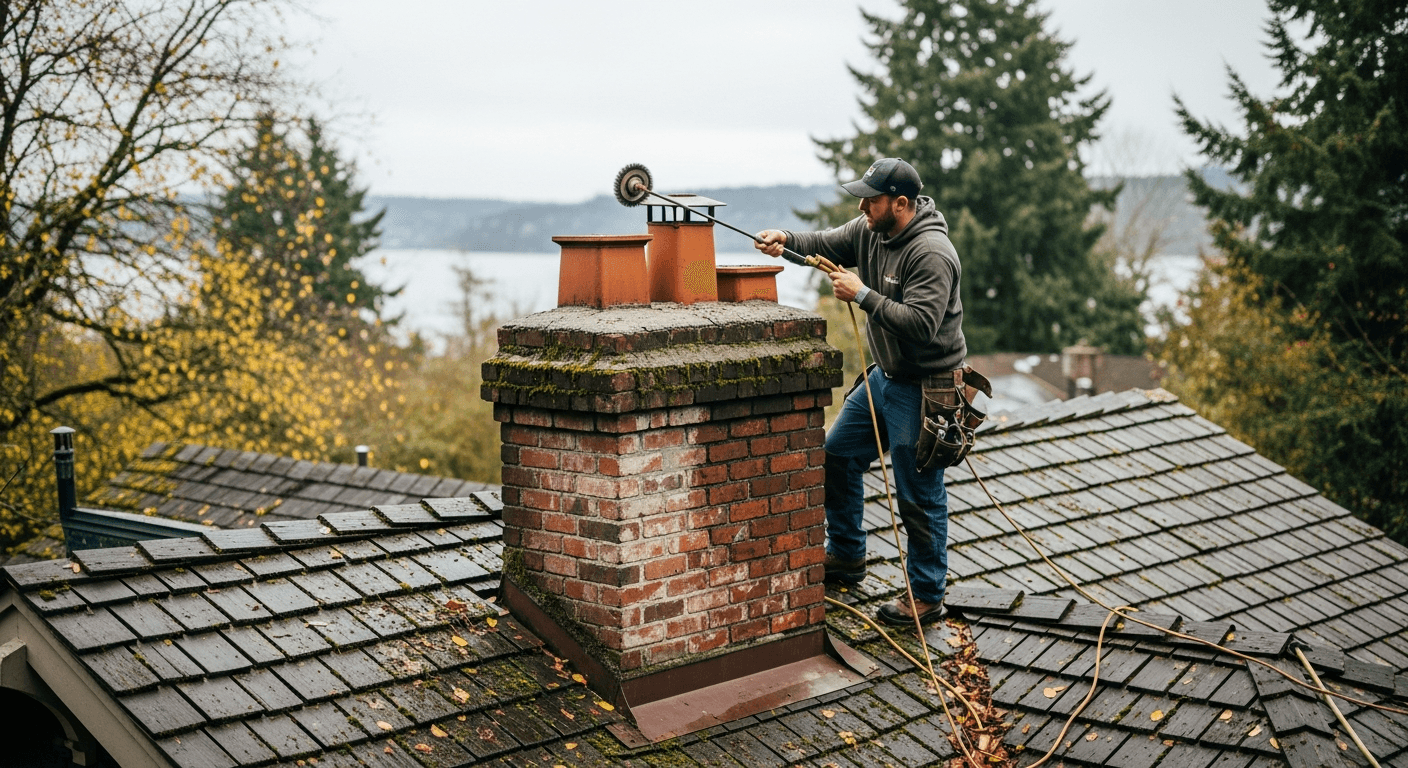
NFPA 211 requires at minimum one inspection and cleaning per year for any actively used chimney. In Tacoma, where heavier winter fireplace use and high ambient moisture accelerate both creosote buildup and liner deterioration, we recommend sweeping after every cord of wood burned or at the close of each heating season — whichever comes first. Gas chimneys require annual inspection even when sweeping frequency is lower.
Will homeowners insurance pay for chimney liner repair or replacement in Washington State?
Rarely. Standard Washington HO-3 policies cover sudden, accidental damage such as a chimney fire, lightning strike, or falling debris. Moisture deterioration and age-related cracking are maintenance exclusions. If a chimney fire caused the damage, get a written certified sweep report documenting the cause and scope before filing your claim — that report is what the adjuster will require.
What does a chimney sweep cost in Tacoma?
A standard single-flue sweep with basic visual inspection typically runs $150 to $250 in Pierce County. Adding a Level 2 camera inspection at the same appointment costs an additional $75 to $150 — money well spent if you have not had a camera run in the last few years, particularly in any pre-1940 Tacoma home with an original clay tile liner.
How much does chimney liner replacement cost in Tacoma?
A 316L stainless steel flexible liner installed on a standard 20-foot two-story Tacoma chimney typically runs $2,200 to $4,500, depending on flue diameter, insulation requirements, and access conditions. Cast-in-place poured liners run $3,500 to $6,500 for the same flue height. Obtain at least two itemized written quotes and verify that each quote specifies the correct alloy grade and wall thickness for your fuel type.
Can I use my fireplace if the chimney liner is cracked?
No. A cracked liner is a violation of NFPA 211 and an active safety hazard. Fractured tiles allow carbon monoxide and hot combustion gases to infiltrate wall cavities, and they provide a pathway for chimney-fire heat to reach combustible framing. Stop using the fireplace immediately and do not restart until a certified sweep has inspected the liner, completed any required repair or relining, and confirmed in writing that the flue is safe for use.
Related services