Most Tacoma homeowners need a Level 2 inspection — not a Level 1 — and the reason comes down to the age of the housing stock. A significant portion of Tacoma's homes were built before 1940 with clay-tile-lined masonry chimneys that crack from the inside out, invisible to any visual-only walkthrough. NFPA 211 defines three distinct inspection levels with specific triggers for each, and knowing which one applies to your situation in Stadium District, the North End, or anywhere else in Pierce County determines both what you pay and whether your fireplace is actually safe to use this winter.
The Three Inspection Levels: What NFPA 211 Actually Requires
The National Fire Protection Association's Standard 211 defines three chimney inspection levels. These are not marketing tiers or upsell categories — they are industry-recognized service definitions that specify exactly how far a technician looks and what tools must be used. Knowing the difference protects you from overpaying or, more commonly in Tacoma's older neighborhoods, accepting a surface check when your clay-tile flue liner demands a camera.
Level 1 is a visual inspection of all readily accessible portions of the chimney system: the firebox interior, damper, accessible exterior flue surfaces, and chimney crown. No camera, no specialized tools. It is appropriate when nothing about your system has changed — same appliance, same fuel type, regular use, no known problems. For a homeowner in Proctor who burns two cords of dry Douglas fir every winter in a well-maintained insert and had everything serviced last fall, a Level 1 annual checkup is defensible.
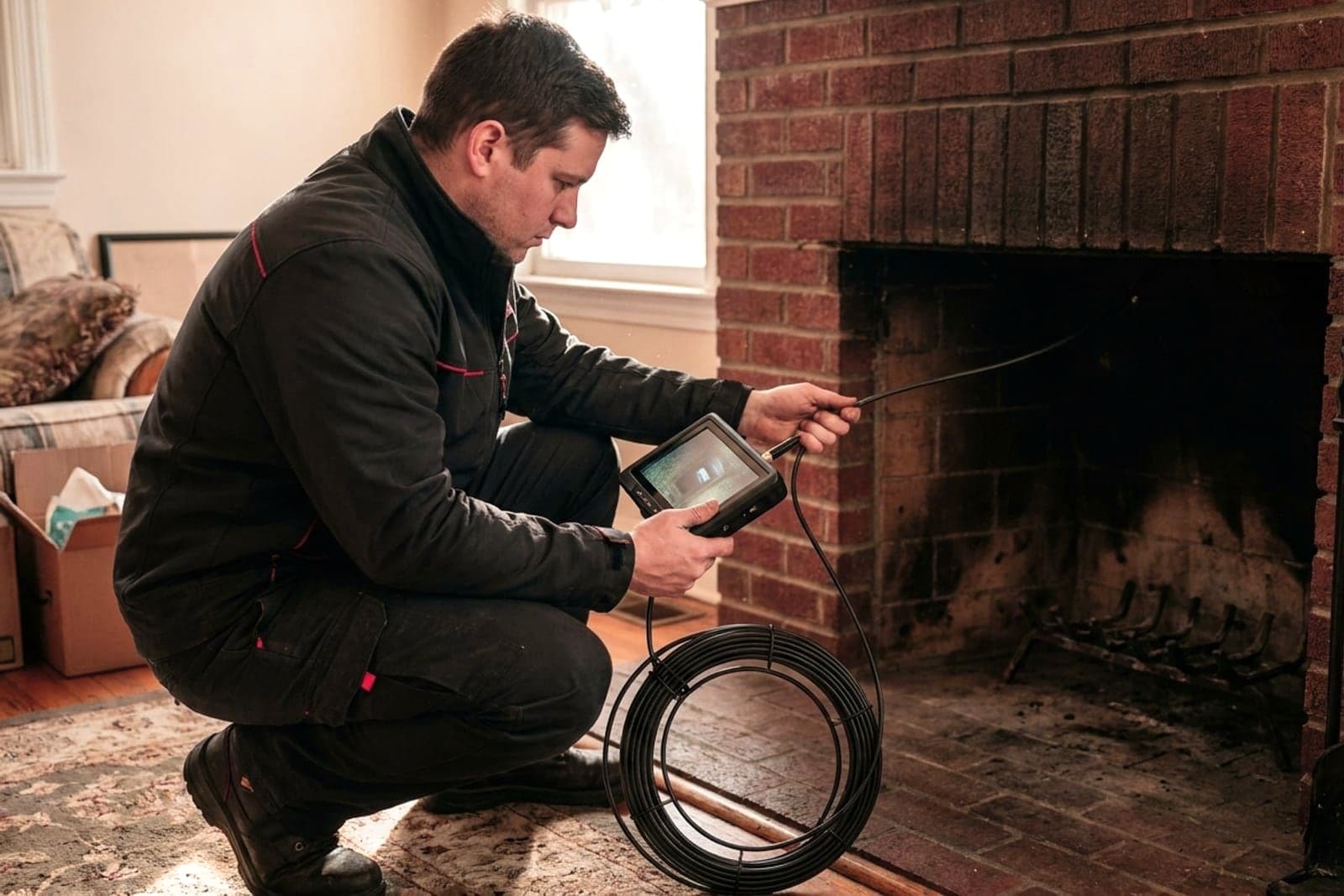
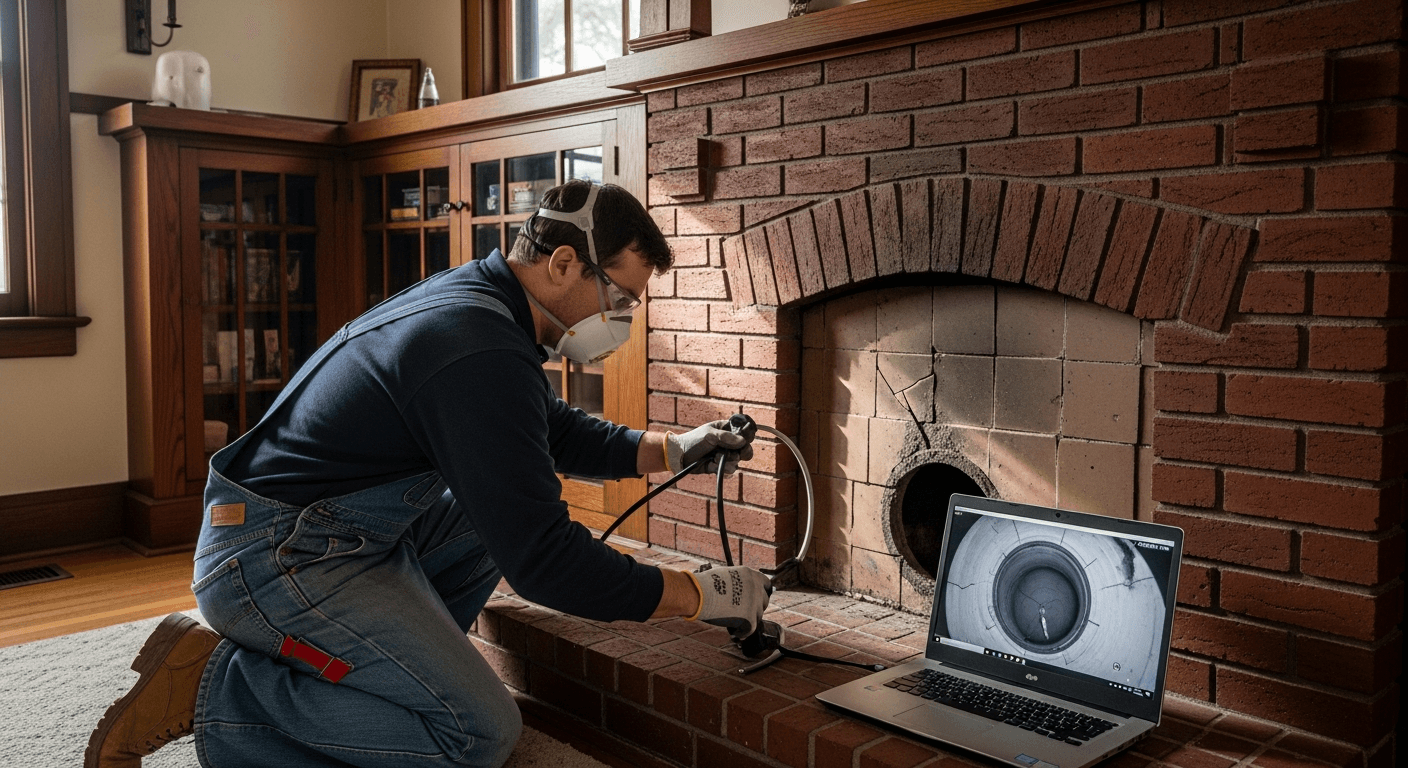
Level 2 is a video-assisted inspection covering everything in Level 1 plus the accessible portions of the attic, crawlspace, and basement where the chimney passes through the structure — and, critically, a full camera scan of the entire flue interior from firebox to cap. NFPA 211 requires a Level 2 any time a property changes hands, any time the heating appliance or fuel type changes, and after any event that may have damaged the system: a chimney fire, a hard freeze-thaw cycle, a windstorm, or a fallen tree branch. In Tacoma, where wet winters and Commencement Bay salt air accelerate mortar and clay-tile deterioration on pre-1940 chimneys, a Level 2 every two to three years is the responsible baseline — not an upsell.
Level 3 is an investigative inspection that may require removing structural components — sections of chimney masonry, wall surfaces, or ceiling material — to access areas of suspected serious damage that a camera alone cannot confirm. It is triggered only when a Level 2 produces evidence of a potentially life-threatening structural problem. The overwhelming majority of Tacoma homeowners will never need a Level 3 unless a major hidden defect is uncovered during a Level 2 scan.
What Tacoma's Older Homes Change About the Equation
A large share of Tacoma's housing stock was built between 1900 and 1940 — Craftsman bungalows in the North End and Stadium District, foursquares along North 21st Street, early colonials near McKinley Hill — and nearly all of them were built around wood or coal combustion with clay-tile flue liners. Clay tile was the engineering standard of that era. It is also brittle, it cracks under thermal shock from high-temperature fires or sudden temperature swings, and the mortar joints between tile sections break down steadily under Pierce County's wet winters and freeze-thaw cycles.
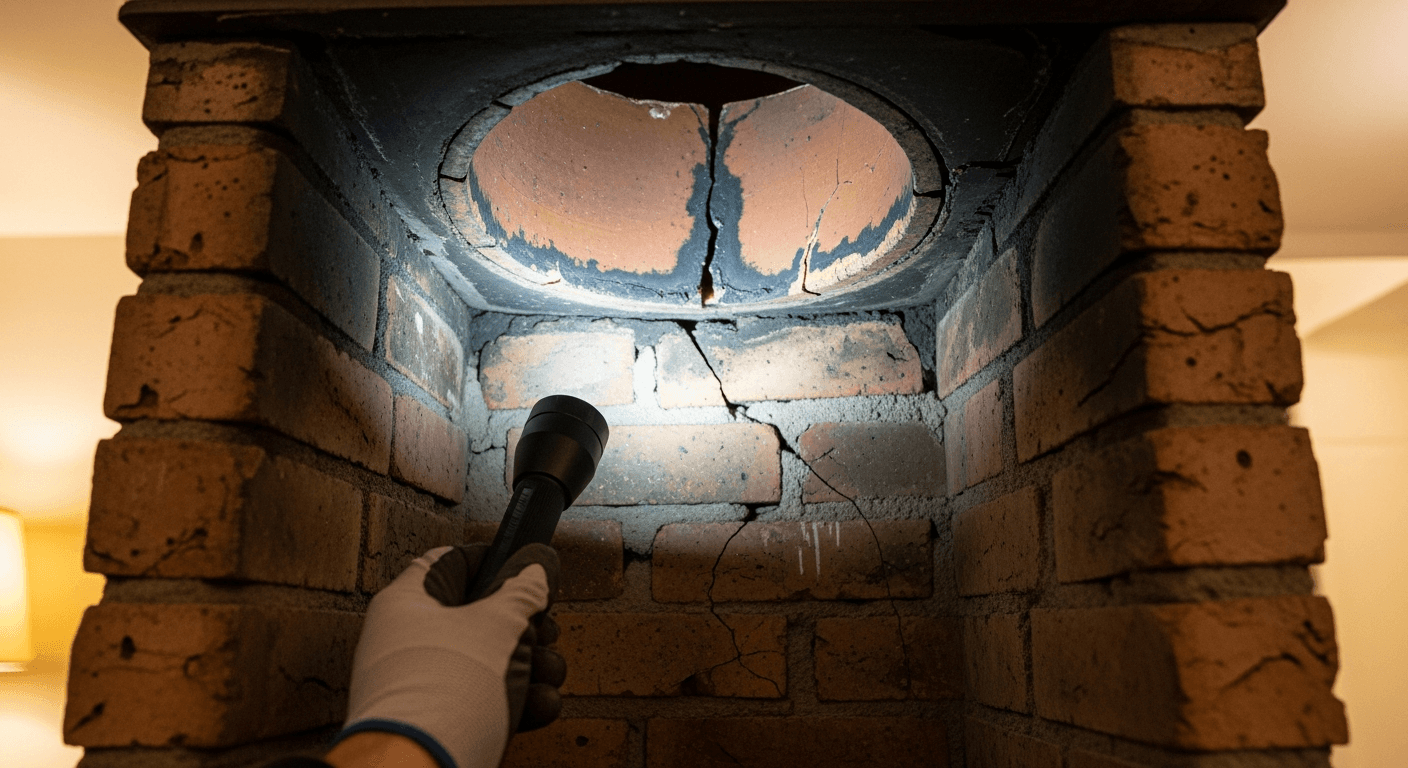
The practical consequence: a clay-tile liner that looks intact from the roofline may have cracked tile sections, open mortar joints, or a partially collapsed liner somewhere along its run that is completely invisible without a camera. Combustion gases — including carbon monoxide — migrate through those gaps into wall cavities and living spaces. This is the core reason Level 2 inspections exist, and it is specifically why homeowners in Tacoma's pre-1940 neighborhoods should not accept a visual-only inspection as sufficient.
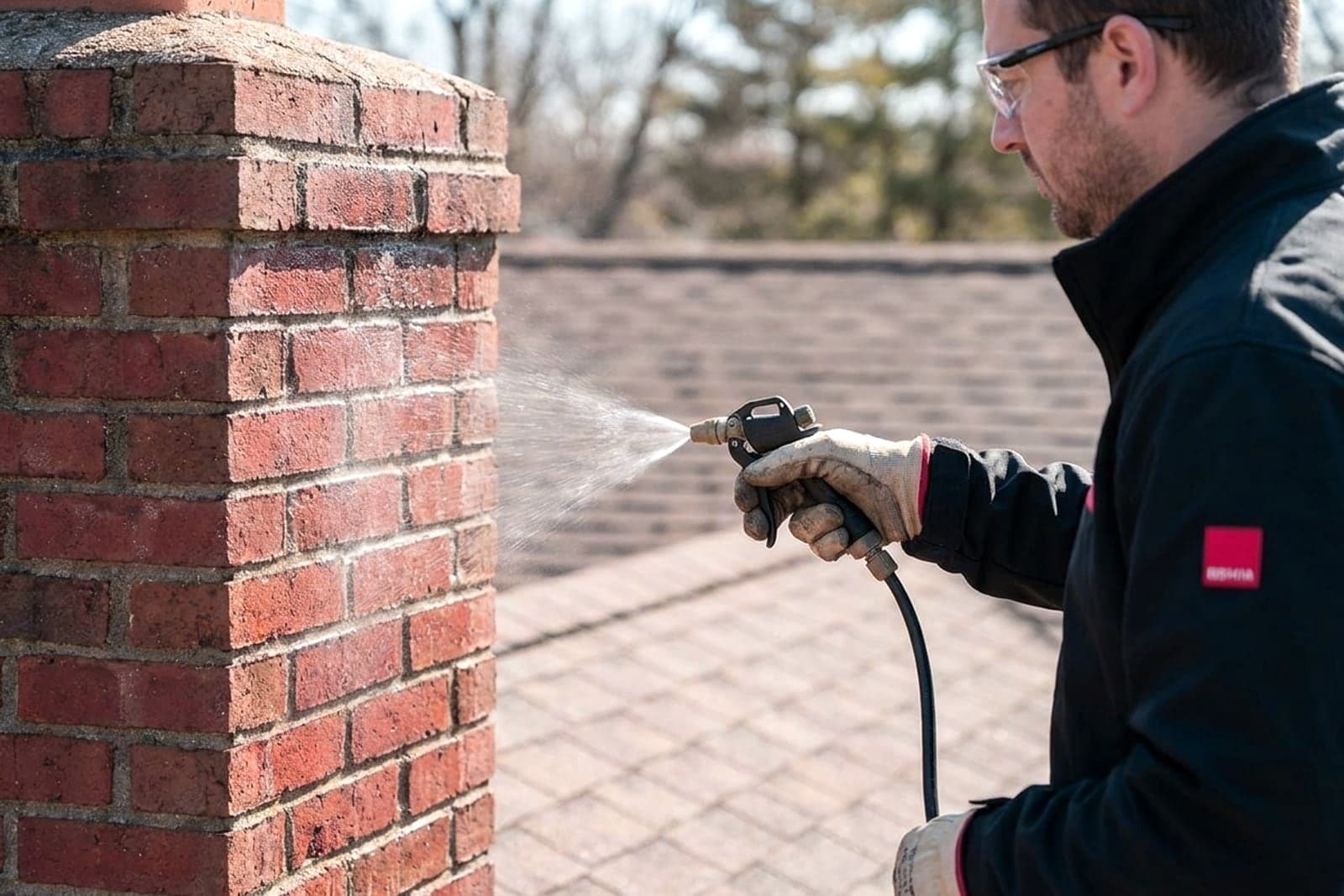
Salt air adds a compounding problem for homes within a mile or two of Commencement Bay or the Narrows. Chloride-laden moisture accelerates the spalling of brick faces and the breakdown of mortar, particularly on south- and west-facing chimney surfaces that absorb the most weather off the water. A Level 2 inspection documents that deterioration with video footage — useful for scheduling repairs on your timeline rather than reacting to a failure, and for supporting insurance conversations if storm damage is involved.
Inspection Costs in Tacoma: What to Expect by Level
Pricing in Pierce County reflects the actual labor involved. A Level 1 visual inspection on a straightforward single-flue masonry chimney takes roughly 30 to 45 minutes. A Level 2 takes longer because the technician must run a camera the full length of the flue, review footage in real time, and produce a documented findings report. Level 3 is scoped individually because demolition and reconstruction labor vary with every job.
The table above reflects realistic ranges for qualified, CSIA-certified technicians working in the Tacoma market. Be skeptical of any quote below $150 for a claimed Level 2 — if a camera scan of the full flue interior is not explicitly included in writing, it is not a Level 2 regardless of what the invoice calls it.
One practical note: many chimney companies bundle a Level 1 inspection with an annual sweep. If your system is in regular use and nothing has changed since the last service, that combination is a sensible and cost-effective single visit. If you are buying or selling a home, switching from a wood-burning fireplace to a gas insert, or dealing with any damage event, pay for a standalone Level 2 and confirm in advance that you will receive the camera footage or a written report of findings.
| Inspection Level | What Is Examined | Tools Required | Typical Tacoma Cost Range | When You Need It |
|---|---|---|---|---|
| Level 1 | Accessible firebox, damper, exterior flue surfaces, chimney crown | Flashlight, visual only | $75 – $150 | Annual check when system, fuel, and appliance are unchanged |
| Level 2 | Everything in Level 1 plus full interior flue camera scan, attic/crawlspace/basement chimney passages | Video camera system, full documentation | $200 – $400 | Home sale or purchase, appliance or fuel change, after any storm, chimney fire, or hard freeze-thaw event |
| Level 3 | Everything in Level 2 plus concealed areas requiring partial demolition to access | Camera plus structural access tools | $500 – $1,500+ | Confirmed serious structural damage discovered during a Level 2 that cannot be assessed without opening the structure |
Recognizing the Warning Signs: Symptoms and Their Likely Causes
Tacoma homeowners often notice something is wrong with their chimney before they schedule an inspection. The table below maps common observable symptoms to their most likely underlying causes, helping you understand both the urgency of the situation and which inspection level is most appropriate. A symptom that points to a structural or liner issue typically warrants a Level 2 inspection at minimum.
| Symptom You Can Observe | Most Likely Cause | Inspection Level Recommended | Urgency |
|---|---|---|---|
| Smoke entering the room during fireplace use in a Tacoma home | Blocked or damaged flue, collapsed liner section, or failed damper | Level 2 — full camera scan required | High — do not use fireplace until inspected |
| White staining (efflorescence) on exterior chimney brick | Water infiltration through mortar joints or cracked crown carrying salts to the surface | Level 2 — documents extent of moisture intrusion | Moderate — schedule before next rain season |
| Rust stains on the firebox interior or damper plate | Moisture entering the flue, often through a cracked crown or failed cap | Level 1 or Level 2 depending on extent | Moderate — inspect and repair crown before winter |
| Flakes of clay tile visible in the firebox ash | Spalling or cracked clay-tile flue liner sections shedding into the firebox | Level 2 — camera scan to assess full liner condition | High — cracked liner creates carbon monoxide and fire risk |
| Persistent smoky odor in rooms adjacent to the chimney chase | Open mortar joints or cracked liner allowing combustion gases into wall cavities | Level 2 — full flue and structural inspection | High — possible carbon monoxide pathway; inspect immediately |
| Visible mortar missing between chimney bricks on the Tacoma home's exterior | Weathering, freeze-thaw cycling, or salt-air deterioration of mortar joints | Level 1 — if no other symptoms; Level 2 if liner age is unknown | Moderate — tuckpointing should be scheduled before winter |
| Cracked or separated chimney crown visible from the ground | Thermal expansion cycling or long-term water intrusion causing crown failure | Level 2 — crown damage typically accompanies flue deterioration | High — open crown accelerates all other chimney deterioration |
A Tacoma Homeowner's Real Scenario: When a Level 1 Wasn't Enough
Consider a hypothetical but realistic situation: a homeowner in Tacoma's North End purchases a 1924 Craftsman that was inspected before closing. The pre-sale inspection is visual only — a walk-around that notes exterior brick condition and confirms the damper operates but includes no camera scan of the flue. The fireplace presents well. The brick is intact. The mortar looks serviceable from the hearth.
When a technician runs a camera through the clay-tile liner, three cracked tile sections are found in the lower third of the flue — a classic result of thermal cycling in an old liner that has never been relined. There is also a mortar joint in the second-story section that has opened wide enough to admit a finger on the interior side, completely invisible from any external vantage point. The chimney crown has a full-width hairline crack with water-staining patterns on the masonry below the flashing consistent with at least two or three seasons of moisture intrusion behind the brick.
In this scenario, the homeowner had planned to use the fireplace that first winter. Instead, a stainless steel liner installation and crown repair are completed before the first fire of the season. The Level 2 inspection — at $275 — identifies conditions that create genuine carbon monoxide and chimney fire risk in a house built almost entirely of original old-growth Douglas fir framing. This is the practical case for the service stated plainly.
When to Schedule Your Inspection in Tacoma — Timing Matters
The right window for Tacoma homeowners is August through early October. Appointment availability is highest, repair materials cure properly in late-summer temperatures, and you have time to complete any needed work before November rains and cold weather make you dependent on your fireplace. A stainless liner installation or crown repair scheduled in September is a straightforward job. The same repair scheduled in December — when the homeowner has already been using a compromised flue — is an emergency.
Do not wait until November. By then, technician schedules fill quickly, masonry repair mortars require heated tenting to cure in cold wet conditions, and specialty liner components can take one to two weeks to arrive. You may find yourself choosing between using a system that should not be used or going without fireplace heat for several weeks during the wettest part of the year.
If you moved into a Tacoma home in spring or summer and have not yet had a Level 2 inspection, schedule it before October regardless of what any previous inspection report said. If Pierce County experienced an extended hard freeze — the kind of multi-day cold snap that occasionally hits the South Sound when Arctic air pushes through the Cascades — schedule a Level 2 in spring to assess for freeze-thaw cracking before assuming the liner came through intact.
Frequently asked questions
How often does a Tacoma chimney need to be inspected?
At minimum, annually — a Level 1 if nothing about your system has changed. For Tacoma homes built before 1940 with clay-tile liners, a Level 2 camera inspection every two to three years is a more appropriate baseline given the age of the flue materials and Pierce County's wet, freeze-thaw winters. Upgrade to a Level 2 immediately after buying a home, switching fuels or appliances, or experiencing any storm, chimney fire, or structural event.
Is a chimney inspection required when buying a home in Tacoma?
Washington State does not legally require it, but NFPA 211 specifies that a Level 2 inspection is the correct standard whenever a property changes hands. A general home inspection does not include a camera scan of the flue — that requires a separate chimney inspection from a qualified technician. For any pre-1940 Tacoma home with a masonry fireplace, waiving that inspection is a significant risk.
What does a chimney inspection cost in Tacoma?
A Level 1 visual inspection runs $75 to $150 for a single-flue chimney. A Level 2 inspection with a full camera scan and documented findings runs $200 to $400 in the Tacoma and Pierce County market. Level 3 inspections involving structural access start around $500 and are scoped individually. Any Level 2 quote that does not explicitly include camera footage of the full flue interior is not a true Level 2.
Will homeowners insurance cover a chimney inspection or repairs found during one?
Routine inspections are maintenance expenses and are not covered by standard homeowners insurance policies. However, if a Level 2 inspection documents damage caused by a covered peril — a windstorm, a falling tree limb, or sudden structural collapse — the cost of those specific repairs may be claimable. The video documentation from a Level 2 inspection is the most useful evidence you can provide when initiating that conversation with your insurer.
What is the difference between a chimney sweep and a chimney inspection?
A sweep removes creosote, soot, and debris from the flue. An inspection assesses the structural and safety condition of the entire chimney system. They are distinct services that address different problems. Cleaning a flue does not reveal cracked clay tiles, open mortar joints, or a compromised liner — only a camera scan does. Reputable technicians often perform both on the same visit, but if yours does not offer to run a camera, ask specifically whether the inspection includes one.
Related services