The fire code answers half of this question and your firewood answers the other half. The national standard for chimneys calls for an inspection every year; whether that visit turns into a full cleaning depends on what has built up inside the flue since the last one. A Tacoma household that lights a few weekend fires in December and one that heats with a stove from October to April will not need the same schedule. This guide explains the baseline, the habits that shorten or lengthen it, and the signs that a flue is due before the calendar says so.
The baseline: look every year, clean when needed
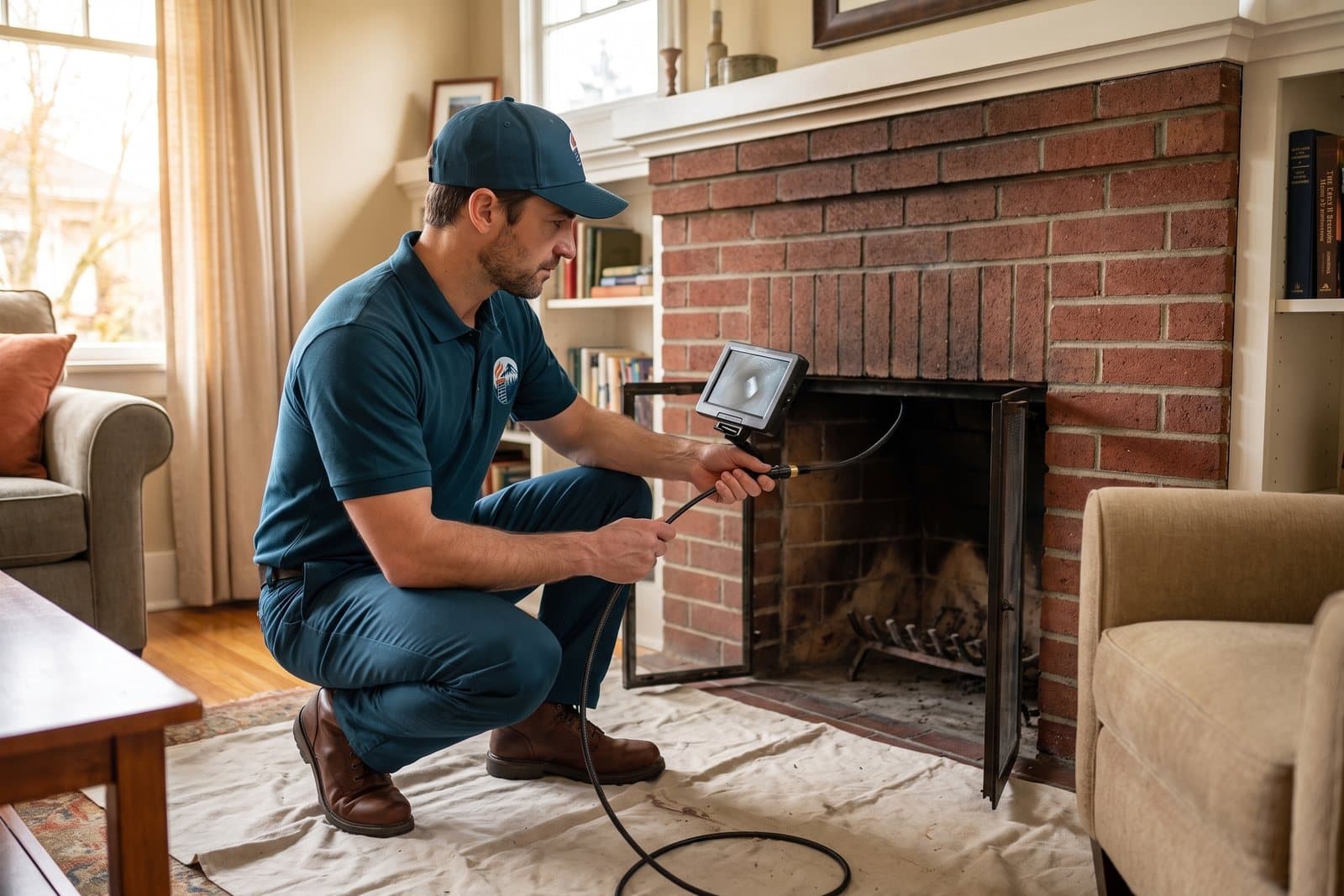
NFPA 211, the standard most chimney professionals work from, calls for chimneys, fireplaces and vents to get a yearly inspection covering three things: whether they are sound, whether they are free of deposits, and whether clearances are correct. It does not set a fixed cleaning date. Cleaning is what happens when that inspection finds soot or creosote worth removing.
In practice, most wood-burning chimneys in regular use do need cleaning on that yearly visit, which is why the two are usually booked together. The advice from Washington's State Fire Marshal matches: have a professional inspect and clean it once a year, and keep a cap on top.
What speeds up buildup
Creosote forms when smoke cools inside the flue and its tars condense on the walls. Anything that makes smoke cooler, slower or dirtier adds to it. Wet wood is the biggest factor: it spends heat boiling off water instead of burning cleanly. Local air rules already require dry, seasoned wood or manufactured logs, and following that rule also protects the flue.
Appliance and habit come next. A stove choked down for a long overnight burn produces cool, smoky exhaust. An insert pushed into a large masonry flue without a properly sized liner lets smoke slow down and cool. A chimney on an outside wall stays colder than one running up through the middle of the house. Each of these can turn a once-a-year cleaning into a twice-a-season one.
| How the chimney is used | Reasonable plan | Watch for |
|---|---|---|
| Open fireplace, occasional weekend fires | Yearly inspection; clean when deposits are found | Nests and water damage between uses |
| Stove or insert heating the house all winter | Yearly cleaning, plus a check mid-season | Fast buildup during long low burns |
| Insert in an old flue with no liner | Yearly cleaning and a liner assessment | Deposits in the oversized flue above the insert |
| Gas fireplace or furnace flue | Yearly inspection | Nests, rust, a blocked termination cap |
| Chimney not used for a year or more | Inspection before the next fire | Debris, animals, cracked tiles |
How much wood Pierce County actually burns
Relatively few homes here rely on wood. Census estimates for 2020 to 2024 count about 6,700 occupied homes in Pierce County, roughly 1.9 percent, using wood as their main heating fuel, and about 744 of those are in Tacoma. Those households run their flues far harder than a family with a decorative fireplace and should plan on cleaning at least every year.
Burn bans also shape the season. When Puget Sound Clean Air Agency calls a Stage 1 or Stage 2 ban, open fireplaces go dark, and a Stage 2 ban also stops certified stoves and pellet stoves unless the household holds an approved exemption. Some winters that means fewer fires; it does not change the need for the annual look. A flue that sat idle through a long ban period still collects rain, needles and the occasional bird, and a fire lit on top of that debris is where trouble starts.
Signs the flue is due now
Some signals override the calendar. A strong, sour smell from the fireplace on humid days, black flakes collecting on the smoke shelf or hearth, fires that are hard to start and smoke into the room, or a roaring or crackling sound from the flue during a burn all point to buildup or a draft problem. A fire in the flue is the risk. Using USFA data, the State Fire Marshal traced more than three in four home heating fires of 2024 to a chimney, flue or fuel burner.
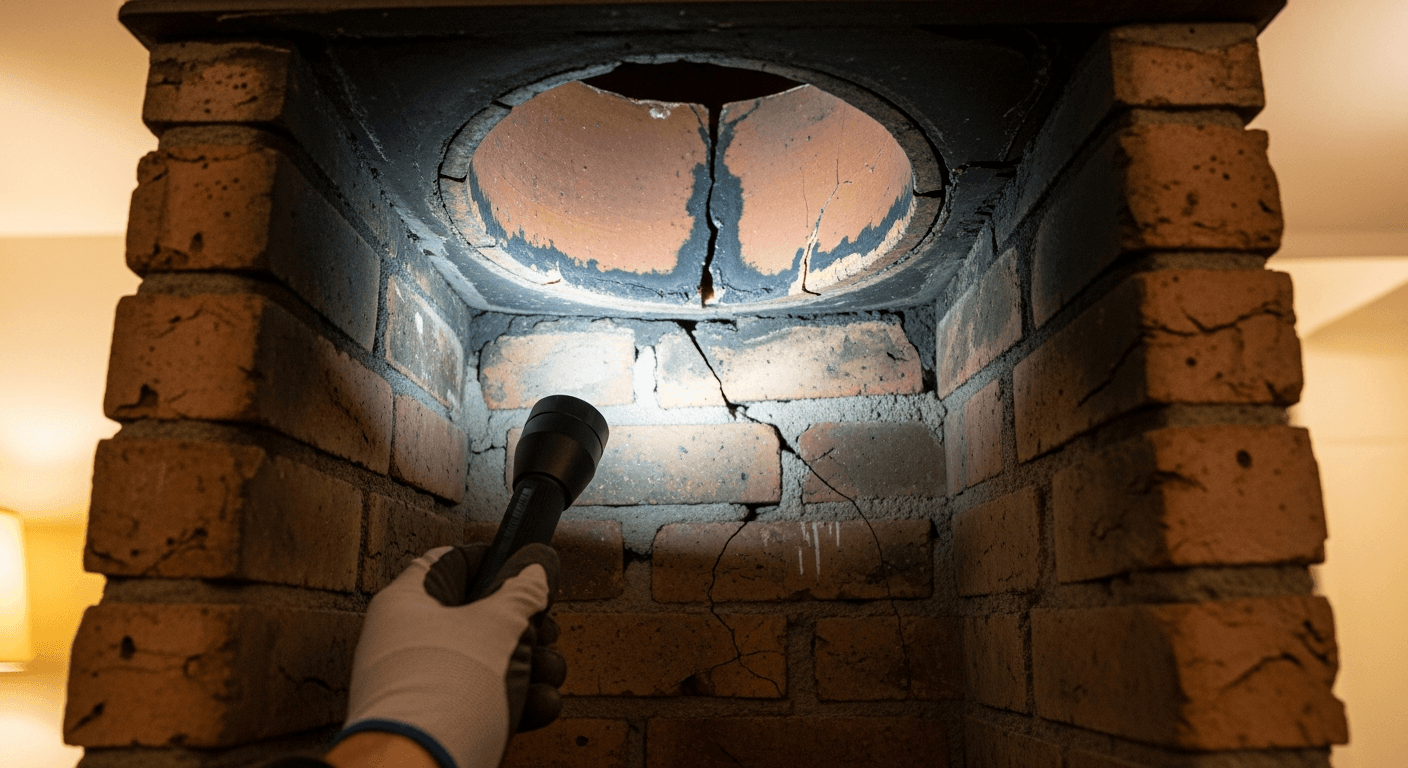
If you hear that roaring sound with a fire going, close the stove door or glass doors if you can, get everyone out and call 911. Once the fire department has cleared it, the flue needs a full inspection before anyone lights it again, because a chimney fire can crack tiles and open mortar joints that are invisible from the room.
Timing the visit around Tacoma weather
WeatherSpark's wetter season in Tacoma begins around October 10 and lasts roughly 6.7 months. Booking in August or September means the roof is dry for the technician, the flue is not holding a summer of humidity, and anything the inspection turns up can be repaired before steady rain.
Our chimney sweep is $189 to $449, including a Level 1 inspection; hard access or a steep roof puts a job at the top. A separate inspection without cleaning is $99 plus tax and is subtracted from any quoted work you choose to go ahead with. Our cost page lists the other services.
Frequently asked questions
If I only light a few fires a year, can I skip the sweep?
You can often skip the cleaning, but not the yearly look. A lightly used flue may have almost no deposits and still hold a nest, fallen tile or water damage from the wet months.
Does a certified wood stove need cleaning less often?
It usually builds up less than an old uncertified stove burning the same wood, but a stove turned down low for long overnight burns can still coat its flue quickly. Deposits, not the label, set the interval.
Should a gas fireplace flue be checked every year too?
NFPA 211 applies its annual inspection to chimneys, fireplaces and vents generally. Gas flues rarely need sweeping, but nests, rust and a displaced cap are still found on those visits.
What time of year is best to book?
Late summer. The flue is dry, the weather suits roof work, and any repair has time to be done before the wet season and the first cold nights arrive in October.
Sources
- CSIA — Homeowner Resources — accessed September 24, 2026
- WA State Fire Marshal — Home heating safety — accessed September 24, 2026
- PSCAA — Legal Overview — accessed September 24, 2026
- Census Reporter — ACS heating fuel — accessed September 24, 2026
- PSCAA — About Air Quality Burn Bans — accessed September 24, 2026
- WeatherSpark — Tacoma climate — accessed September 24, 2026
Related services