Yes — if your liner is cracked, missing, or original clay tile from before World War II, you need a new liner before you light another fire. For most Tacoma homeowners, a stainless-steel flex liner installed in a single day runs $1,500 to $4,500; a full cast-in-place liner for a structurally compromised masonry flue lands between $3,500 and $7,000. Tacoma's stock of century-old Craftsman and foursquare homes in the North End, Proctor District, and Hilltop neighborhoods carries the highest concentration of original clay-tile flues in Pierce County — liners that were never engineered to survive 100 wet winters, repeated freeze-thaw cycles, and, for waterfront properties in Ruston and Old Town, steady salt-air exposure. Choosing the right liner is the single most consequential safety decision you will make about your chimney.
Why do Tacoma chimneys need relining more often than homes in drier climates?
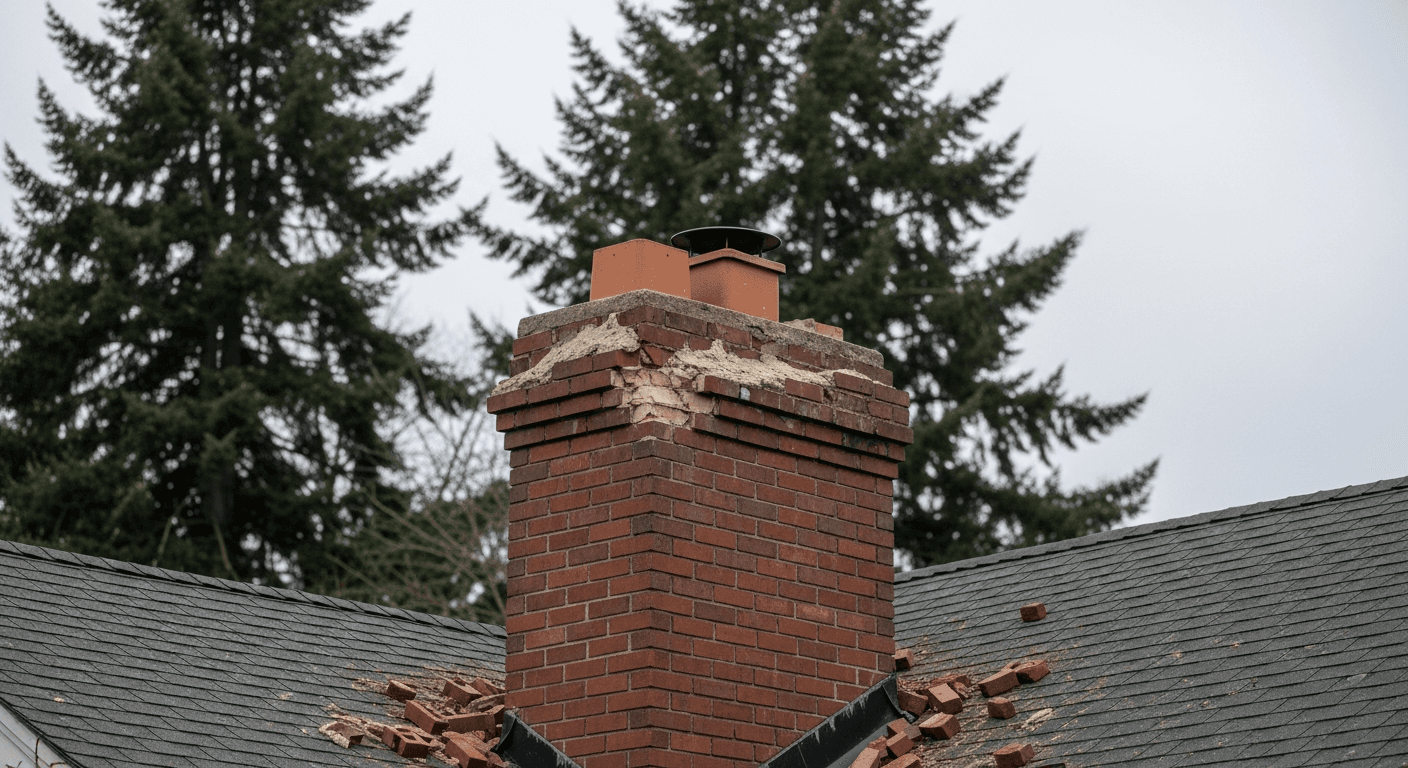
Tacoma averages approximately 38 inches of rainfall per year, and Pierce County's freeze-thaw cycles — typically running from November through March — are punishing on clay tile. Rainwater infiltrates hairline cracks in the tile glaze, freezes, expands by roughly nine percent, and fractures the tile from the inside. Repeat that process across 80 or 100 winters — a realistic age for North End and Proctor District homes — and you end up with a flue that appears intact from the firebox but is fractured and gap-ridden in the middle sections where no one can see without a camera.
Salt air intensifies the problem for homes in Ruston, the Old Town waterfront corridor, and Point Defiance-adjacent blocks. Sodium chloride accelerates the chemical breakdown of the mortar joints between tile sections. We routinely pull liner tiles from those neighborhoods that have lost 30 to 50 percent of their original wall thickness — enough loss to make the liner structurally non-functional even where it appears uncracked.
A deteriorated liner is not merely an efficiency issue. Combustion gases, sparks, and sustained heat can escape through liner gaps into the wood framing that surrounds most Tacoma masonry chimneys. NFPA 211 and Tacoma Fire Department guidelines both require a continuous, intact liner rated for the connected appliance. If your liner fails a Level 2 camera inspection, relining is not discretionary.
What are the main chimney liner options and what does each one cost in Tacoma?
Three relining approaches are practical for Tacoma homes: stainless-steel flex liner, rigid stainless sections, and cast-in-place (poured) liner. The right choice depends on your appliance type, the condition and geometry of your existing flue, and your budget.
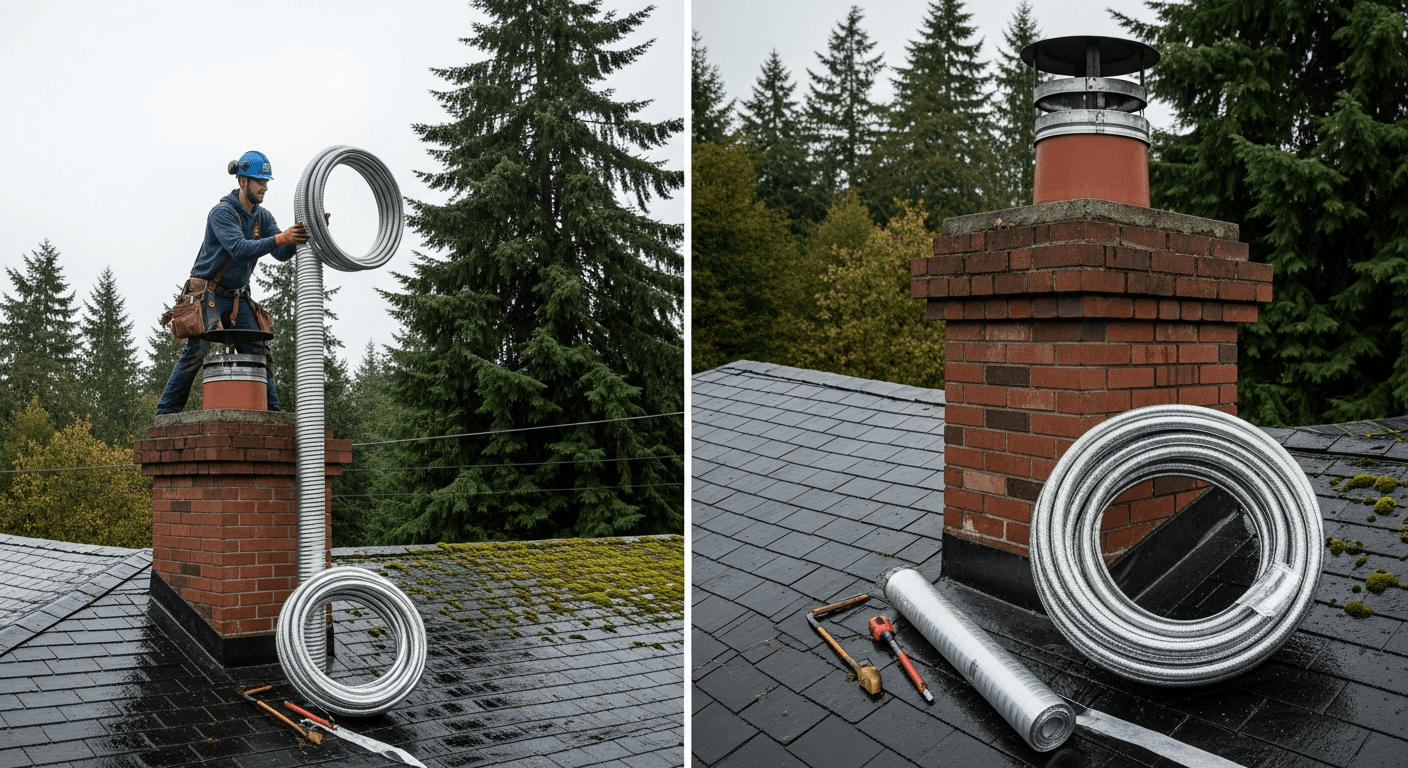
Stainless-steel flex liner is the option we install most often in Tacoma. A continuous corrugated tube is fed down from the chimney crown, connected to the appliance collar at the firebox, and capped at the top with a new stainless crown cap. Because flex liner negotiates offsets — a common feature in pre-1940 Tacoma masonry chimneys that were built before standardized flue geometry — it fits situations where rigid sections simply cannot go. Specify 304-series alloy for gas appliances and 316Ti for wood-burning and oil appliances; the alloy distinction matters for both safety and warranty validity.
Rigid stainless sections are the better choice when the flue runs straight and the homeowner is installing a high-efficiency insert that demands maximum draft consistency. The smoother interior surface produces less turbulence than corrugated flex, which improves draw — particularly valuable during Tacoma's cold, damp shoulder-season months when a cold flue is slow to establish a draft. Labor costs slightly more because fitting and locking interlocking sections inside a masonry chase is slower than feeding a flex tube.
Cast-in-place liner — also called a poured liner — is the correct solution when the existing masonry is so deteriorated that it needs structural reinforcement, not just a new insert. A technician pumps a castable insulating mixture into the flue around an inflatable form. The material bonds to the surrounding masonry, cures into a seamless, code-compliant flue, and effectively rebuilds the chimney from the inside. It costs more and takes longer, but it is the only option that also stabilizes a masonry structure that has lost integrity.
| Liner Type | Best For | Typical Tacoma Cost | Installation Time | Warranty (typical) |
|---|---|---|---|---|
| Stainless flex liner (316Ti) | Offset flues, older Craftsman chimneys, wood or oil appliances | $1,500 – $3,200 | 4 – 8 hours (1 day) | 15–25 years on liner |
| Stainless flex liner (304) | Straight or offset flues, gas appliances and inserts | $1,400 – $2,800 | 4 – 8 hours (1 day) | 15–25 years on liner |
| Rigid stainless sections | Straight flues, high-efficiency inserts, maximum draft | $2,200 – $4,500 | 6 – 10 hours (1 day) | 15–25 years on liner |
| Cast-in-place (poured) liner | Severely deteriorated masonry, structural reinforcement needed | $3,500 – $7,000 | 1 – 3 days plus cure time | 50 years on liner |
| Partial clay tile replacement | Localized damage in otherwise sound, accessible flue sections | $800 – $2,500 | Half day to 2 days | Varies by tile and mortar |
| HeatShield / ceramic flue sealant | Minor hairline cracks, pre-emptive sealing on sound flues | $1,000 – $2,800 | 1 – 2 days | 20 years typical |
Real Tacoma homeowner scenario: the 1912 North End Craftsman with a hidden liner failure
A homeowner in Tacoma's North End contacted us after purchasing a 1912 Craftsman bungalow. The general home inspection had noted the chimney as 'functional but older' — language that describes almost every pre-war masonry chimney in the neighborhood and reveals nothing about liner condition. The new owners wanted to use the original wood-burning fireplace before November.
We conducted a Level 2 inspection, which included a full camera scan of the flue from the firebox to the crown. Approximately eight feet above the firebox we found a three-inch horizontal crack spanning two adjacent clay tiles, plus a failed mortar joint that had been re-pointed at some point using standard Portland cement — a common but incorrect repair material that shrinks away from tile as it cures and reopens the gap within a few seasons. Combustion gases from a wood fire would have been able to escape directly into the wall framing cavity at that location.
The masonry structure above the cracked section was sound, and the chimney had no offset, so a stainless flex liner was the correct and most cost-effective fix. We installed a six-inch 316Ti liner in a single day, wrapped it with UL-listed insulation to meet current thermal efficiency requirements, and connected it to the firebox with a proper cast-iron adapter plate and smoke-chamber parging. A new stainless cap completed the job. Total cost: $2,650. The homeowners had a fully operational, code-compliant fireplace before Tacoma's first sustained October rainfall — which, in this city, does not leave much margin for delay.
How do you know if your Tacoma chimney needs a full reline or just a repair?
A Level 2 chimney inspection with a camera is the only definitive answer. Visual checks from the firebox opening or from the rooftop miss the middle sections of the flue, which is precisely where most liner damage occurs. NFPA 211 mandates a Level 2 inspection any time you change or replace a heating appliance, sell or buy a home, or have experienced a chimney fire — and Pierce County home sales routinely surface liner failures that went undetected for years.
Four conditions strongly suggest relining rather than patching: white efflorescence streaking on exterior masonry above the firebox line (moisture is migrating outward through liner gaps); persistent smoke odor inside the house even when draft appears normal; visible tile fragments dropping into the firebox; or a documented prior chimney fire. Two or more of these signs together mean you should budget for a liner replacement, not a patch.
Partial repairs — replacing individual tiles or applying a ceramic sealant product — are appropriate only when damage is localized and the surrounding liner is confirmed sound by camera scan. Relining a flue that needed only a targeted repair wastes money. Patching a flue that needed full replacement creates a fire hazard. After the camera scan, we will tell you plainly which situation you are in.
Scheduling matters in Tacoma: book your inspection and any relining work in July or August. Demand from homeowners who waited for summer spikes sharply in September and October, and by the time the first sustained rains arrive, appointment slots are weeks out. Summer scheduling means faster turnaround and more flexibility on installation dates.
What should Tacoma homeowners ask before hiring a chimney relining contractor?
First, confirm whether the contractor will pull a City of Tacoma building permit. Relining work connected to a new or replacement appliance installation typically requires a permit under Tacoma Municipal Code and Pierce County building standards. An unpermitted installation can complicate resale disclosures and may give your homeowner's insurance carrier grounds to deny a fire-damage claim.
Second, ask specifically which liner alloy they are specifying and what its continuous-use temperature rating is. A 304-series liner is appropriate for gas appliances but is not rated for the sustained high-flue temperatures produced by wood-burning or oil appliances. For wood and oil, the liner must be 316Ti or a manufacturer-listed equivalent rated to at least 1,700°F for continuous operation and 2,100°F for a chimney-fire event. This is not a detail a reputable contractor will be vague about.
Third, ask about insulation wrap. Liner manufacturers and current building codes require an insulating wrap or granular insulating fill around flex liner installed inside a masonry flue. Skipping insulation is a common cost-cutting shortcut that reduces flue temperatures in cold weather — a serious problem in Tacoma's damp winters, when a cold flue struggles to establish draft and is prone to condensation-driven creosote buildup.
Finally, get the liner manufacturer's warranty documentation in writing before work begins — not just the installer's labor warranty. A quality stainless liner should carry a 15- to 25-year manufacturer warranty; a cast-in-place liner should carry 50 years. If a contractor cannot tell you the brand and model number of the liner they plan to install, treat that as a disqualifying answer.
Frequently asked questions
How long does chimney liner installation take in Tacoma?
A stainless flex liner installation typically takes four to eight hours — one working day. Rigid stainless sections run six to ten hours. Cast-in-place (poured) liners require one to three days for installation plus additional cure time before the flue can be used. In most cases, you are operational within a week of your scheduled appointment.
Does Tacoma require a permit for chimney relining?
A permit is required when relining is part of a new or replacement appliance installation. Replacement-in-kind liner work on an unchanged appliance may not require one, but requirements can vary by project scope. Confirm with City of Tacoma Permits and Development Services before work starts. Your contractor should be able to identify the requirement and pull the permit on your behalf.
Will homeowner's insurance cover chimney relining?
Only if the liner damage resulted from a covered sudden event — a chimney fire, lightning strike, or similar occurrence. Gradual deterioration from age, moisture, and freeze-thaw cycling — which accounts for the overwhelming majority of clay-tile liner failures in Tacoma — is classified as deferred maintenance and is not covered. Review your specific policy language and ask your insurer directly.
Can I use my fireplace with a cracked chimney liner?
No. A cracked liner allows combustion gases, embers, and sustained heat to reach the wood framing surrounding the chimney, which is a direct fire risk. Do not operate any wood-burning or gas appliance connected to a liner that has failed inspection. The fireplace must stay out of service until the liner has been repaired or replaced and cleared.
What size liner does my Tacoma fireplace need?
Liner diameter is determined by your appliance's flue collar size and the chimney's total height. Most wood-burning fireplaces require a six-inch or eight-inch liner; gas inserts typically use a four-inch or six-inch liner. Sizing must be calculated correctly — an undersized liner restricts draft and increases carbon monoxide risk; an oversized liner runs too cool, causing condensation and accelerated creosote accumulation. A technician will confirm the correct size during the inspection.
Related services