Failed chimney flashing causes more than 80 percent of chimney-area leaks we diagnose in Tacoma — not a cracked crown, not the brick itself. Tacoma's 38-plus inches of annual rainfall, combined with salt air off Commencement Bay and the Narrows, corrodes flashing metal faster than anywhere inland in Washington, and once water finds that joint it moves into your framing and drywall within one or two wet seasons. The good news: a properly executed flashing repair or replacement stops the damage entirely, and catching it early keeps the job under a thousand dollars.
What chimney flashing actually is — and why Tacoma's climate destroys it
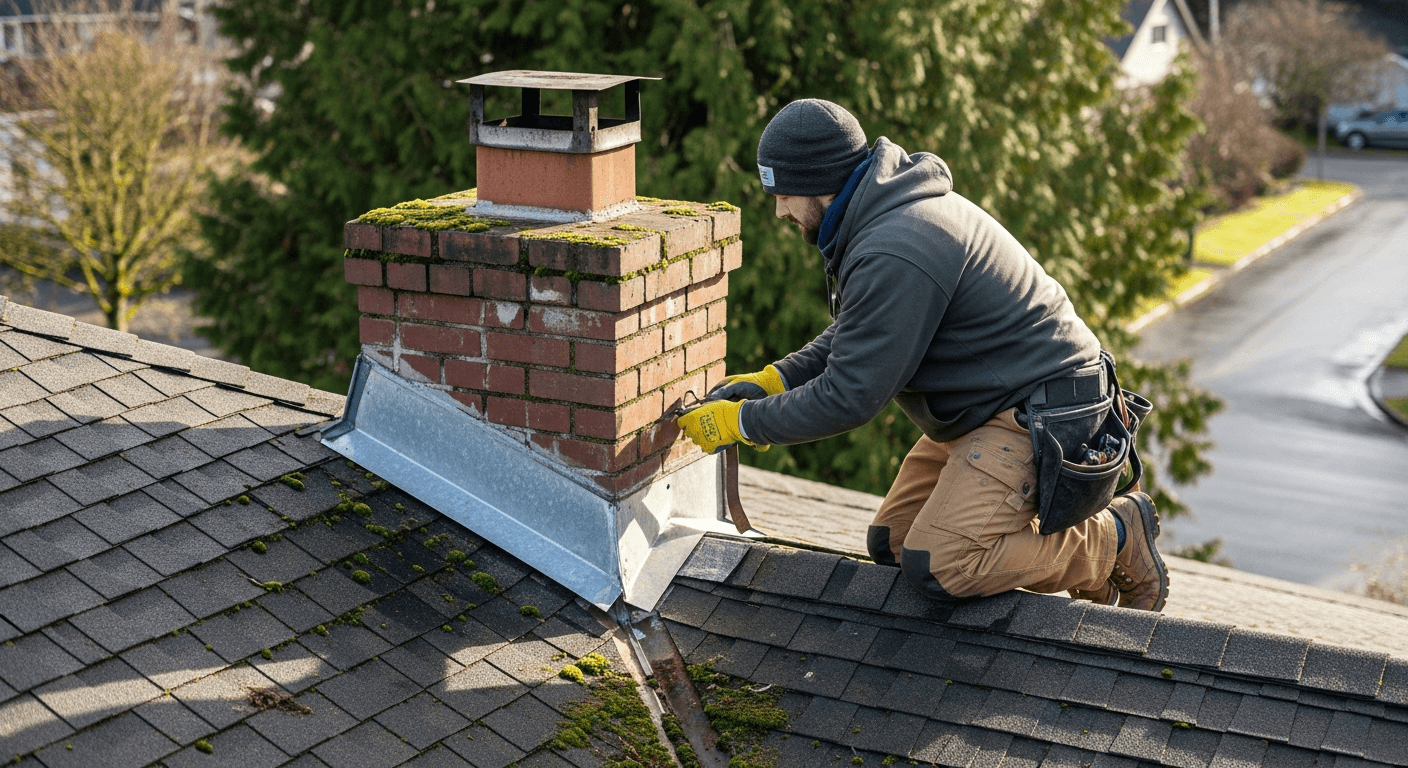
Flashing is the metal seal where your chimney penetrates the roof plane. It has two interlocking parts: step flashing, which weaves between individual shingles along the chimney's sides, and counter flashing (also called cap flashing), which is embedded into the chimney's mortar joints and laps down over the step flashing. The overlap is what sheds water — neither layer alone is watertight.
From October through April, Tacoma delivers rain on roughly two out of every three days. That constant wetting and drying cycles the masonry and roof deck at different rates, gradually working the counter flashing loose from its mortar pocket. Salt air off Commencement Bay and the Narrows compounds the problem by accelerating oxidation: galvanized steel flashing that might last 20 years in eastern Washington typically shows serious corrosion at 10 to 12 years in Tacoma neighborhoods closest to the water, including North End, Stadium District, and the Waterfront District.
Thousands of Craftsman and early-twentieth-century homes in Tacoma's North End, Proctor, and Stadium District were built with lead or galvanized steel flashing that is now 60 to 100 years old — well past any reasonable service life. If your home predates 1970 and has never had documented flashing work, treat inspection as urgent, not optional.
How to tell if flashing is the source of your chimney leak
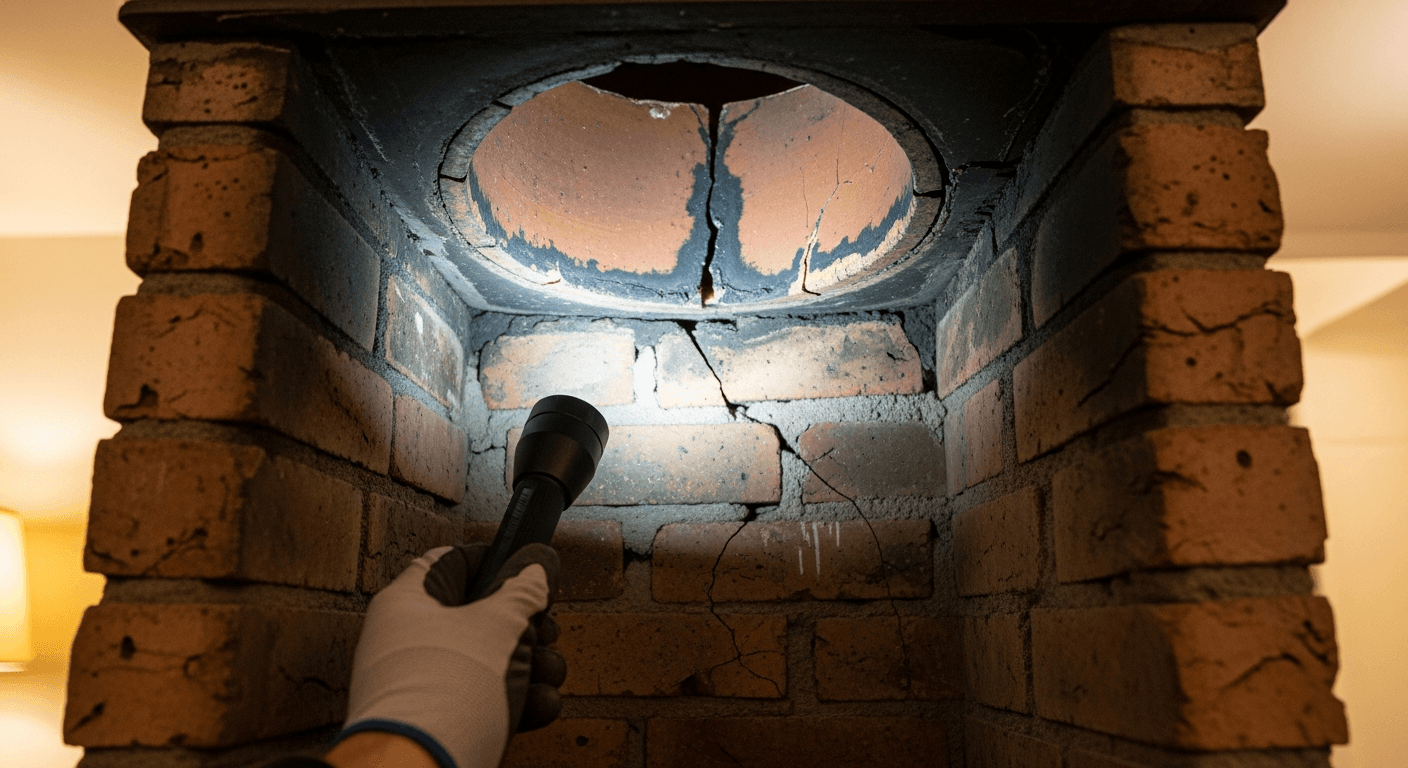
The most reliable indicator is a water stain on the ceiling or interior wall surface immediately adjacent to the chimney, appearing in late October or after the first sustained rain of the season. You may also find rust-colored streaks on the firebox floor, white efflorescence on interior masonry, or wet attic framing directly around the chimney stack — all pointing to the same flashing joint.
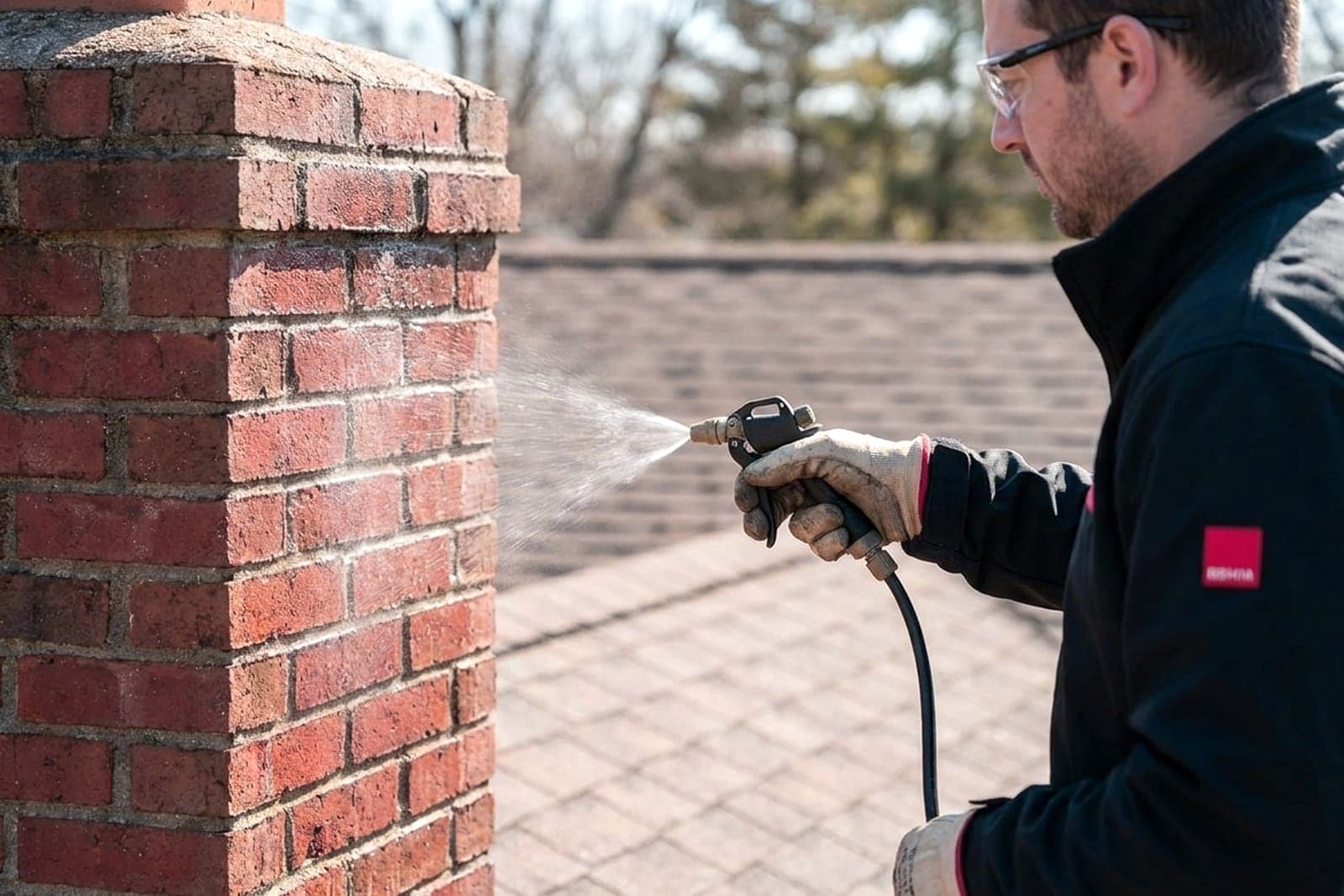
A low-tech field test: on a dry day, have someone run a garden hose slowly over the chimney-to-roof joint at the base of the chimney while you watch from inside the attic with a flashlight. Water appearing within 60 to 90 seconds of wetting that specific joint confirms flashing involvement. If water only appears when you wet the chimney crown or cap, the failure is higher up.
A common source of confusion for Tacoma homeowners: the flashing can look intact from the ground or even from a quick rooftop glance. The actual failure is usually the caulk or roofing cement sealing the counter flashing into the mortar joint — it dries and cracks after two or three seasons — or a mortar joint that has softened enough to let water wick behind the metal. Neither failure is visible without getting on the roof and physically probing the joint with a putty knife or probe.
Recognizing the symptom: what each warning sign points to
Different leak symptoms in a Tacoma home often point to different parts of the chimney system. Understanding which symptom corresponds to which likely cause helps homeowners describe the problem accurately and helps technicians prioritize where to inspect first. The table below maps common warning signs to their most probable source — keeping in mind that a definitive diagnosis always requires hands-on roof inspection.
| Warning Sign | Most Likely Cause | Where to Inspect First |
|---|---|---|
| Ceiling stain adjacent to chimney, appearing each November | Counter flashing pulled free of mortar joint | Counter flashing mortar pocket on north- or west-facing chimney side |
| Rust-colored streaks on firebox floor | Step flashing corrosion allowing water to track down chimney interior | Step flashing along chimney sides at roof plane |
| White efflorescence (salt deposits) on interior masonry | Water wicking through brick behind failed flashing or crown | Flashing joint and chimney crown for cracks or gaps |
| Wet attic framing directly around chimney stack | Counter flashing separation letting water enter wall assembly | Counter flashing lap and mortar joint at roof deck level |
| Water stain only after sustained heavy rain, not light drizzle | Clogged gutters backing water into chimney-to-roof joint | Gutter condition and flashing base where roof meets chimney |
| Leak recurs annually after roofing-cement patch | Roofing cement bridging over flashing rather than sealing beneath it | Full counter flashing and mortar joint condition |
| Damp smell from fireplace without visible staining | Early-stage flashing gap allowing slow infiltration into framing | Attic framing and flashing joint — probe mortar with putty knife |
What chimney flashing repair costs in Tacoma — a realistic price breakdown
Flashing repair costs in Tacoma are driven by three variables: how much metal needs replacement versus re-sealing, your roof's pitch and the chimney's height above the ridge, and the flashing material selected. Re-sealing with a polyurethane or elastomeric caulk and resetting lifted counter flashing into fresh mortar is the lower-cost path when the metal is still structurally intact. Full replacement means pulling the old flashing, installing new interwoven step flashing and embedded counter flashing, and repointing the mortar joints where the counter flashing seats.
For Tacoma's older masonry chimneys, stainless steel or copper flashing is the correct long-term choice over galvanized or aluminum. In our salt-air environment, galvanized flashing has a realistic service life of 12 to 18 years; stainless steel runs 30 to 40 years; copper is effectively indefinite. On a pre-1940 Craftsman where you are already dealing with original brick and softened mortar, spending an extra two to four hundred dollars on stainless steel eliminates the need to revisit the job within your ownership of the home.
The table below reflects verified Tacoma-area pricing as of 2025. Costs increase on steep roofs (above 8:12 pitch) and when masonry repointing is required at the flashing line — a frequent finding on chimneys built before 1960.
| Service | Typical Tacoma Price Range | Notes |
|---|---|---|
| Re-seal existing flashing (elastomeric caulk + mortar reset) | $150 – $350 | Only appropriate when metal has no rust-through or physical separation |
| Partial flashing replacement (one side or corner) | $350 – $650 | Common on north-facing chimney sides that stay wet longest |
| Full step and counter flashing replacement — galvanized steel | $600 – $1,100 | 12–18 yr realistic lifespan in Tacoma salt-air environment |
| Full step and counter flashing replacement — stainless steel | $900 – $1,500 | Recommended for pre-1960 masonry; 30–40 yr lifespan |
| Full step and counter flashing replacement — copper | $1,200 – $2,000 | Premium option; indefinite lifespan, develops protective patina |
| Flashing repair + chimney crown seal (combined visit) | $700 – $1,600 | Saves one mobilization cost when both issues are present |
| Emergency leak patch (temporary) | $100 – $250 | Stops active intrusion only; not a substitute for proper repair |
A real Tacoma scenario: a North End homeowner and a ceiling stain that kept coming back
A homeowner in Tacoma's North End called us after two years of recurring brown water stains on their second-floor bedroom ceiling — immediately beside the chimney stack. A roofer had patched the chimney base with roofing cement on two separate occasions. Each time the stain dried out. Each November it came back, slightly larger.
On the roof, the problem was straightforward to identify. The roofing cement patches had bridged over the counter flashing rather than sealing beneath it, trapping water against the masonry instead of shedding it. The underlying galvanized counter flashing had pulled completely free of the mortar joint on the north-facing side — the side that receives the most direct rain and dries last through Tacoma's winters. Water was running behind the metal and down into the wall assembly, bypassing every exterior patch.
The home was a 1928 Craftsman with original brick, and the mortar joints at the flashing line had deteriorated to the point where they needed repointing before new counter flashing could be properly embedded. We replaced the full step and counter flashing set in stainless steel, repointed the affected mortar joints, and applied a breathable penetrating sealer to the chimney face. The job ran one full day. The homeowner reported zero water intrusion through the subsequent two winters. The core lesson: roofing cement applied from outside cannot seal a failure that originates at the masonry joint.
When to repair versus when to replace flashing entirely
Re-sealing makes sense when the metal shows no rust-through, no pinholes, and no sections physically separated from the masonry by more than a quarter inch, and when the surrounding mortar joints are firm. A properly done elastomeric sealant reset on flashing installed within the last 10 to 12 years can extend service life by five or more years at a fraction of replacement cost.
Full replacement is the right call when any section shows rust-through or pinholes, when the counter flashing has physically separated from the masonry, when concurrent masonry repointing is already needed (new flashing must seat in sound mortar, not crumbling joints), or when the original installation was substandard — no step flashing, flashing nailed directly to the chimney face rather than embedded in mortar, or sections of the chimney perimeter left unsealed. Both substandard installation and premature failure are common findings on Tacoma homes built before 1960.
A practical rule: if a re-seal repair has already been attempted once and the leak returned the following wet season, stop patching and replace. In Tacoma's climate a second patch rarely lasts a full year, and the labor cost of two repair visits often approaches or exceeds the cost of a clean replacement that eliminates the problem entirely.
How to prevent chimney leaks before they start — what Tacoma homeowners can do
The highest-value preventive step is a rooftop flashing inspection every three years — not a visual check from the ground, but a hands-on assessment where a technician probes the mortar joints at the counter flashing line and checks for early corrosion or lifting. Most Tacoma homeowners discover flashing problems only after a ceiling stain appears, at which point there is often interior water damage to remediate on top of the flashing repair itself.
Keep gutters clean, particularly on homes under the dense tree canopy common in Proctor, North End, and South Tacoma neighborhoods. Clogged gutters back water up onto the roof surface and can drive it laterally into the chimney-to-roof joint under sustained heavy rain. Good gutter maintenance does not replace sound flashing, but it meaningfully reduces the hydraulic pressure that flashing has to manage through the November-through-March peak rain period.
North-facing chimneys and those shaded by mature firs or cedars stay wet longer between storms, accelerating mortar deterioration at the counter flashing line. Applying a breathable penetrating masonry sealer — not a surface paint, which traps moisture — to the chimney body every eight to ten years reduces water absorption into the brick and slows the freeze-thaw cycling that loosens mortar. At $150 to $300 applied during an inspection visit, it is the lowest-cost intervention that measurably extends both masonry and flashing service life.
Frequently asked questions
How often should chimney flashing be inspected in Tacoma?
Chimney flashing in Tacoma should be inspected every three years at minimum, and after any windstorm that moves debris across the roof. Tacoma's wet season runs roughly October through April, so the ideal inspection window is August or September — before rain returns and while the roof surface is dry enough for safe, thorough work.
Will homeowners insurance cover chimney flashing repair?
Homeowners insurance rarely covers chimney flashing repair for typical flashing failure in Tacoma. Insurance covers sudden, accidental damage — a tree limb tearing off counter flashing, for example — not gradual deterioration from age and weather exposure, which is how the vast majority of Tacoma flashing failures present. Keep dated inspection records; they document maintenance diligence and can support a sudden-damage claim if one ever arises.
Can I patch chimney flashing myself with hardware-store roofing caulk?
A roofing-cement patch can slow an active chimney leak temporarily, but it is not a durable repair for Tacoma homes. Roofing cement does not bond reliably to masonry under repeated wetting and drying, typically cracks within one to two Tacoma wet seasons, and when applied incorrectly it bridges over the flashing and traps water against the masonry — exactly the failure pattern we see on chimneys that have been patched before we arrive. A permanent fix requires re-embedding counter flashing in sound mortar, which requires masonry work.
What is the average cost of a chimney sweep in Tacoma?
A standard chimney sweep for a single wood-burning fireplace in the Tacoma area runs $150 to $300, depending on creosote buildup and whether a Level 1 inspection is included. Bundling the sweep with a flashing inspection saves a separate mobilization charge and ensures someone physically gets on the roof to check the flashing joint — not just looks at the firebox from below.
How long does a chimney flashing repair take?
A chimney flashing re-seal job in Tacoma typically takes two to three hours. Full step and counter flashing replacement on a standard single-chimney Tacoma home — including any mortar repointing at the flashing line — is usually completed in one full day. Adding a crown seal or waterproofing treatment does not typically extend the job to a second day.
Related services