Homeowners insurance will pay for chimney repair in Tacoma only when a named peril — wind, hail, lightning, or a falling object — caused sudden, visible damage you can prove happened on a specific date. That condition eliminates most of what we actually find on Tacoma chimneys: spalling mortar from forty winters of freeze-thaw cycles, crumbling clay liners saturated by marine air off Commencement Bay, and rusted dampers on homes built when Craftsman bungalows were new. Standard HO-3 policies exclude deterioration, neglect, and gradual wear by name. Knowing which side of that line your damage falls on — before you call your agent — is the difference between a paid claim and a premium increase for nothing.
What chimney damage homeowners insurance actually covers
A standard HO-3 policy covers sudden, accidental damage caused by a named peril. In Pierce County the most common legitimate chimney claims involve three scenarios: a windstorm shearing masonry off the top of the chimney stack, hail cracking a clay flue tile or shattering a concrete crown, or a large Douglas fir branch collapsing the firebox opening. A structure fire that damages the flue lining is also covered, although the adjuster will examine whether pre-existing deterioration contributed to the fire's spread.
The controlling phrase in every standard policy is 'sudden and accidental.' A strong claim requires three things: a specific storm date confirmed by local weather records, photographs of intact masonry taken before that date, and a written Level 2 inspection report issued by a certified sweep shortly after the event. That report is what converts a homeowner's account into documented evidence an adjuster can act on.
One pattern we see repeatedly on Tacoma jobs: a windstorm peels back the step flashing where the chimney meets the roofline, water enters the wall cavity, and the homeowner calls three or four months later after noticing a musty firebox. By then the trail is cold. Adjusters are trained to assess how long moisture has been present — staining patterns, mold growth depth, and efflorescence all give away a timeline. A damage event that looks like storm damage in November can look like chronic neglect by February. Inspect and document within 48 to 72 hours of the weather event, not months later.
What insurance almost never covers — and why Tacoma chimneys are especially vulnerable
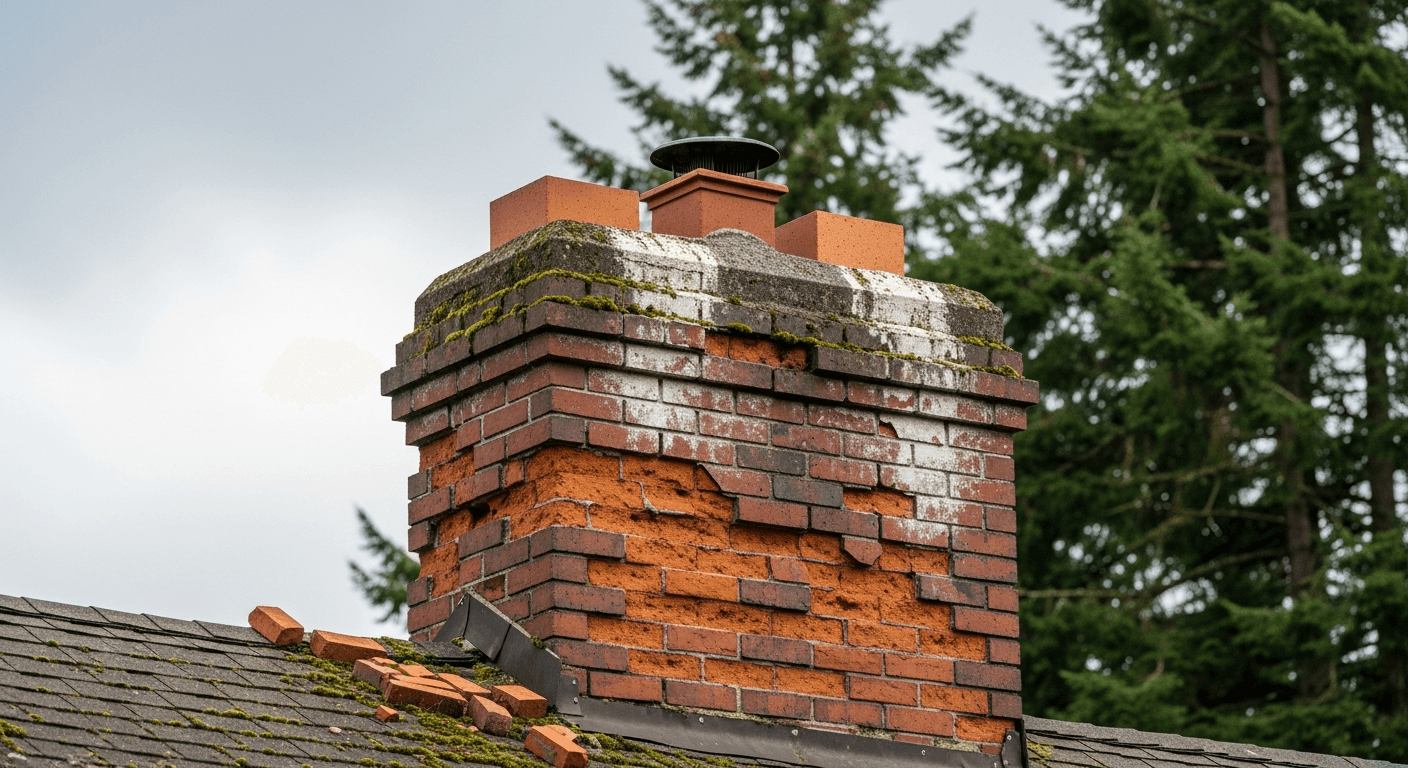
Insurance policies exclude deterioration, settling, cracking, shrinking, and faulty maintenance without exception. For Tacoma homeowners that exclusion list maps almost perfectly onto the chimney problems we diagnose most often: eroded mortar joints from freeze-thaw cycling on the Puget Sound side of the Cascades, clay flue tiles cracked by years of condensation and creosote acid, unparged crowns that were never waterproofed, and cast-iron dampers corroded by the humid marine air that moves inland from Commencement Bay between October and April. Each of those conditions is a maintenance failure in the eyes of your insurer, regardless of how predictable it was given our climate.
The exclusion that surprises Tacoma homeowners most is the earth-movement clause. Portions of the city — particularly neighborhoods with older fill soils or steeper lots in the Proctor and North End areas — experience subtle long-term settling that can open mortar joints and tilt chimney stacks a degree or two over decades. That damage requires a separate earthquake or earth-movement endorsement; it is not covered under a standard HO-3.
Pre-existing conditions are the other claim-killer on Tacoma's older housing stock. The median home in Pierce County was built in 1979, and the Craftsman-era neighborhoods we work in most frequently have chimneys that are 90 to 100 years old. When an adjuster or their contractor opens the firebox and finds a deteriorated liner, a cracked crown, or missing mortar on the smoke shelf, they will assert the damage pre-dates the reported event — and without a prior inspection report, you cannot prove otherwise. Annual inspections create a dated paper trail that shows your chimney's baseline condition before any storm occurs. Without that record, you are arguing from zero against a professional claims reviewer.
Real Tacoma scenarios: when a claim worked — and when it didn't
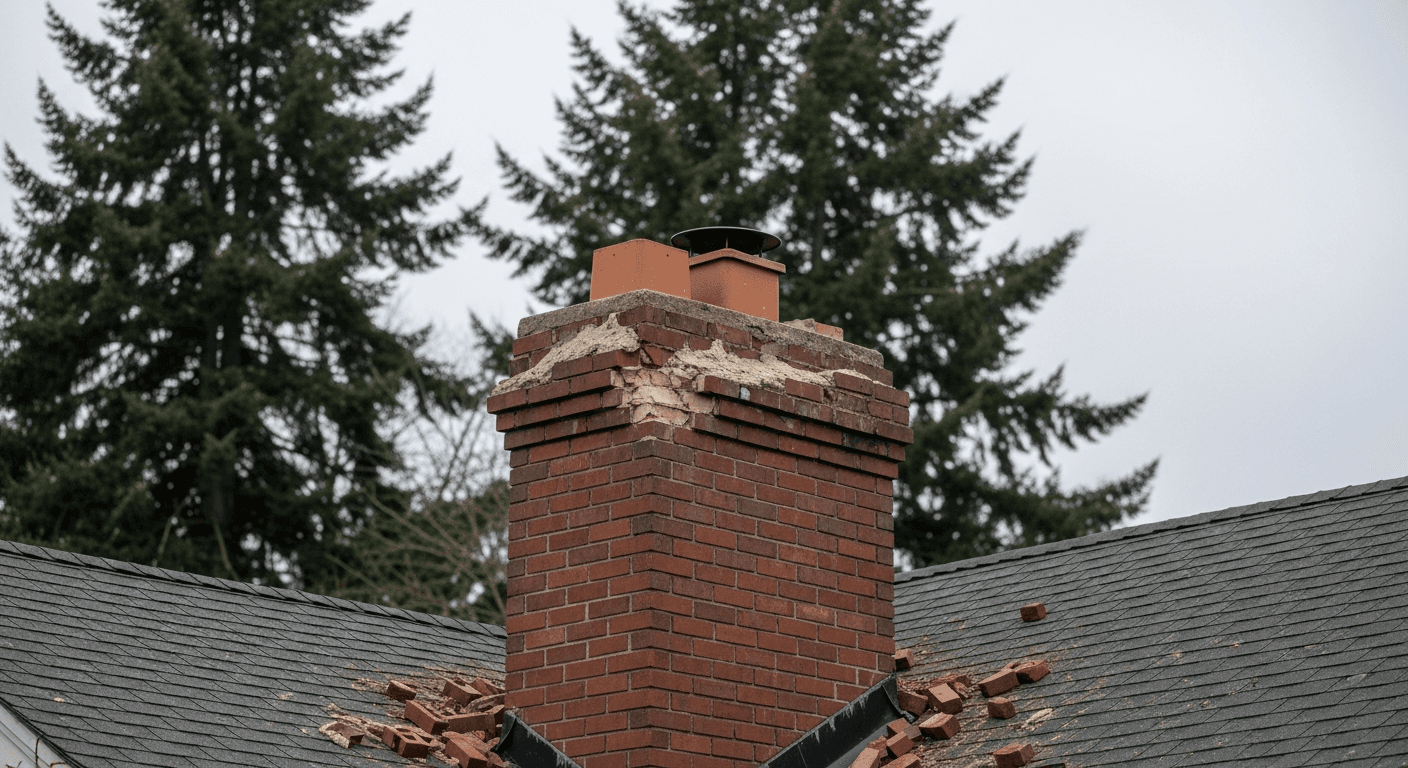
A homeowner in the North End called us two days after a November windstorm. She had seen brick debris on her asphalt shingles and wanted it documented before contacting her insurer. We ran a Level 2 inspection and found that three courses of brick had collapsed at the chimney crown, the mortar at the top of the stack had sheared cleanly in a pattern consistent with wind loading rather than gradual erosion, and the flue tiles below the failure point were intact and undamaged. We issued a written inspection report with time-stamped camera footage. Her insurer approved a partial claim covering the masonry rebuild from the point of failure upward. She paid her $1,000 deductible; the carrier paid the remaining $1,800 toward a $2,800 repair.
Compare that to a homeowner in the Proctor District who called us after his adjuster had already inspected and denied the claim. When we got on the roof, the reason for the denial was visible: the clay flue liner had been deteriorating for years — tiles were cracked, heavily sooted, and showing white efflorescence salts at least four feet below the zone of storm damage. The insurer argued, correctly under the policy language, that the chimney was already structurally compromised before the storm struck. Without a prior inspection report to establish the liner's pre-storm condition, the homeowner had no written evidence to challenge that finding. He paid $4,400 out of pocket for a full stainless steel reline and crown replacement — work that, had it been identified and budgeted through annual inspections, could have been spread over two or three seasons.
Both homeowners took away the same lesson: the inspection report is the claim. Without one, you are at the mercy of an adjuster whose job is to find exclusions, on a chimney whose age already argues against you.
Chimney repair and inspection costs in Tacoma — what to expect to pay
Whether you are building a claim or paying out of pocket, knowing real local price ranges helps you evaluate estimates and avoid overpaying. The table below reflects typical costs on Tacoma jobs in 2024–2025. Prices vary based on chimney height, roof pitch, scaffold requirements, and the extent of deterioration found.
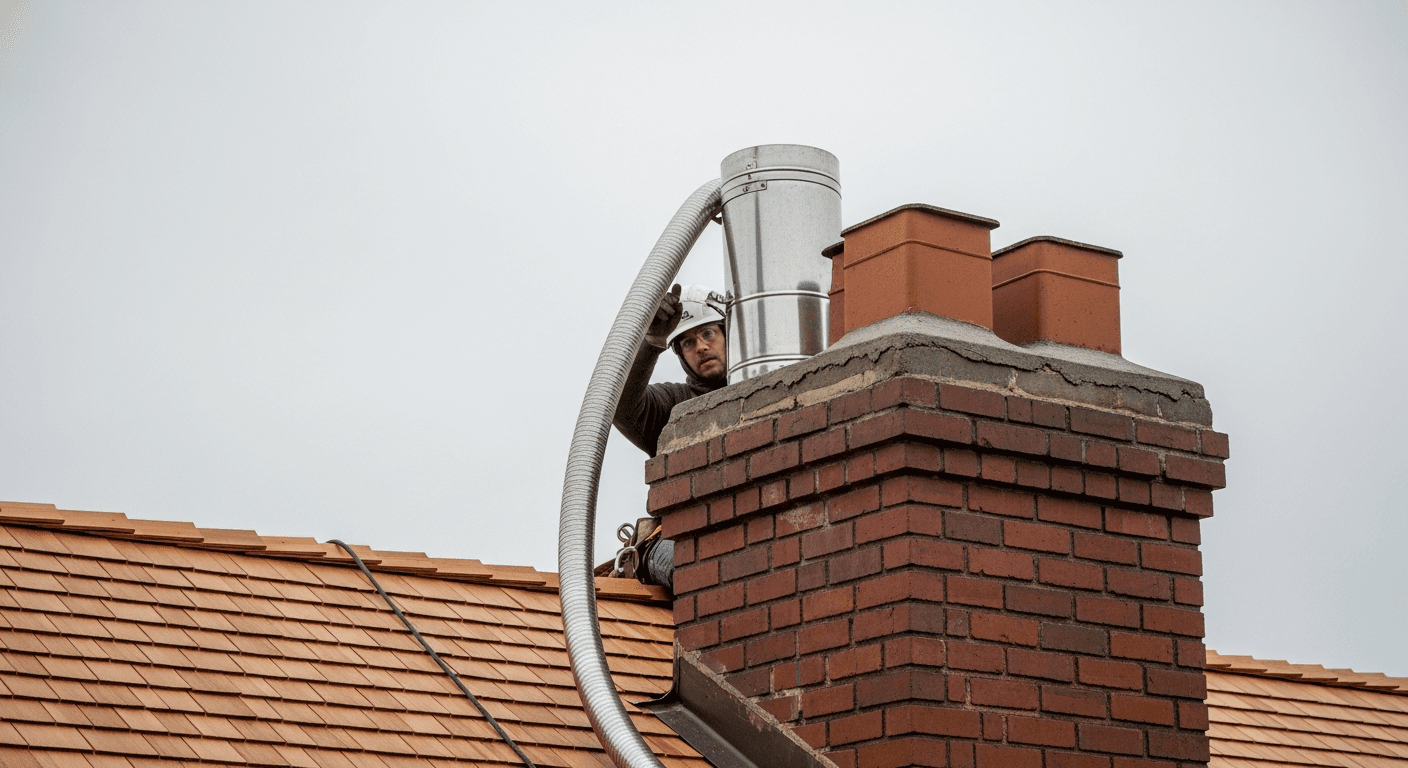
One cost note specific to Tacoma: the density of pre-1960 masonry chimneys in our service area makes relining one of the most common major repairs we perform. A stainless steel liner with high-temperature insulation is the correct long-term solution on nearly every older home; it meets current UL 1777 standards and is sized precisely to the appliance, which matters for draft on Tacoma's frequently low-pressure winter days. Cast-in-place liners are viable on severely irregular flue shapes but add cost. Bundling a sweep with a Level 1 inspection remains the most cost-effective starting point — it tells you what the chimney actually needs before any repair dollars are committed.
| Service | Typical Tacoma Cost Range | Insurance Covered? | Notes |
|---|---|---|---|
| Level 1 chimney inspection | $100 – $175 | Rarely — but creates baseline documentation | Visual check of accessible areas; recommended annually on every Tacoma fireplace |
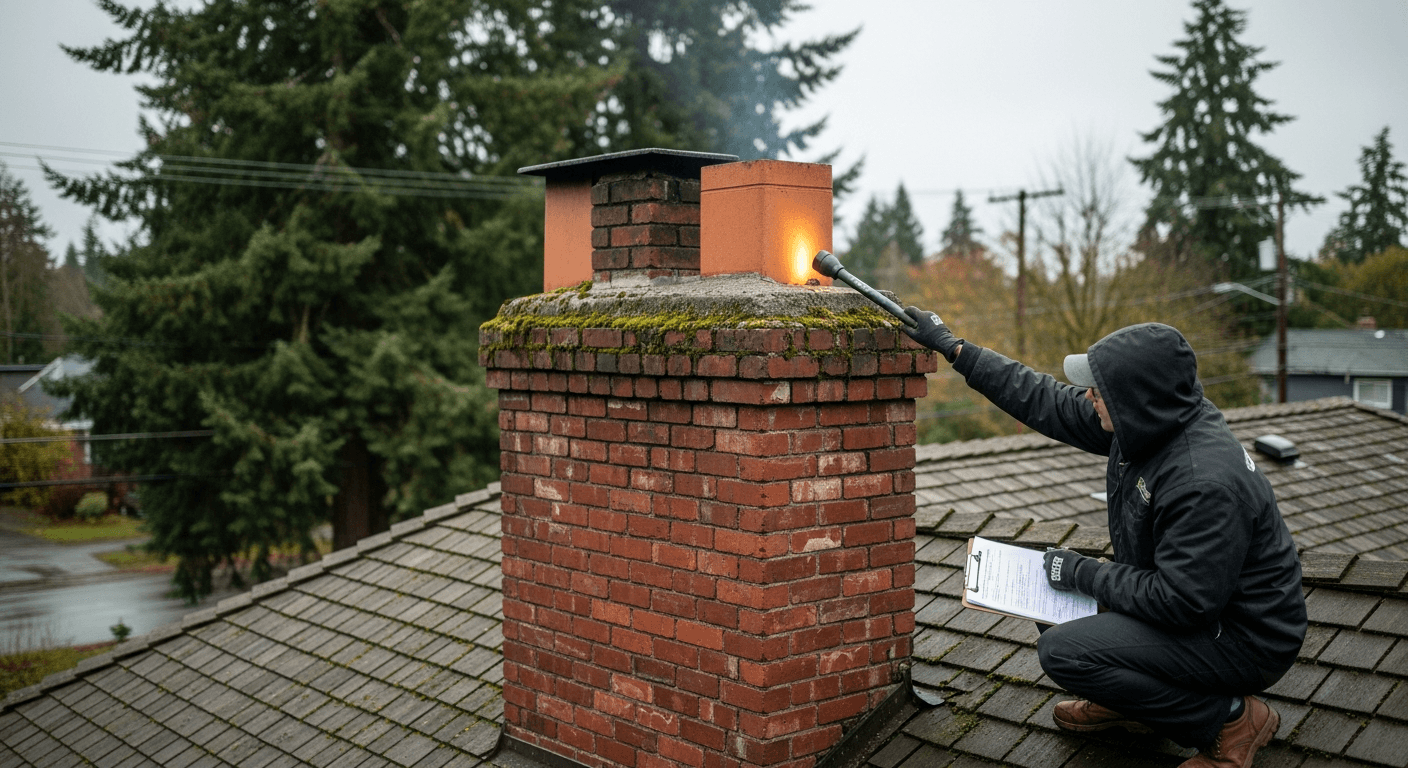
| Level 2 chimney inspection | $225 – $400 | Often required by adjuster to process a claim | Includes video flue scan and written report; essential after any storm event or home purchase |
| Chimney sweep (standard) | $150 – $280 | No — falls under maintenance exclusion | Price varies with creosote buildup; active wood-burners typically need annual service |
| Chimney crown repair (partial) | $300 – $700 | Possibly — if damage is storm-caused and documented | Tuckpointing and crown coat on a structurally intact base |
| Chimney crown replacement (full) | $800 – $1,800 | Possibly — if storm-caused and documented | Full pour required on severely eroded crowns common on pre-1960 Tacoma masonry |
| Masonry rebuild (top section) | $1,500 – $3,500 | Yes — most commonly approved claim type if documented | Storm shear of upper stack courses; requires Level 2 report and storm-date verification |
| Stainless steel flue relining | $2,500 – $5,500 | Rarely — adjuster typically classifies as deferred maintenance | Most common major repair on Tacoma homes built before 1960; UL 1777 compliant |
| Chimney flashing repair | $400 – $1,000 | Sometimes — if storm displacement is documented | Step and counter flashing at roof-chimney junction; inspect immediately after windstorms |
| Waterproofing treatment | $200 – $450 | No — classified as preventive maintenance | Vapor-permeable masonry sealer; reduces freeze-thaw spalling and future repair costs |
How to give yourself the best shot at a valid claim
Schedule a Level 1 inspection every year without exception. The written report from each annual visit is the baseline document that proves your chimney was in acceptable condition before a storm. It is the single most effective tool for neutralizing the 'pre-existing deterioration' argument, and it costs less than two tanks of gas.
After any named windstorm or significant hail event, book a Level 2 inspection within 48 to 72 hours. Before the inspector arrives, take time-stamped photos from ground level and the roofline — do not disturb fallen brick, mortar fragments, or displaced flashing. Physical debris on the roof or ground is evidence; sweeping it off before documentation hands the insurer a reason to dispute the cause. Confirm the storm date using a National Weather Service event record for Pierce County, which your inspector or agent can pull as a supporting document.
Read your specific policy before filing. Some Washington state insurers offer optional equipment-breakdown endorsements that extend coverage to mechanically failed components; these rarely apply to masonry but can sometimes cover liner failures in gas-appliance configurations involving a blower or ignition system. Ask your agent directly whether any chimney-related riders are available on your current policy.
Finally, do the math before filing a small claim. A flashing repair at $600 may not justify triggering a $1,000 deductible and a potential three-to-five-year premium adjustment. For documented structural damage above $2,500 to $3,000, filing is almost always worth pursuing. Below that threshold, paying out of pocket protects your claims history.
Frequently asked questions
Will homeowners insurance pay for chimney repair in Tacoma?
Yes, but only under specific conditions: the damage must result from a named peril such as wind, hail, lightning, or a falling object, and you must document the cause and date with photos and a Level 2 inspection report. Gradual deterioration, freeze-thaw spalling, and settling — the most common problems on Tacoma's older masonry chimneys — are excluded by name from standard HO-3 policies.
How often does a Tacoma chimney need to be cleaned?
NFPA 211 requires annual inspection and cleaning as needed. In Tacoma, where wood burning runs through six or more months of wet, low-temperature weather, most active fireplaces accumulate enough creosote to warrant a sweep every one to two cords burned — typically once per season. Gas fireplaces need annual inspection but may not require cleaning every year. The inspection matters more than the sweep for insurance documentation purposes.
How much does a chimney sweep cost in Tacoma?
A standard sweep runs $150 to $280 in Tacoma depending on creosote buildup and chimney height. Adding a Level 1 inspection typically costs $75 to $150 more and produces the written record that supports future insurance claims. Quotes under $99 frequently lead to high-pressure upsells on repairs; price alone is not a reliable indicator of quality.
What does a Level 2 chimney inspection cost in Tacoma, and do I need one?
A Level 2 inspection in Tacoma costs $225 to $400 and includes a video camera scan of the full flue length plus a written report. You need one immediately after any storm that may have damaged your chimney, before buying or selling a home with a fireplace, and any time your insurer requests documentation to process a claim. It is the one report an adjuster will accept as independent evidence of cause and condition.
What is the fastest way to document chimney damage for an insurance claim?
Within hours of the damaging event: take time-stamped photos from ground level and the roofline, leave all debris exactly where it fell, and note the storm date using a National Weather Service record for Pierce County. Within 48 to 72 hours: schedule a Level 2 inspection so the sweep's written report and video footage are dated close to the event. That package — your photos, the storm record, and the inspector's signed report — is the complete evidence file your adjuster needs.
Related services