Nobody outside your insurer can promise that a policy will pay for a chimney. Coverage rests on the contract you signed, its exclusions and the cause an adjuster assigns to the damage, and we are a chimney company, not an insurance company. What a Tacoma homeowner can control is the paper trail. Claims involving masonry tend to hinge on one question: did something happen to this chimney, or did it simply get old? The answer is easier to prove when you have dated photos, past service records and a written report from someone who looked inside the flue before anything was repaired. This guide walks through the kinds of events that hit chimneys around Commencement Bay, the records worth collecting for each, and the questions to put to your agent before the first brick is replaced.
An event or an age problem?
Adjusters usually sort chimney damage into two piles. On one side are things that happened on a particular day: a limb that fell during a November blow, a chimney fire, a crown split by an earthquake. On the other side is slow decline, the kind of mortar loss, spalled brick or rusted flashing that builds up over twenty winters. How your policy treats each pile is written in its wording, so read the exclusions and ask your agent where that line sits for masonry.
Tacoma's housing stock makes the question common. Half the city's homes went up before 1967, according to the Census Bureau's five-year survey, and about 27 percent date from 1939 or earlier, a pre-war share more than twice the county's. An old chimney can still suffer a sudden loss, but the older it is, the more an insurer will want evidence of its condition before the event.
The local events that damage chimneys
Wind and water are the everyday threats. WeatherSpark puts Tacoma's windier stretch at roughly mid-October to late April, with November the windiest month, and the same months carry most of the year's rain. That is when trees come down on roofs and when a small crack at the crown starts letting water into the stack.
Earthquakes are the rarer and larger risk. The magnitude 6.8 Nisqually quake of February 2001 was centered about 52 kilometers beneath Anderson Island, in Pierce County, and a USGS report notes that FEMA found chimney damage at one-third of the 30,000 homes it inspected afterward. Washington Emergency Management has also modeled a shallow magnitude 7.1 event on the Tacoma fault zone, which last produced a large quake somewhere between 850 and 1,240 years ago. Whether your policy includes earthquake coverage at all is worth checking now, while nothing is broken.
Records worth having, and where they come from
Gather what you can before cleanup starts. A photo taken the morning after a storm is worth more than a detailed description written a month later.
| Record | Where it comes from | What it shows the insurer |
|---|---|---|
| Dated photos of roof, stack and interior stains | Your phone, taken before any cleanup | The damage as it looked right after the event |
| Past sweep and inspection invoices | Your files or the company that did the work | The chimney was being looked after |
| Fire department incident report | Tacoma Fire Department or your local district, if they responded | The date and nature of a chimney fire |
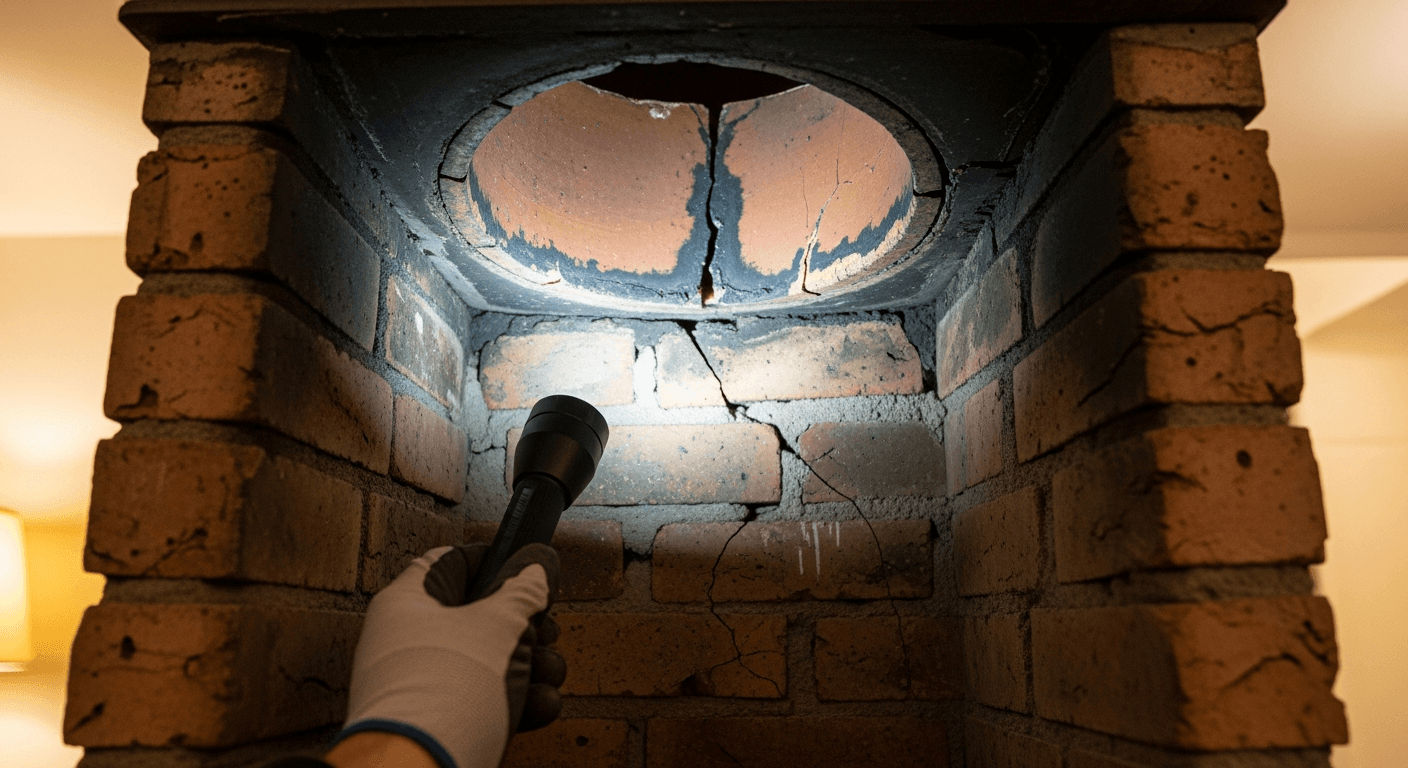
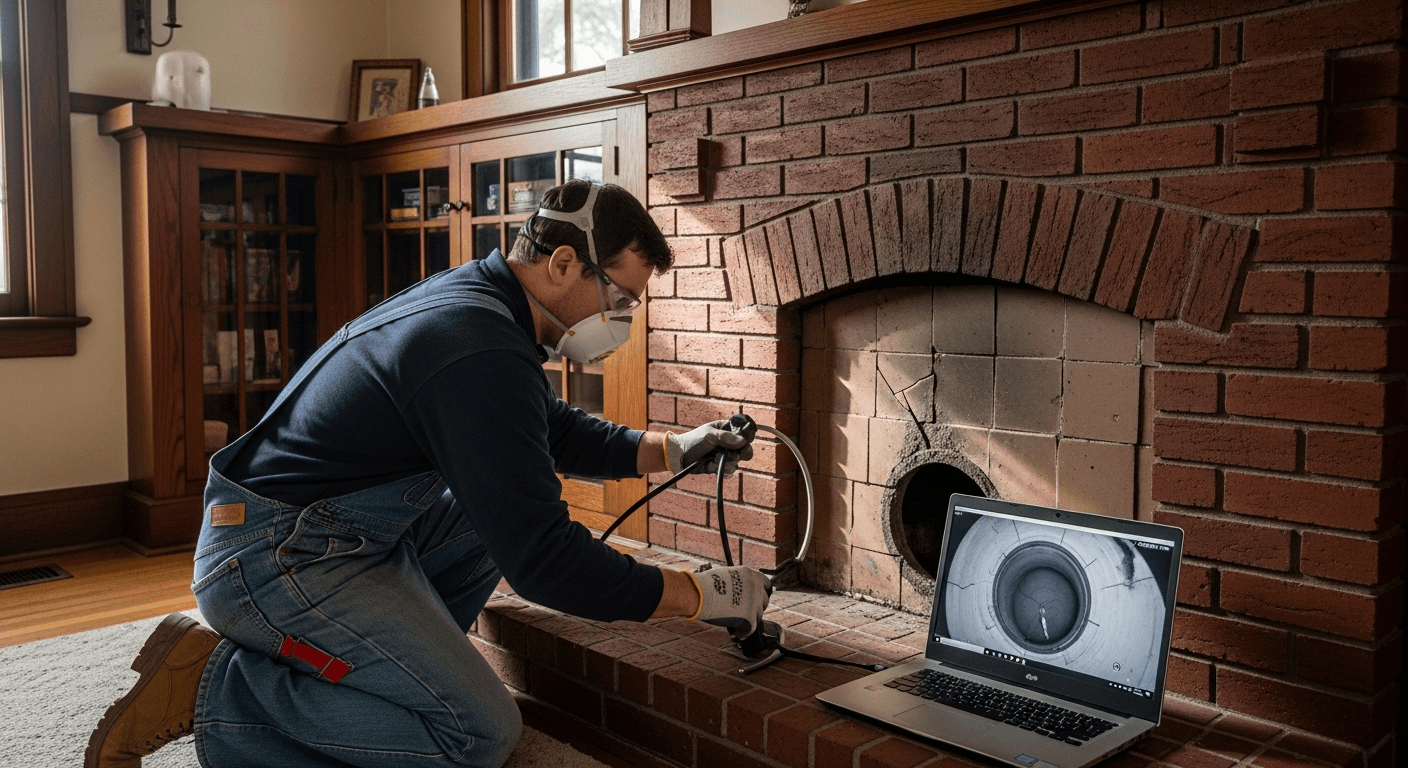
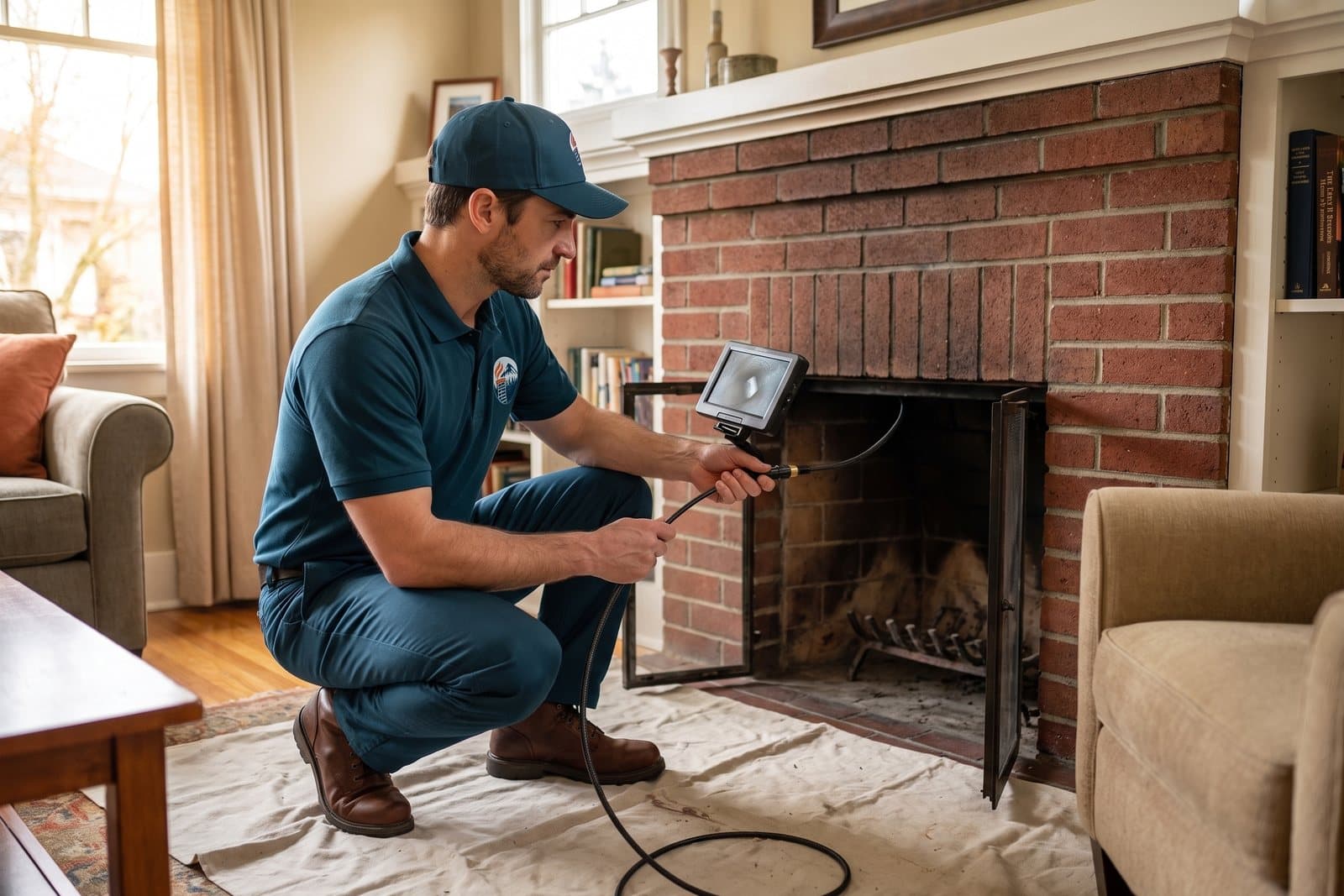
| Written inspection report with flue images | A Level II inspection after the event | Conditions in the flue that stay hidden from anyone standing at the hearth |
| Receipts for emergency measures | The tarp, cap or board-up you paid for | Steps taken to keep the loss from growing |
Why the inspection level matters
NFPA 211, the U.S. standard written for chimneys and vents, expects a yearly inspection. Its current committee text and CSIA's procedure call for the deeper Level II when a flue has burned, or when a storm or tremor may have harmed the stack. That level puts a camera through every foot of the flue and takes in the attic, crawl space and roof areas that can be reached, which is where cracked tiles and opened joints show up on camera.
Ask for the report in writing, with dated images, a description of the damage as observed and a scope of repair. Booking that inspection costs $99 plus tax, and the amount is taken off the repair bill if you sign the written quote. Keep the original and send the insurer copies.
Before you sign a repair contract
Washington requires construction contractors to register with Labor & Industries, and the agency's Verify tool shows registration, bond and insurance for any company you are about to hire. The bond amounts required since July 2024 are posted on the same site, and the lookup takes about a minute.
If the work touches a house in one of Tacoma's local historic districts, the City notes that exterior changes to contributing buildings, chimneys included, may need design review by the Landmarks Preservation Commission when a permit is required. Mention that to the adjuster early: a rebuild that must match original materials can take longer to approve and schedule.
Finally, get the scope in writing before either side agrees to a number. When you, the contractor and the insurer are all reading the same list of repairs, disagreements tend to stay small.
Frequently asked questions
Is a chimney repair covered if the mortar just wore out?
That is a question for your policy and your agent. Many policies read slow deterioration differently from a sudden event, so look at the exclusions section and ask how it applies to masonry that aged over decades.
Should I fix the chimney before the adjuster visits?
Only stop further damage, such as tarping a hole or capping an open flue, and keep the receipts. Leave permanent repairs until the insurer has seen the damage or told you in writing to proceed.
Which inspection helps after a quake or a chimney fire?
A Level II. NFPA 211 and CSIA both name a flue fire, and damage from weather or ground shaking, as reasons to order one, and its camera pass gives you images you can share.
How do I check the contractor who will do the repair?
Washington L&I lets you look up any contractor's registration, bond and insurance at Lni.wa.gov/Verify before you sign anything.
Sources
- Census Reporter — ACS 2024 year built, Pierce places — accessed September 24, 2026
- WeatherSpark — Tacoma climate — accessed September 24, 2026
- PNSN — 2001 Nisqually Earthquake — accessed September 24, 2026
- USGS Open-File Report 03-211 — Nisqually quake — accessed September 24, 2026
- WA Military Dept. — Tacoma fault M7.1 scenario — accessed September 24, 2026
- NFPA 211 (2026 cycle) — inspection levels — accessed September 24, 2026
- CSIA — Level 2 inspection procedure — accessed September 24, 2026
- Washington L&I — Register as a Contractor — accessed September 24, 2026
- City of Tacoma — Historic Districts & Landmarks — accessed September 24, 2026
Related services