Brick and mortar are porous. Every rain soaks a little water into the part of a chimney that stands above the roof, and in a mild winter that water mostly dries out again before it does harm. The trouble starts when the soaking outpaces the drying, which is the normal state of affairs in Tacoma from mid-autumn to spring. A masonry water repellent reduces how much the brick takes on without sealing moisture inside. Whether your chimney needs one depends less on its age than on how it behaves when wet, and there is an easy way to find out before you pay anyone. This guide covers that test, the repairs that have to come first, and the timing that suits our weather.
How much rain a Tacoma chimney absorbs
The Tacoma #1 weather station recorded close to 40 inches of precipitation a year on average between 1982 and 2016, with November and January the wettest months. WeatherSpark describes the wet stretch as running from around October 10 to May 1, nearly seven months in which a stack rarely gets a long dry spell.
Cold adds a second load. The same station logged about 32 nights a year at or below freezing, most of them in December and January. Water that has soaked into a brick expands when it freezes, and repeated cycles flake off the fired face of the brick, a problem masons call spalling. Out in the Puyallup valley the long-record station counted roughly twice as many freezing nights, so a chimney in Puyallup or Sumner goes through more of those cycles than one near Commencement Bay.
A five-minute test you can run
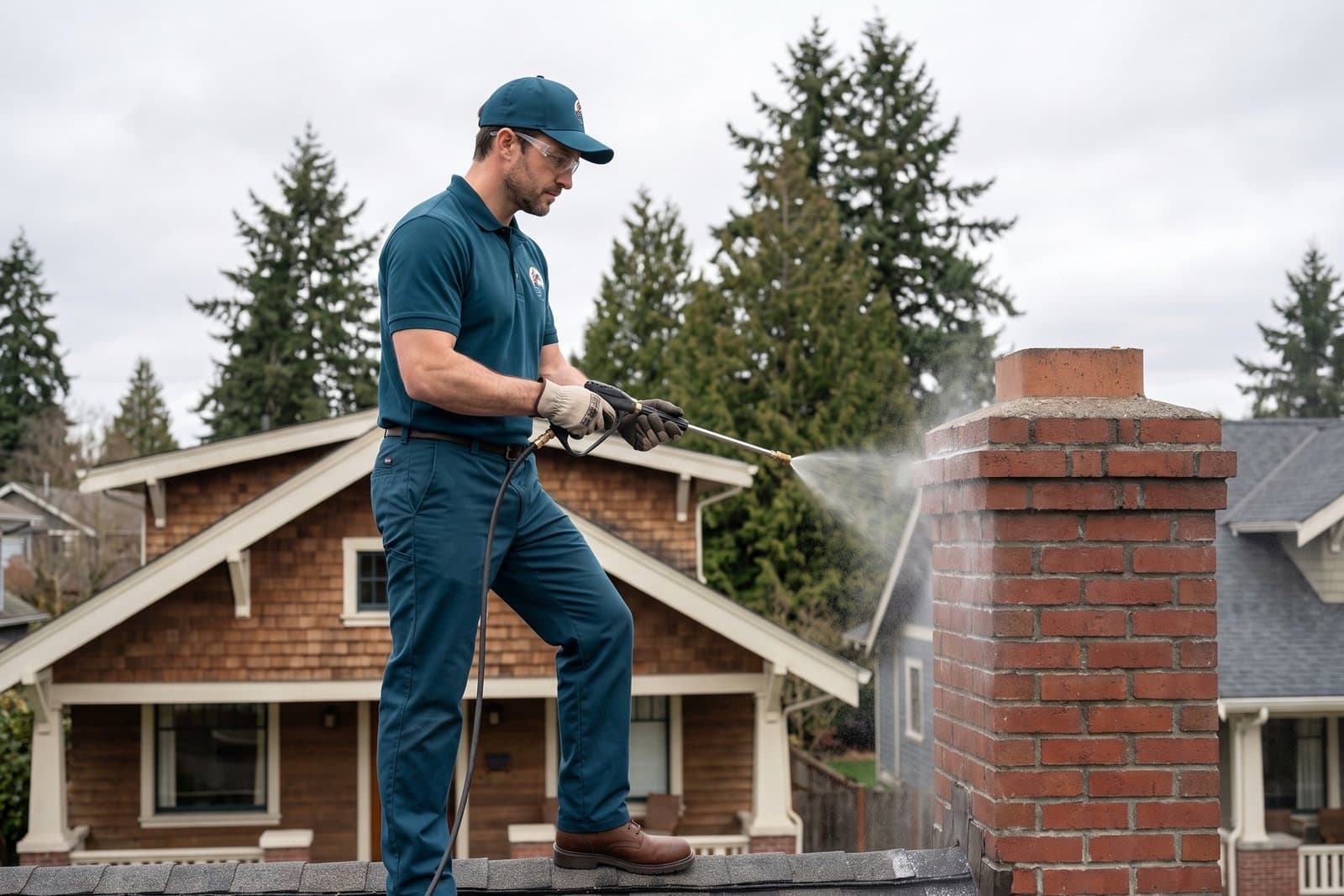
On a dry afternoon, mist a patch of brick you can reach safely with a garden sprayer, ideally on a chimney that runs up an exterior wall. Watch it for a minute or two. The table explains what you are seeing.
| What the water does | What it tells you | Next step |
|---|---|---|
| Beads and runs off | A repellent is still working, or the brick is dense | Nothing now; repeat the test next summer |
| Darkens the brick slowly | The surface absorbs some water | Worth treating once repairs are done |
| Vanishes almost instantly | The brick soaks up water freely | Treat before the wet season, after repairs |
| Runs into open joints or cracks | Water has a direct path inside | Repair the mortar or crown first |
What has to be fixed before a sealer goes on
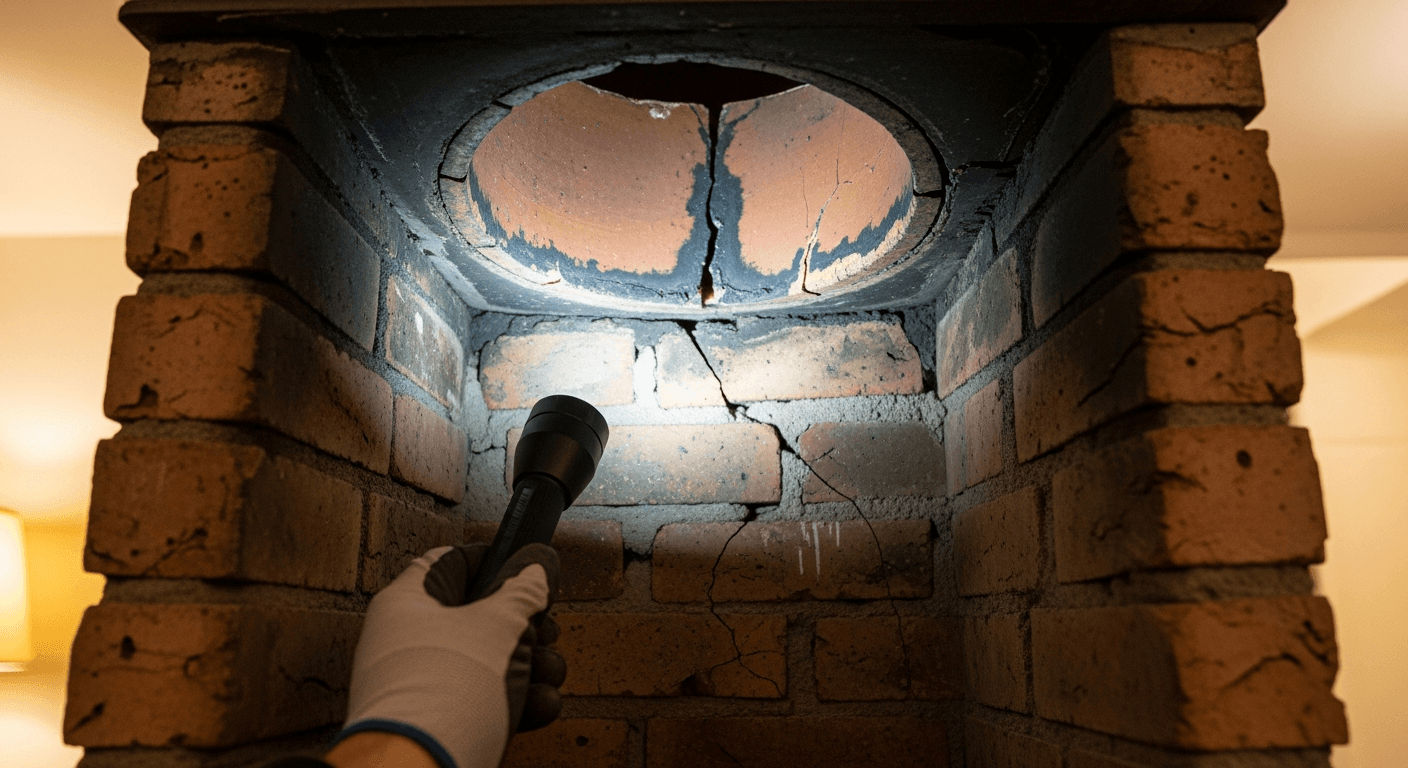
A repellent protects sound masonry. It does not bridge gaps. Eroded mortar joints need repointing, a cracked or crumbling crown needs repair, and flashing that has pulled away from the brick needs to be reset, or the treatment simply coats the leak.
Look at the roof around the stack as well. Oregon State University Extension notes that moss on a Pacific Northwest roof holds soil and debris that stay wet, and can lift shingles far enough for water to reach the layers below. Moss packed against the uphill side of a chimney keeps that corner damp long after the rain stops, so clearing it is part of the preparation.
Check the top of the flue while you are up there. The Washington State Fire Marshal's heating-safety advice includes fitting a chimney cap, and an uncapped flue takes rain straight down its inside face, where no exterior treatment will ever reach.
Timing the job around our weather
Masonry treatments go on dry brick, and Tacoma's driest month by a wide margin is July, which averages well under an inch of rain at the Tacoma #1 station. Late spring and early autumn can work too, but the window narrows quickly once October arrives. Booking in June or July leaves time for any mortar work to cure first.
Houses built before the Second World War deserve extra care. Roughly one Tacoma home in four was standing by 1939, and brick that has weathered for most of a century can be more fragile than it looks. Ask whoever treats yours which product they use and confirm it is vapor permeable, since trapping moisture in old brick does more harm than leaving it bare.
What the work runs
Our chimney waterproofing is priced from $320 to $795; a tall stack, a hard roof or several faces exposed above the roofline puts a job toward the top. No Tacoma or South Sound company publishes a waterproofing price online that we could find, so the only published references are national: Fixr lists chimney sealing at $150 to $500, and HomeAdvisor gives the same $150 to $500 for sealing a cracked chimney. Those are other companies' figures, not our quote, and they rarely include the repairs a sealer depends on.
Frequently asked questions
Can a water repellent fix a cracked crown?
No. A repellent slows water soaking through sound brick. Cracks in the crown, open mortar joints and loose flashing let water in directly and need to be repaired before any treatment is applied.
Will a sealer trap moisture inside the chimney?
A film-forming coating or paint can. Masonry repellents meant for chimneys are vapor permeable, so moisture already inside the brick can still dry outward after the treatment.
Does a gas fireplace chimney need waterproofing too?
The brick does not know what burns below it. A masonry stack that absorbs rain will wear the same way whether the flue serves a wood fire, a gas insert or nothing at all.
How long before I know the treatment is failing?
Repeat the spray test every year or two. When water starts darkening the brick again instead of beading, the repellent is losing its effect and the stack is due for another look.
Sources
- WRCC — Tacoma #1 monthly climate summary — accessed September 24, 2026
- WRCC — Tacoma #1 temperature summary — accessed September 24, 2026
- WRCC — Puyallup 2 W temperature summary — accessed September 24, 2026
- WeatherSpark — Tacoma climate — accessed September 24, 2026
- OSU Extension — Controlling roof moss — accessed September 24, 2026
- WA State Fire Marshal — Home Heating Safety — accessed September 24, 2026
- Census Reporter — ACS 2024 year built, Pierce places — accessed September 24, 2026
- Fixr — Chimney Repair Cost — accessed September 24, 2026
- HomeAdvisor — Chimney Repair Cost — accessed September 24, 2026
Related services