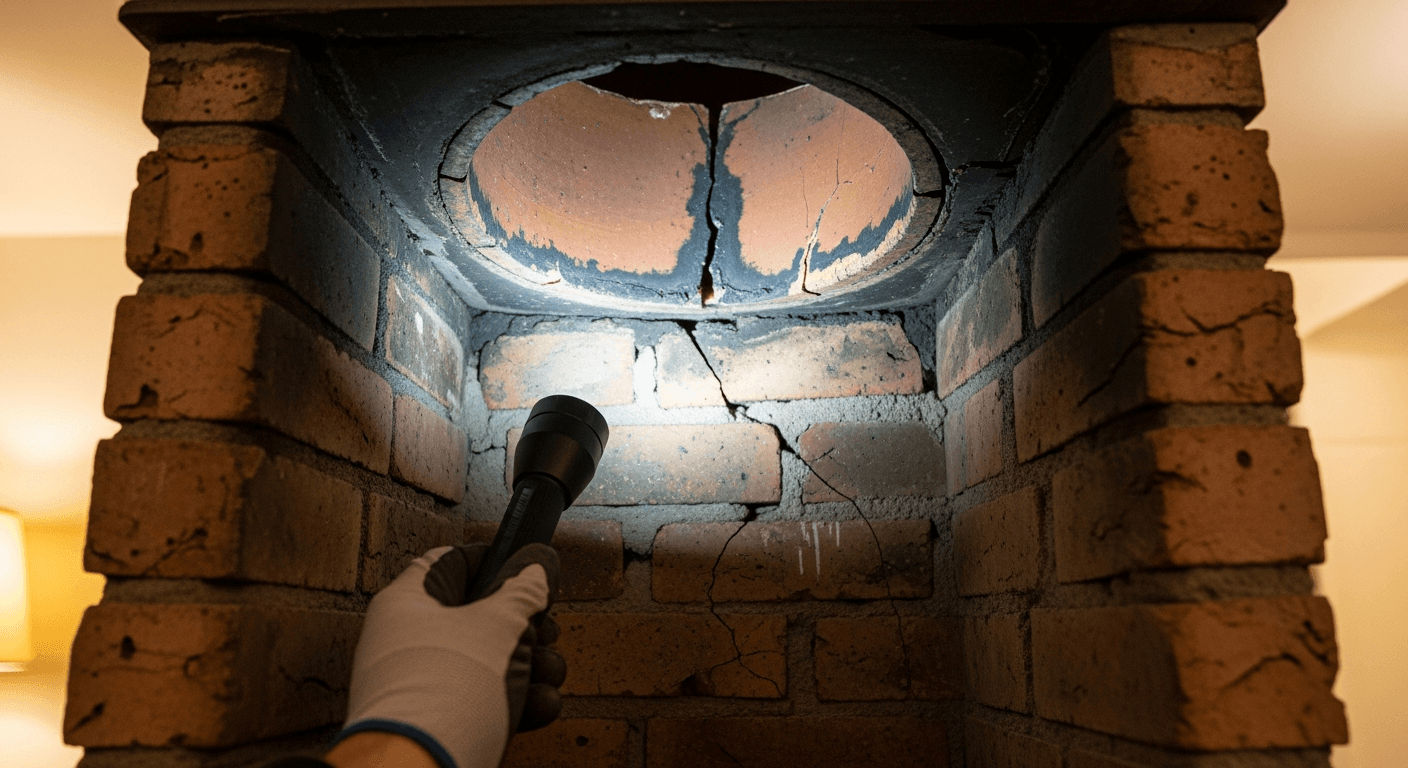
In Pierce County, deciding whether your fireplace can be used on a given evening involves two separate questions. The first is legal: is burning allowed today, and is the appliance one you are allowed to run at all? The second is physical: is the chimney clear, sound and drawing properly? A yes to one does not answer the other. A perfectly swept flue still cannot be used during a Stage 2 ban, and a clear sky does not make a cracked liner safe. The checklist below takes both in order, starting with the rules that apply around Tacoma and ending with the things you can see and test yourself in a few minutes.
First, the rules that apply tonight
When cold, still air holds smoke close to the ground, the regional clean air agency declares a burn ban for Pierce County. Stage 1 means no fire in any open wood fireplace, and none in a stove or insert that lacks certification. Under Stage 2 the ban widens to every wood fireplace, every wood stove or insert whether certified or not, and pellet stoves. A household may burn anyway only when that appliance is its one adequate way to heat the house and an exemption was approved before the ban.
The reason for strictness here is historical. In 2009 the Tacoma-Pierce County area was found out of compliance with the federal fine-particle standard, and Washington Ecology identified wood smoke from home heating on cold, calm evenings as the main cause. According to EPA's later notice, residential wood burning made up 74 percent of direct fine-particle emissions on winter days at the time. The area was redesignated to attainment in 2015 and has followed a maintenance plan ever since.
Is your stove allowed at all?
Since October 1, 2015, operating an uncertified wood stove or insert has been illegal in the Tacoma-Pierce County Smoke Reduction Zone, and so has buying, selling or reinstalling one. Open fireplaces are not covered by that rule, although they are still off limits during a ban.
To identify a certified unit, the agency's advice is to hunt for an EPA compliance plate, usually fixed to the rear or a side panel. A door of plain steel, or twin glass doors, tends to signal an older uncertified model, and a 'UL Tested' plate is a safety listing, not an emissions certification. If your house sits near the edge of the zone, check the agency's map rather than assuming.
The physical checklist
Work through these with the fireplace cold and a flashlight in hand. Any item in the right-hand column is a reason to wait for a professional look before lighting anything.
| Check | How to do it | Do not burn if |
|---|---|---|
| Last inspection | Find the date on your most recent sweep or inspection invoice | It was more than a year ago, or you have no record |
| Damper | Open and close it fully with the handle | It sticks, will not open all the way, or is rusted through |
| Firebox | Look at the back and side walls with a light | Bricks are missing, loose, or show open cracks |
| Flue deposits | Scratch the smoke shelf or flue wall with a pocketknife | The layer is thicker than a coin or looks shiny and tar-like |
| Top of the chimney | View it from the yard with binoculars | The cap is missing, bricks are gone, or the stack leans |
| Draft | Hold a lit match inside the opening with the damper open | Smoke drifts back into the room rather than rising up the flue |
| Alarms | Press the test button on smoke and CO alarms | Either alarm is missing or silent |
| Fuel | Check your wood pile | The wood is green, painted, treated or wet |
| Hearth area | Clear rugs, papers and furniture back from the opening | Anything that can burn sits close to the hearth |
Why the flue matters most
The Washington State Fire Marshal, citing the U.S. Fire Administration, reports that fires in chimneys, flues or fuel burners caused 77 percent of residential building heating fires in 2024. Deposits that line the flue are what those fires feed on, and most of the flue cannot be seen from the room. That is why NFPA 211 sets a yearly inspection as the baseline for every chimney, fireplace and vent, used often or not.
Fuel is the other half. Under the agency's rules the firebox may hold nothing but seasoned dry cordwood or manufactured logs; garbage, treated lumber, plastics and paper beyond what it takes to start the fire are all banned. Smoke from the chimney may not exceed 20 percent opacity for more than six minutes in any hour. Heavy smoke is usually a sign of wet wood, and wet wood is what leaves the thickest deposits.
If anything on the list failed
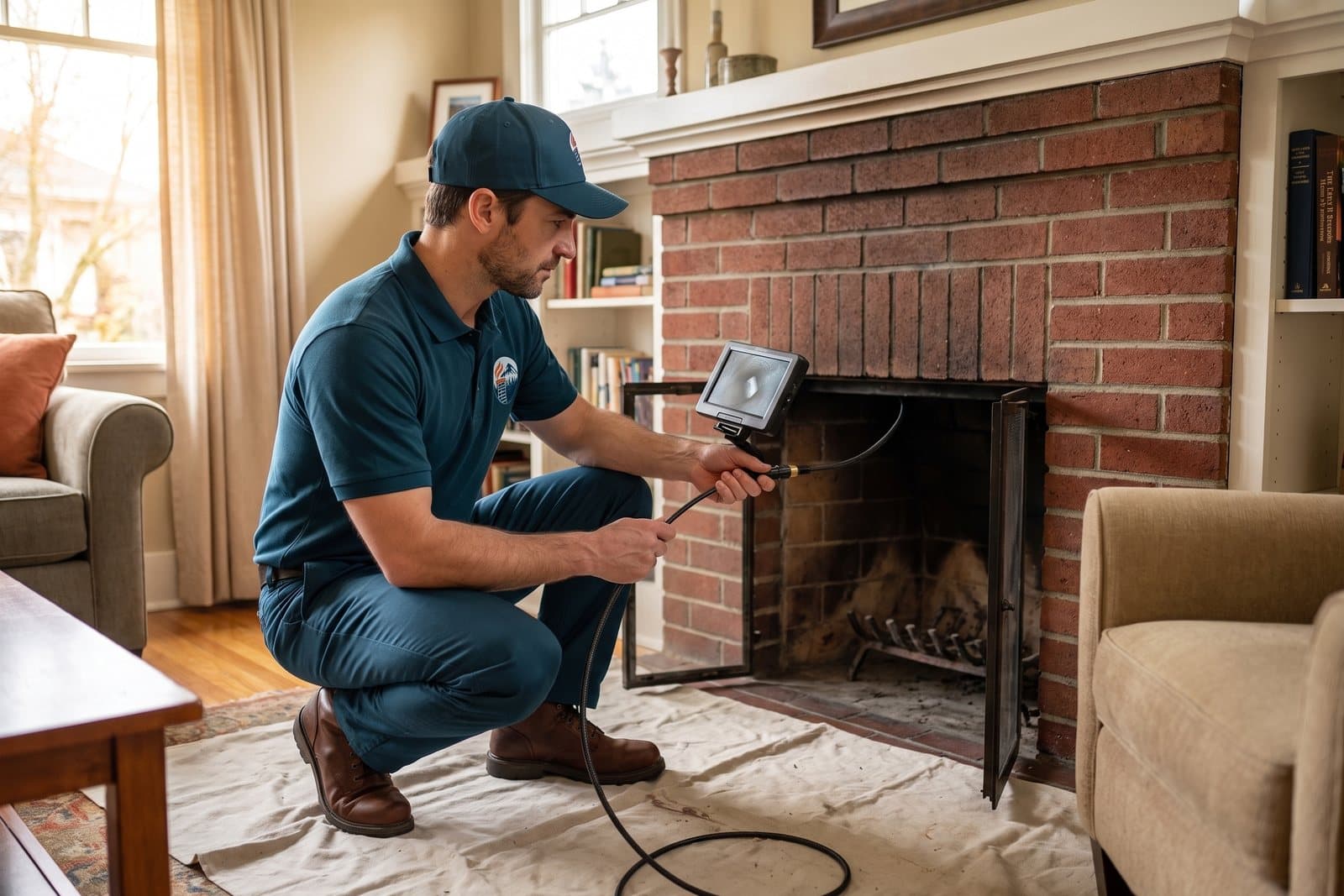
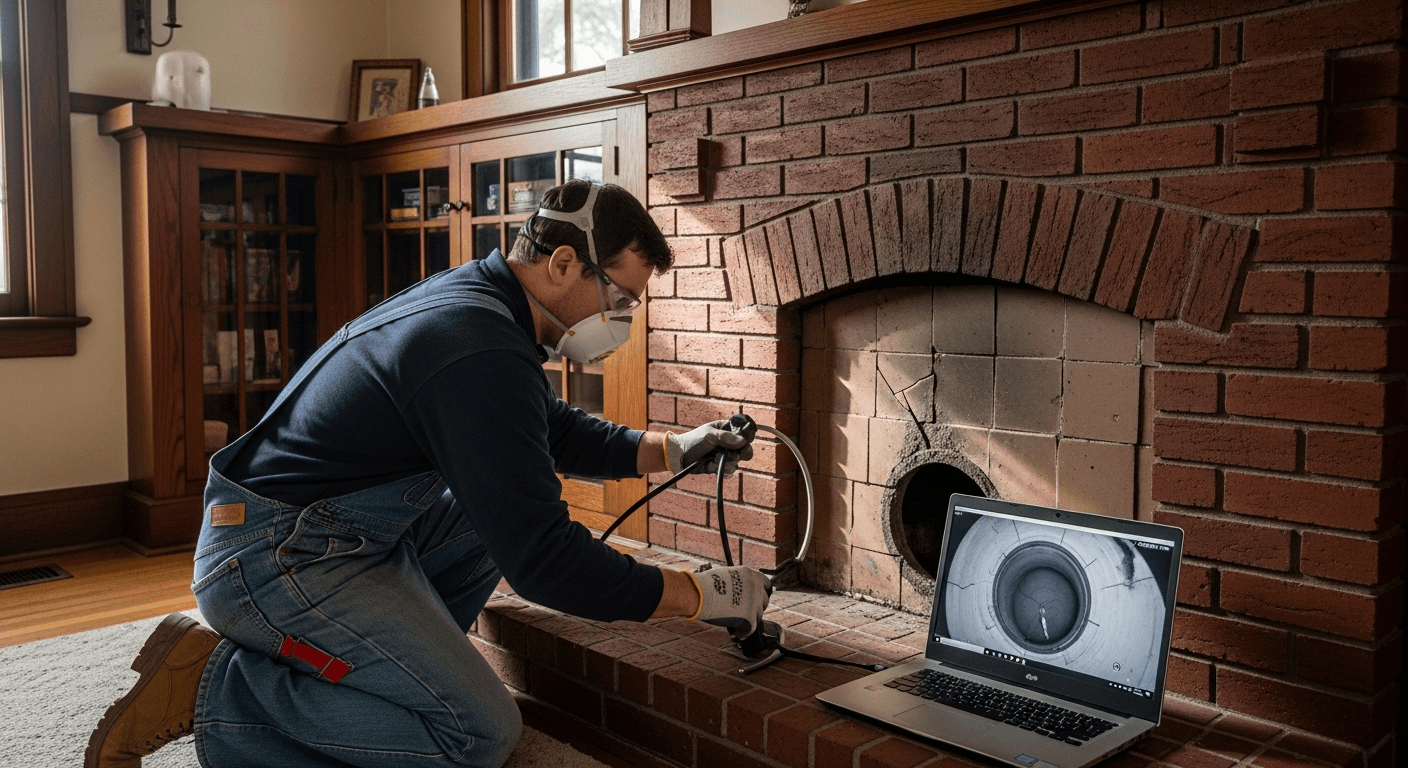
Leave the fireplace unused until someone has looked inside the flue. An inspection visit is $99 plus tax; say yes to the written quote that follows and we subtract it from the job. If the problem is heavy deposits, the next step is usually a sweep or a creosote removal; if it is a cracked firebox or a damaged liner, the report will say so with photos before any repair is discussed.
Frequently asked questions
How do I find out if a burn ban is on today?
Three ways: the Puget Sound Clean Air Agency website, the recorded message at 800-595-4341, or the agency's email alerts, which you can sign up for once. Check on the day itself, since a ban can start whenever the air goes stagnant.
My stove has no label. Can I still use it?
Not in the Tacoma-Pierce County Smoke Reduction Zone if it turns out to be uncertified. Look on the back and sides for an EPA compliance label, and have it identified before the heating season if you cannot find one.
Is it safe to burn if the chimney has not been swept in two years?
It is a gamble. NFPA 211 expects an inspection every year, and two seasons of deposits can be enough to fuel a flue fire. Have it inspected first.
Can I burn if furnace repairs leave the house cold during a ban?
Not without an approved exemption. The agency says a temporarily broken furnace does not qualify for the no-other-heat exemption.
Sources
- PSCAA — About Air Quality Burn Bans — accessed September 24, 2026
- PSCAA — Air Quality Burn Ban Status — accessed September 24, 2026
- PSCAA — No Other Adequate Source of Heat — accessed September 24, 2026
- PSCAA — Tacoma-Pierce County Wood Stove Rule — accessed September 24, 2026
- PSCAA — Wood Stove Rule FAQs — accessed September 24, 2026
- PSCAA — Legal Overview — accessed September 24, 2026
- Federal Register — Tacoma-Pierce PM2.5 redesignation — accessed September 24, 2026
- WA Ecology — Fine particle progress, Tacoma-Pierce — accessed September 24, 2026
- WA State Fire Marshal — Home Heating Safety — accessed September 24, 2026
- CSIA — Homeowner Resources — accessed September 24, 2026
Related services