
Yes — most gas fireplaces and gas inserts require venting, and an improper setup is a carbon monoxide hazard, not a minor comfort issue. In Tacoma, that answer comes with a local wrinkle: the city's large inventory of 1910s–1940s Craftsman bungalows and Tudor revivals means thousands of homes have original clay-tile masonry flues that were designed for wood combustion, not the cooler, wetter exhaust gases a gas appliance produces. Add the moisture-heavy winters and the salt air that pushes inland from Commencement Bay through the North End and Ruston, and gas venting failures here happen faster — and get missed more often — than most homeowners expect.
The three venting types — and which one your gas fireplace or insert actually has
Direct-vent gas fireplaces are the most common type installed in Tacoma homes today. They use a co-axial pipe — a sealed pipe-within-a-pipe — to draw combustion air from outside and exhaust through an exterior wall or a dedicated liner running up an existing chimney. Because they are fully sealed from the room, they are the safest option and pair well with the tightly insulated retrofitted Craftsmans common in neighborhoods like the North End and Proctor District.
Natural-vent (B-vent) units draw combustion air from inside the room and exhaust up through the existing masonry flue, relying on natural draft. This was the standard approach for gas insert installations in Tacoma from the 1980s through the mid-1990s. If you purchased a pre-1960 home with a gas insert already in place, it is very likely B-vented through the original clay-tile flue — which makes the condition of that liner a direct safety concern, not a cosmetic one.
Vent-free gas fireplaces exhaust combustion byproducts directly into the living space and rely on an oxygen depletion sensor as a safety shutoff. They are legal in Washington State, but they are not appropriate for small, well-sealed rooms or households with asthma or respiratory sensitivities. If a contractor recommends a vent-free unit primarily because your existing flue needs expensive work, that is a conversation worth having carefully — the upfront savings are real, but so are the indoor air quality trade-offs in a sealed modern home.
What Tacoma's older masonry chimneys mean for a gas conversion
Most Tacoma homes built between 1910 and 1945 have segmental clay-tile masonry flues sized for wood-burning fireplaces and coal furnaces — typically 13-by-13 inches or larger. Gas appliances burn significantly cooler and produce wetter flue gases. When those gases travel up an oversized clay-tile flue, they cool and condense before reaching the top. That moisture, combined with sulfur compounds in natural gas combustion, attacks mortar joints from the inside — a process that is invisible from the firebox and easy to miss in a standard home inspection.
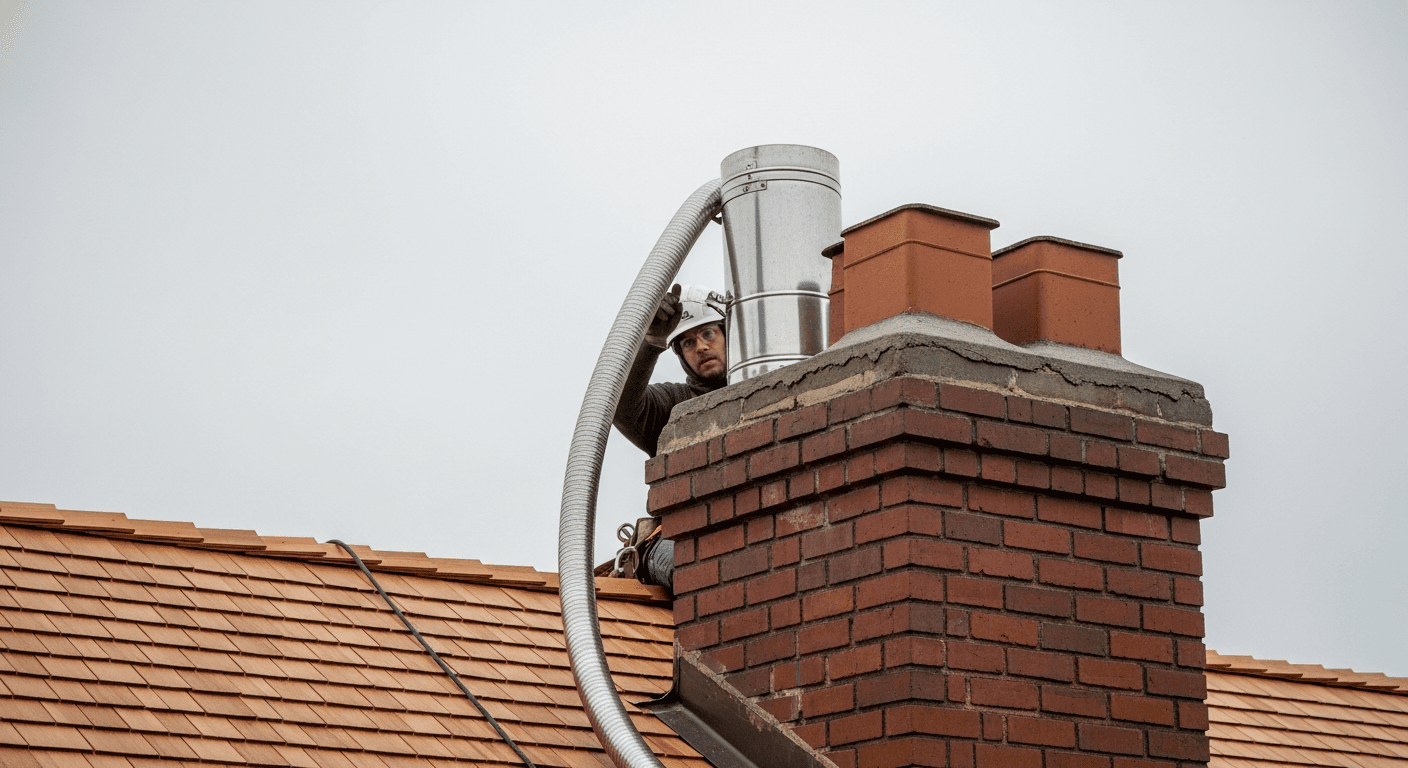
NFPA 54, the national fuel gas code, requires that gas appliance venting be matched in diameter to the appliance's BTU rating. An original 13-by-13-inch clay-tile flue is almost always oversized for a modern gas insert, which is why a stainless-steel flexible liner — sized down to match the appliance's output — is the code-correct fix in the majority of Tacoma gas conversions, not an optional upgrade.
The corrosion problem compounds for homes within roughly a mile of the waterfront. Salt air from Commencement Bay reaches neighborhoods from the North End west through Ruston, and we routinely find gas insert vent caps and chase covers on those properties that have rusted through in eight to ten years — well before most homeowners think to inspect them. A stainless cap that looks intact from the ground can have a compromised screen or cracked seal that allows moisture, birds, or debris into the liner.
Recognizing gas venting problems: symptoms and their likely causes
Gas fireplace venting failures rarely announce themselves dramatically. The table below maps the warning signs Tacoma Chimney Pros most commonly encounters to their likely underlying causes. A single symptom is enough to warrant shutting the appliance off and scheduling a Level 2 inspection — do not wait for multiple signs to appear simultaneously.
Note that some of the most serious venting problems — particularly an oversized or cracked liner — can be present with none of these visible signs at all. A camera liner inspection and draft test performed by a certified chimney technician is the only way to confirm correct venting definitively, regardless of whether symptoms are present.
| Symptom | Most Likely Cause | Urgency |
|---|---|---|
| Yellow or orange burner flame instead of crisp blue | Incomplete combustion; possible vent restriction or oversized flue causing poor draft | Shut off appliance; call for inspection before next use |
| Sulfur or rotten-egg odor near the firebox during operation | Combustion gases migrating through cracked mortar joints or a failed liner connection | Shut off appliance; call for inspection before next use |
| CO detector activates — even briefly or intermittently | Carbon monoxide entering the living space through a venting failure | Shut off appliance immediately; call for emergency inspection |
| Rust streaking down the exterior of a metal chase | Corroded or failed chase cover allowing water intrusion into the flue system | Schedule inspection within days; do not wait for annual service |
| Soot staining around the firebox opening | Negative draft or vent blockage forcing exhaust back into the room | Shut off appliance; call for inspection before next use |
| Condensation or moisture staining on the ceiling near the chimney | Oversized flue causing flue gases to condense and saturate masonry before exiting | Schedule Level 2 inspection; liner resizing likely required |
| Pilot or burner repeatedly extinguishes on its own | Oxygen depletion in a poorly vented space, or a draft problem disrupting the flame sensor | Schedule inspection; do not attempt to relight repeatedly without diagnosis |
What gas fireplace venting service and repairs actually cost in Tacoma
The figures below reflect what Tacoma Chimney Pros observes across Pierce County. Final cost depends on chimney height, roof pitch, liner length and diameter, and the condition of existing masonry. Always get a written itemized estimate — the gap between a cap replacement and a full liner installation is several hundred dollars, and the right answer depends on your specific appliance and flue.
| Service | Typical Tacoma Cost Range | Notes |
|---|---|---|
| Gas insert vent cap replacement | $95 – $225 | Stainless caps cost more but are essential within a mile of the waterfront |
| Gas insert liner installation (stainless flex) | $900 – $2,200 | Includes liner, top plate, and connector; liner length and diameter drive cost |
| B-vent sizing inspection and draft test | $150 – $275 | Included in a Level 2 inspection; strongly recommended when buying a home with an existing gas insert |
| Direct-vent terminal (wall cap) replacement | $120 – $300 | Salt-air corrosion is the leading cause; includes labor |
| Flue resizing with rigid stainless liner | $1,400 – $3,000 | Required when flex liner is not rated for the appliance's BTU output or chimney geometry |
| Carbon monoxide and draft diagnostic visit | $125 – $200 | Recommended immediately if CO detector triggers or sulfur odor is present during operation |
| Chase cover replacement (prefab metal chase) | $300 – $650 | Common failure point on 1980s–2000s gas insert installations with factory-built metal chases |
A real Tacoma scenario: the gas insert that passed two home inspections and then failed
A homeowner in the North End purchased a 1928 Craftsman bungalow. The general home inspection noted the masonry chimney as 'functional with normal wear' — with no specific evaluation of the gas insert that had been retrofitted sometime in the 1990s. That fall, after running the insert for an hour, the new owner noticed a faint sulfur smell near the firebox.
Our Level 2 camera inspection found that the 1990s installer had simply removed the original damper and vented the B-vent connector up the existing oversized clay-tile flue with no liner and no BTU-based sizing calculation. Decades of condensing flue gases had deteriorated the mortar joints in the upper third of the flue. The sulfur odor was combustion gas migrating through those cracked joints into the attic — not through the firebox itself.
The repair was a stainless flex liner sized to the insert's BTU rating, a new stainless top plate, and a rain cap — total just under $1,500. The homeowner's larger frustration was that two previous owners had used the insert for years and it had never been flagged by a home inspector. A chimney inspection specific to gas appliance venting — which includes liner camera inspection and a draft test — is a different and more thorough evaluation than a general home inspection visual walkthrough, and it is the right standard when purchasing any Tacoma home with an existing gas insert.
When to schedule service — and the signs that mean call now, not in the fall
NFPA 211 recommends annual inspection for gas fireplaces and inserts even with infrequent use, because the failure modes are not creosote buildup — they are corroding liner components, blocked vent terminals, and deteriorating mortar joints that develop silently over years. In Tacoma, we recommend scheduling that inspection in September or early October, before the sustained fall rain season begins, when flue visibility is best and any liner or cap work can be completed before the fireplace is needed nightly.
Do not wait for an annual appointment if you observe any of the following: your CO detector activates — even briefly and even if it resets — a sulfur or rotten-egg odor appears near the fireplace during operation, the pilot or burner flame is yellow or orange rather than crisp blue, or you see rust streaking down the exterior of a metal chase. Any one of these signs warrants shutting the appliance off and calling for a technician before running it again. In the well-sealed, updated Craftsmans common across Tacoma's older neighborhoods, a venting failure can produce dangerous CO concentrations significantly faster than it would in the drafty original construction those homes had decades ago.
Frequently asked questions
Does a gas fireplace need to be cleaned like a wood-burning fireplace?
A gas fireplace in Tacoma does not need to be swept for creosote, but it does require annual inspection. A proper gas appliance inspection covers the vent terminal for blockage or corrosion, a draft test, a liner camera inspection for deterioration, and a check of the burner and ignition system. Skipping it because there is no ash or soot is the most common oversight we see in Tacoma homes with gas inserts — and it is the oversight that produces undetected CO exposure.
Can I convert my old wood-burning Tacoma fireplace to gas without relining the chimney?
A wood-burning Tacoma fireplace can be converted to gas without relining only if the existing liner passes a Level 2 inspection, is in excellent structural condition, and is correctly sized for the gas appliance's BTU rating per NFPA 54. In practice, original 1920s–1950s clay-tile flues in Tacoma masonry chimneys are almost always oversized for a modern gas insert and show enough mortar joint deterioration to require a stainless flex liner. Relining is the rule, not the exception, in local gas conversions.
How do I know if my gas insert is vented correctly?
Warning signs that a gas insert in a Tacoma home may not be vented correctly include a yellow or wavering burner flame, a sulfur or rotten-egg smell during operation, soot staining around the firebox opening, or a CO detector alert. However, a venting problem — particularly an oversized or cracked liner — can exist with none of those visible signs. A certified chimney technician performing a draft test and camera liner inspection is the only way to confirm correct venting definitively.
What is the difference between a direct-vent and a vent-free gas fireplace?
A direct-vent gas fireplace draws combustion air from outside through a sealed co-axial pipe and exhausts outside — it is completely sealed from the room and is the safest option for tight modern homes in Tacoma. A vent-free gas fireplace exhausts combustion byproducts into the living space and relies on an oxygen depletion sensor to shut off before CO reaches dangerous levels. Vent-free units require no chimney work but are not recommended for small, well-sealed rooms or for anyone with respiratory conditions.
How much does a gas fireplace inspection cost in Tacoma?
A Level 2 chimney inspection in Tacoma — which includes camera inspection of the liner and is the appropriate standard for any home with a gas insert — typically runs $150 to $275. A Level 1 visual inspection runs $100 to $175. If the gas insert venting in a Tacoma home has never been verified by a chimney professional, the Level 2 is the correct starting point regardless of how recently the appliance was installed.
Related services


