Tacoma chimneys need professional inspection and cleaning once every year at minimum — and sometimes more often depending on burn volume and proximity to the waterfront. NFPA 211 sets that annual baseline, and Tacoma's specific conditions make it non-negotiable: 38 inches of annual rainfall concentrated between October and April, freeze-thaw cycles that crack clay tile liners, and a housing stock where the majority of masonry chimneys predate 1970. In this city, a skipped year doesn't just mean extra creosote — it means moisture has had another full wet season to turn a $175 inspection finding into a $2,000 liner repair.
The honest answer: once a year minimum, sometimes more
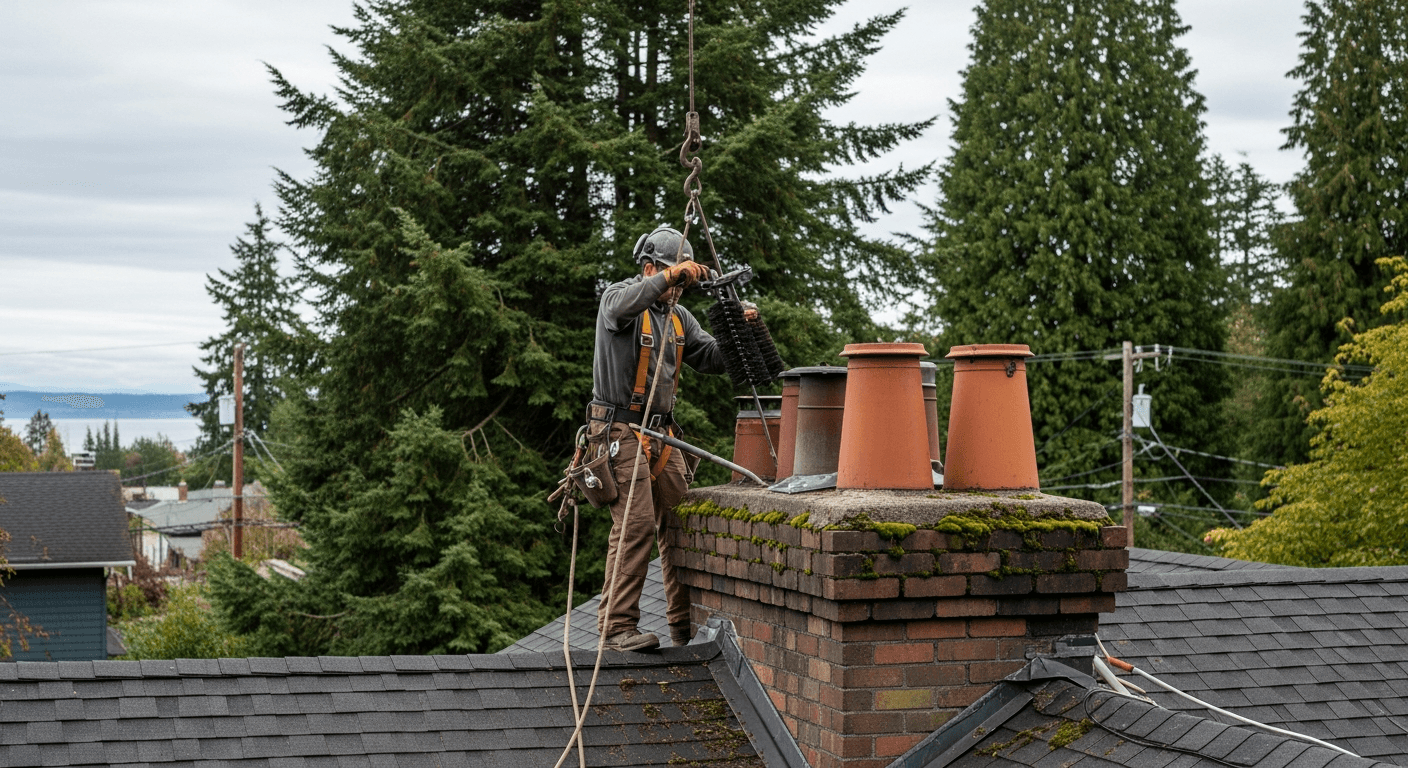
NFPA 211 requires annual inspection for every chimney, fireplace, and venting system — regardless of use frequency. For a Tacoma homeowner burning three or four fires a week from October through March, that means one thorough sweep-and-inspection per year at minimum. If you burn more than two cords of wood in a single heating season, a mid-season spot check before February is worth scheduling.
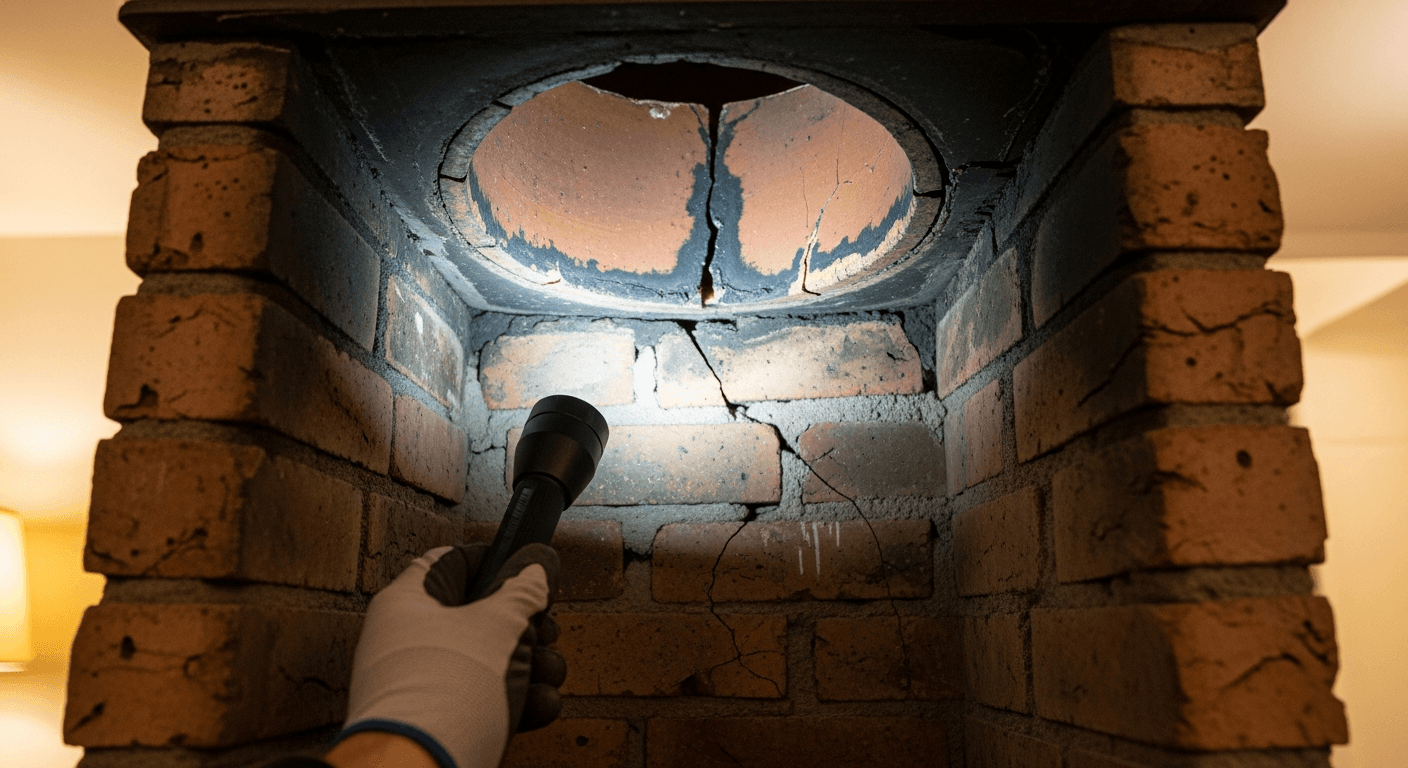
Creosote is the fire hazard everyone knows about, but in Tacoma it shares billing with structural decay. Mortar joints in Pierce County's brick chimneys soften and erode under repeated wet-dry cycling. Standard clay tile liners — used in nearly every local chimney built before 1970 — crack from the combination of thermal expansion and moisture intrusion. Chimney crowns that go unprotected through even one wet winter begin to spall at the edges. Annual inspection catches each of those problems when they're still a minor repair, not a capital project.
Gas fireplaces and inserts require the same annual inspection discipline. They produce negligible creosote but their vent systems are vulnerable to blockages — a bird nest over a gas vent cap after a Puget Sound spring is genuinely common — and their burner components and gaskets need a yearly look. A blocked gas vent is a carbon monoxide risk, not a cosmetic issue.
How often each service is needed — by situation
The right service frequency depends on how the chimney is used, where the home sits in Tacoma, and what the last inspection revealed. The table below maps the most common situations to the recommended service interval for Tacoma residential chimneys.
| Situation or Chimney Type | Recommended Inspection Frequency | Recommended Cleaning Frequency | Notes |
|---|---|---|---|
| Wood-burning fireplace, light use (under 1 cord/season) | Annually | Annually | Standard NFPA 211 minimum for all Tacoma chimneys |
| Wood-burning fireplace, heavy use (2+ cords/season) | Annually | Annually + mid-season check | Mid-season check recommended before February |
| Gas fireplace or insert | Annually | Not applicable for creosote; vent inspection required | Blocked vents are a carbon monoxide risk |
| Pre-1970 clay tile liner chimney | Annually | Annually | Moisture and freeze-thaw cycles accelerate liner cracking |
| Waterfront or near-bay property (Ruston, Old Town, North Slope) | Annually, with cap and flashing on tighter cycle | Annually | Salt air corrodes metal components faster than inland Pierce County |
| Chimney with known crown damage or prior liner crack | Every season until repaired, then annually | Annually | Deferred repair accelerates structural deterioration through wet winters |
| Infrequently used fireplace (a few fires per year) | Annually | Annually | Bird and animal nesting can block flues regardless of burn frequency |
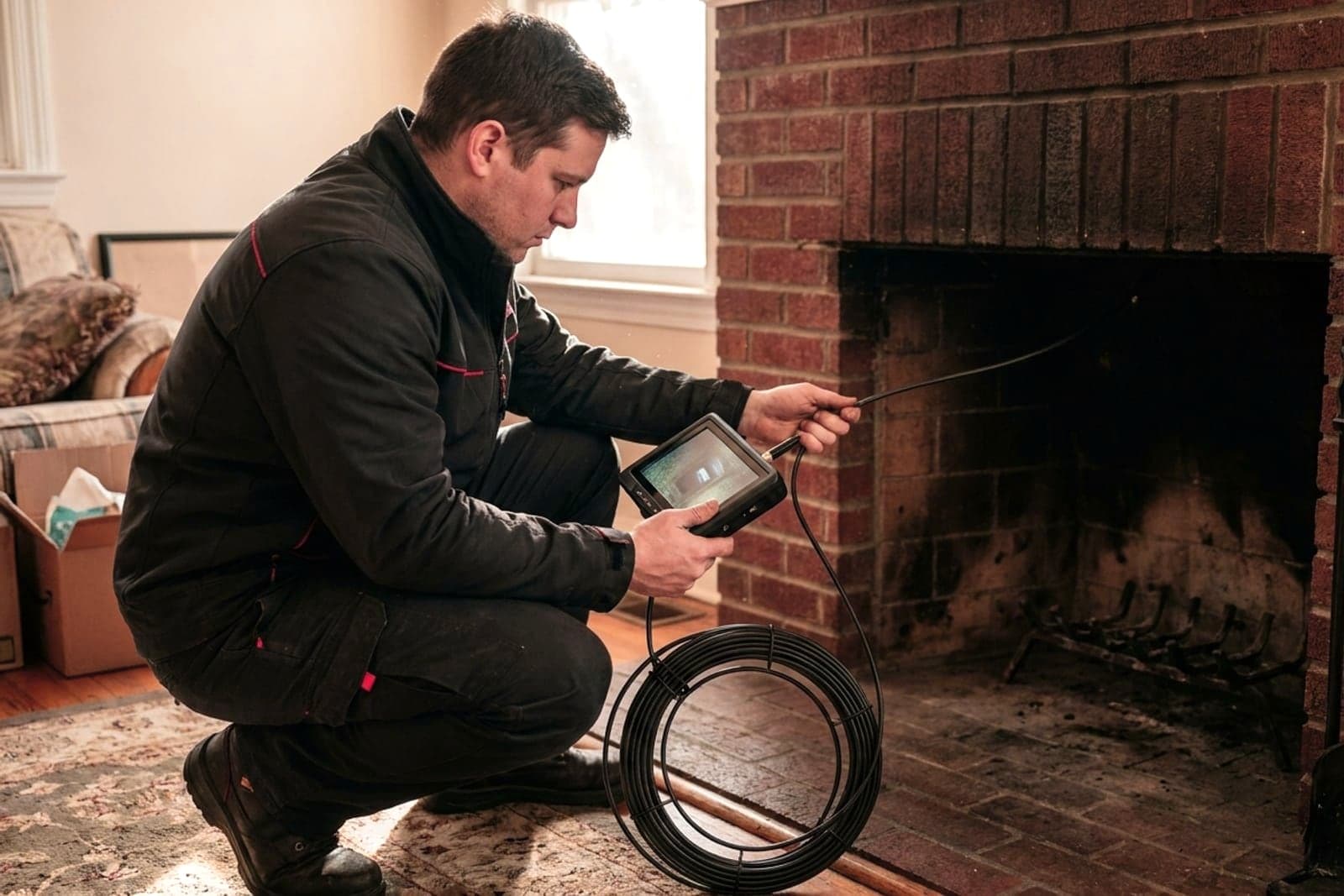
| Home purchased with unknown chimney history | Level 2 inspection immediately, then annually | At purchase, then annually | Level 2 camera inspection reveals hidden liner fractures and uncapped flues |
What a full year of chimney maintenance actually looks like — and what it costs
Most Tacoma homeowners treat chimney service as a single annual event. That framing is basically correct, but the work itself follows a seasonal rhythm. Late summer — August into early September — is the right window: problems discovered then give you time to schedule repairs before your first fire of the season, and technicians are still bookable without a multi-week wait. By mid-October, availability tightens sharply and you risk a cold fireplace while you wait.
Spring is a useful secondary checkpoint for heavy burners or anyone who noticed draft problems, persistent smoke odors, or staining on the firebox walls during the heating season. The crown and flashing inspection below fits naturally into that post-winter window, when any moisture damage from the wet season is visible before summer heat dries and masks surface cracks.
The table below reflects current pricing in the Pierce County market for single-fireplace residential service.
| Service | Best Timing | Typical Tacoma Cost | How Often |
|---|---|---|---|
| Level 1 Inspection | Late August – September | $100–$175 | Annually |
| Chimney Sweep (light to moderate creosote) | Late August – September | $150–$275 | Annually if burning regularly |
| Sweep + Level 1 Inspection Bundle | Late August – September | $200–$325 | Annually — most common package |
| Level 2 Inspection (camera scan of liner) | After any damage event or home purchase | $250–$450 | As needed, or every 3–5 years |
| Heavy / Glazed Creosote Removal | Before first fall fire | $300–$600+ | As needed — depends on burn volume |
| Crown Inspection & Minor Patching | April – May, after wet season | $150–$400 depending on extent | Every 2–3 years given Tacoma's rainfall |
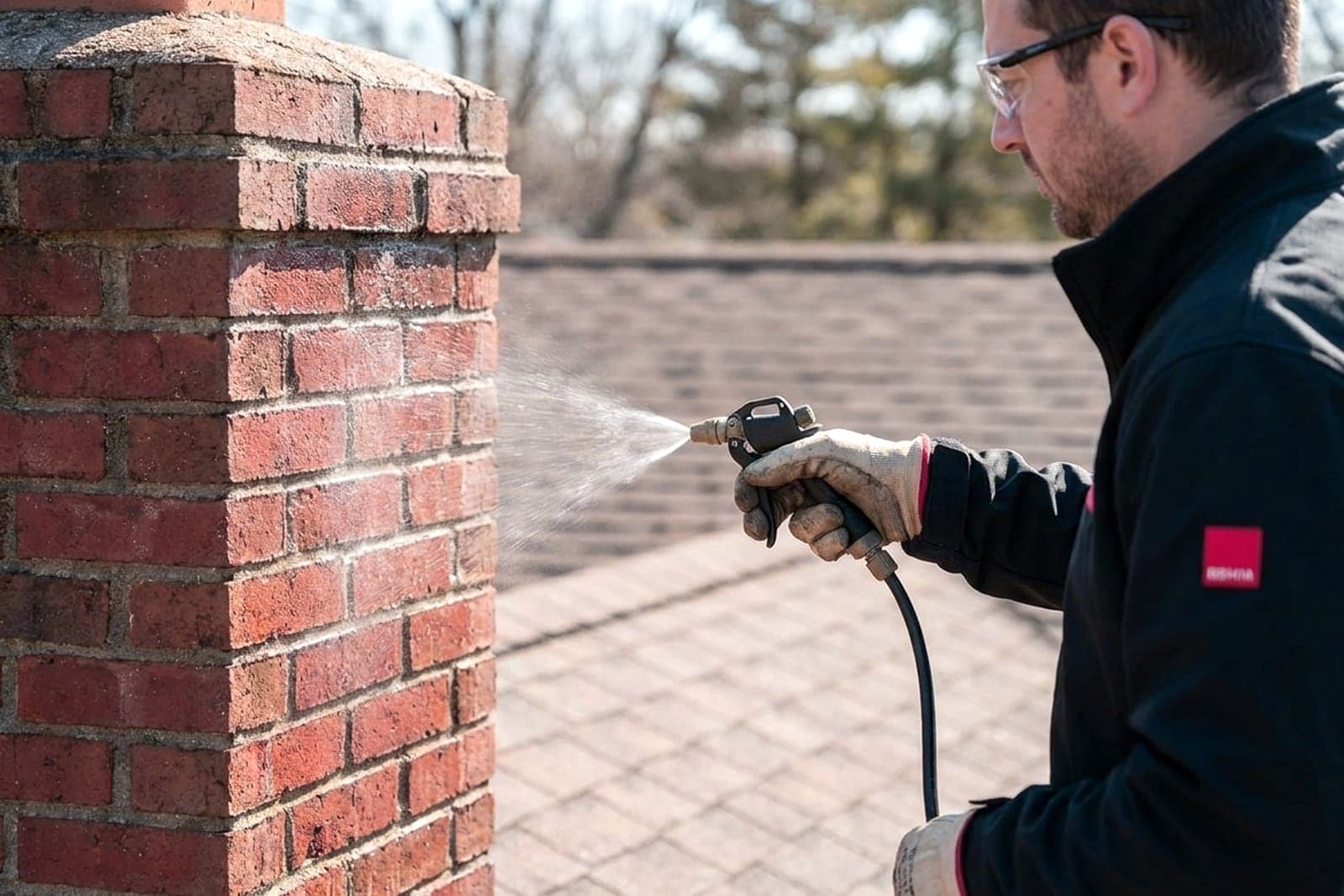
| Full Waterproofing Treatment | Late spring, dry weather required | $200–$500 | Every 5–7 years |
Real Tacoma scenario: the homeowner who skipped two years
In late October — peak booking season — we got a call from a homeowner in the North End who had purchased a 1933 Craftsman two years earlier and assumed the previous owners had maintained the chimney. The fireplace drew fine and she had no obvious problems, so she kept putting off the inspection.
What we found: Stage 2 creosote coating the flue walls — a thick, tar-like deposit that requires chemical treatment before mechanical removal and can't be cleared in a standard sweep. Midway up the clay tile liner, a horizontal crack roughly four inches long, consistent with moisture working through a deteriorating crown over two consecutive wet winters. The crown itself had visible hairline fractures at the corners and soft, friable edges where water had been entering and freezing.
Total cost to bring the chimney to safe, usable condition: $1,740 — liner crack repair with a refractory patch, a two-stage heavy creosote removal, and full crown resurfacing with elastomeric sealant. Two annual sweep-and-inspection visits over the same period would have run approximately $500, and we would have flagged the crown cracking after winter one — before water had cycled through the liner tile for a second season. Deferred chimney maintenance in Tacoma almost never saves money.
Why Tacoma chimneys age faster than the national average
Tacoma averages 38 inches of precipitation per year, with roughly 70 percent of it falling between October and April. That sustained, concentrated moisture load is punishing to masonry. Clay tile liners — standard in virtually every chimney built in this city before 1970 — are brittle by nature and lose structural integrity when wet-dry and freeze-thaw cycles repeat across decades without protective maintenance.
Homes within a mile or two of the waterfront — parts of Ruston, Old Town, the North Slope Historic District, and properties near the tideflats — face an additional accelerant: salt air that corrodes mortar joints and eats through metal components including dampers, chimney caps, and flashing at a measurably faster rate than inland Pierce County properties. If your home has any view of Commencement Bay or sits close to the waterfront, budget for cap and flashing inspections on a tighter cycle and expect mortar joint deterioration to show up earlier than it would on a comparable home in Fircrest or South Hill.
Many Craftsman-era chimneys in Tacoma were engineered to serve multiple appliances — a living room fireplace, a basement furnace, sometimes a separate wood stove — within a single masonry structure using individual clay flue tiles stacked inside. Decades of renovations have frequently removed the furnace or the stove while leaving one of those interior flue tiles open and uncapped at the top. An abandoned uncapped flue is a direct moisture and pest entry point into the chimney structure and, in worst cases, into the house framing around it. You won't find that without an inspection.
How to build a simple chimney maintenance plan you'll actually stick to
Homeowners who stay ahead of chimney problems share one habit: they treat the annual service appointment like a utility payment — scheduled in advance, expected, and already in the budget. Book your sweep-and-inspection every August. Do it now, set a recurring phone reminder, and the lion's share of chimney maintenance takes care of itself for most households.
Between annual appointments, watch for four specific warning signs that warrant an unscheduled call: white chalky staining (efflorescence) on exterior brick, which means water is actively moving through the masonry; black staining or smoke odor inside the firebox without a recent fire; visible crumbling or missing mortar at the crown when you look up from the yard; and any change in how the fireplace drafts — sluggishness, back-puffing, or smoke rolling into the room. Each of those is a symptom, not a cosmetic issue.
If you're purchasing an older Tacoma home — especially anything built before 1960 — make a Level 2 camera inspection a non-negotiable part of your due diligence. At $250 to $450, it will reveal liner fractures, abandoned uncapped flues, and improper appliance connections that a visual walk-around cannot detect. That information belongs in your purchase negotiation, not in your first winter's repair bills.
Frequently asked questions
How often does a chimney really need to be cleaned?
A Tacoma chimney needs professional cleaning once a year at minimum if the fireplace burns wood. NFPA 211 requires annual inspection for all chimneys regardless of use frequency. In Tacoma, where wet winters and aging clay tile liners are standard, that annual visit also catches moisture damage before it escalates into a major repair. If a Tacoma household burns more than two cords of wood per season, adding a mid-season check in January or February is worthwhile.
Will homeowners insurance cover chimney repairs?
Homeowners insurance covers sudden, accidental damage to a Tacoma chimney — a chimney toppled by a windstorm or struck by a falling fir tree. It almost never covers deterioration from deferred maintenance, which is the source of the vast majority of chimney repairs in Tacoma: cracked crowns, failing liner tiles, eroded mortar joints. Keeping dated records of annual inspections documents that the chimney was properly maintained, which matters if a claim for an unrelated sudden event is ever filed.
How much does a chimney sweep cost in Tacoma?
A standard chimney sweep for a single Tacoma fireplace with light to moderate creosote runs $150 to $275. Bundling the sweep with a Level 1 inspection — the most common service package in the Pierce County market — typically costs $200 to $325 and is the better value for most homeowners. Heavy or glazed creosote requires chemical pre-treatment and additional labor, pushing the cost to $300 to $600 or more depending on severity.
What does chimney repair cost in Tacoma?
Minor crown patching on a Tacoma chimney runs $150 to $400. Tuckpointing deteriorated mortar joints costs $300 to $800 depending on how much of the chimney is affected. Flashing repair typically falls between $300 and $600. Full stainless steel liner installation — the most common major repair in Tacoma's pre-1970 homes — ranges from $1,500 to $4,500 depending on liner diameter and chimney height. Repairs caught at annual inspection almost always land at the lower end of those ranges.
Can I skip the inspection if I only use my fireplace a few times a year?
No. The structural risks specific to Tacoma — crown cracking, mortar erosion, liner fractures from moisture — accumulate in a Tacoma chimney whether fires are lit or not. An infrequently used fireplace can also develop a blocked flue from bird or animal nesting over spring and summer. The annual inspection is as much about the masonry and the structure as it is about creosote buildup.
Related services