A chimney has no fan and no motor, yet on a good night it pulls smoke out of the room steadily for hours. It works because hot gas is lighter than the cool air around it, and a tall, enclosed column of hot gas creates a steady upward pull called draft. Everything else in a chimney, from the damper to the cap, either helps that pull or protects the house from the heat and moisture that come with it. This guide walks through how draft works, what each part is for, and why the same chimney can draw perfectly one evening and smoke the next in a Tacoma winter.
Draft, in plain terms
Air expands and gets lighter as it heats. Inside a flue, the column of hot combustion gas weighs less than a column of outside air of the same height, so the outside air pushes in at the bottom and the hot gas rises out of the top. The taller and warmer the column, the stronger the pull.
That is also why draft is weakest at the start of a fire. A cold flue holds cold, heavy air that resists moving until it warms. Anything that cools the gas on its way up, such as an oversized flue, a flue on an outside wall or wet fuel, slows the draft and leaves more residue behind on the walls.
The parts, from the bottom up
Masonry chimneys and factory-built metal chimneys follow the same logic even though they are built differently. The table covers the pieces of a typical masonry fireplace chimney, the kind found in many Tacoma houses.
| Part | What it does | Common problem |
|---|---|---|
| Firebox | Holds the fire, lined with firebrick | Cracked brick, open mortar joints |
| Damper | Closes the flue when there is no fire | Rusted shut or stuck partly open |
| Smoke chamber | Funnels smoke from the firebox into the flue | Rough, stepped walls that trap creosote |
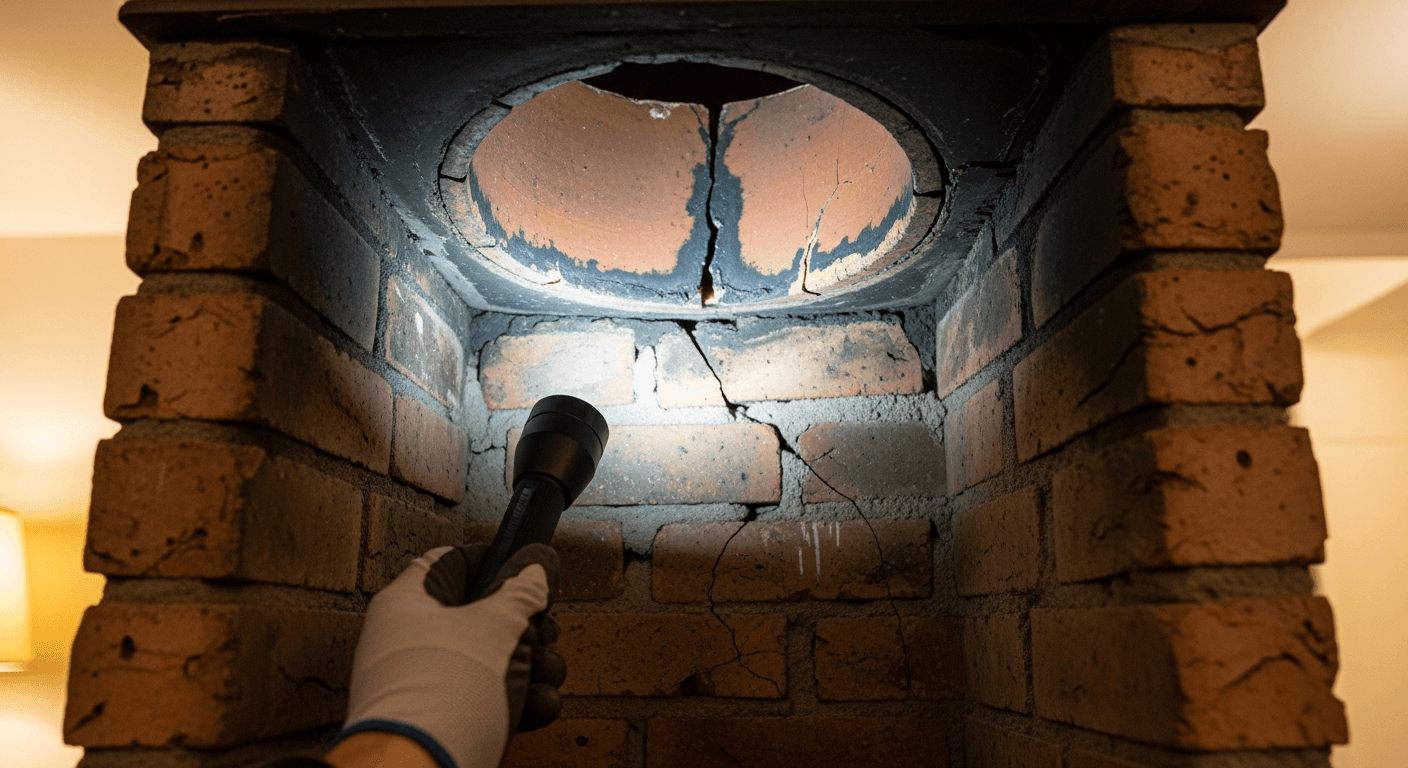
| Flue liner | Contains heat and gases, protects the masonry | Cracked or missing clay tiles |
| Crown | Caps the masonry and sheds rain off the stack | Cracks that let water into the stack |
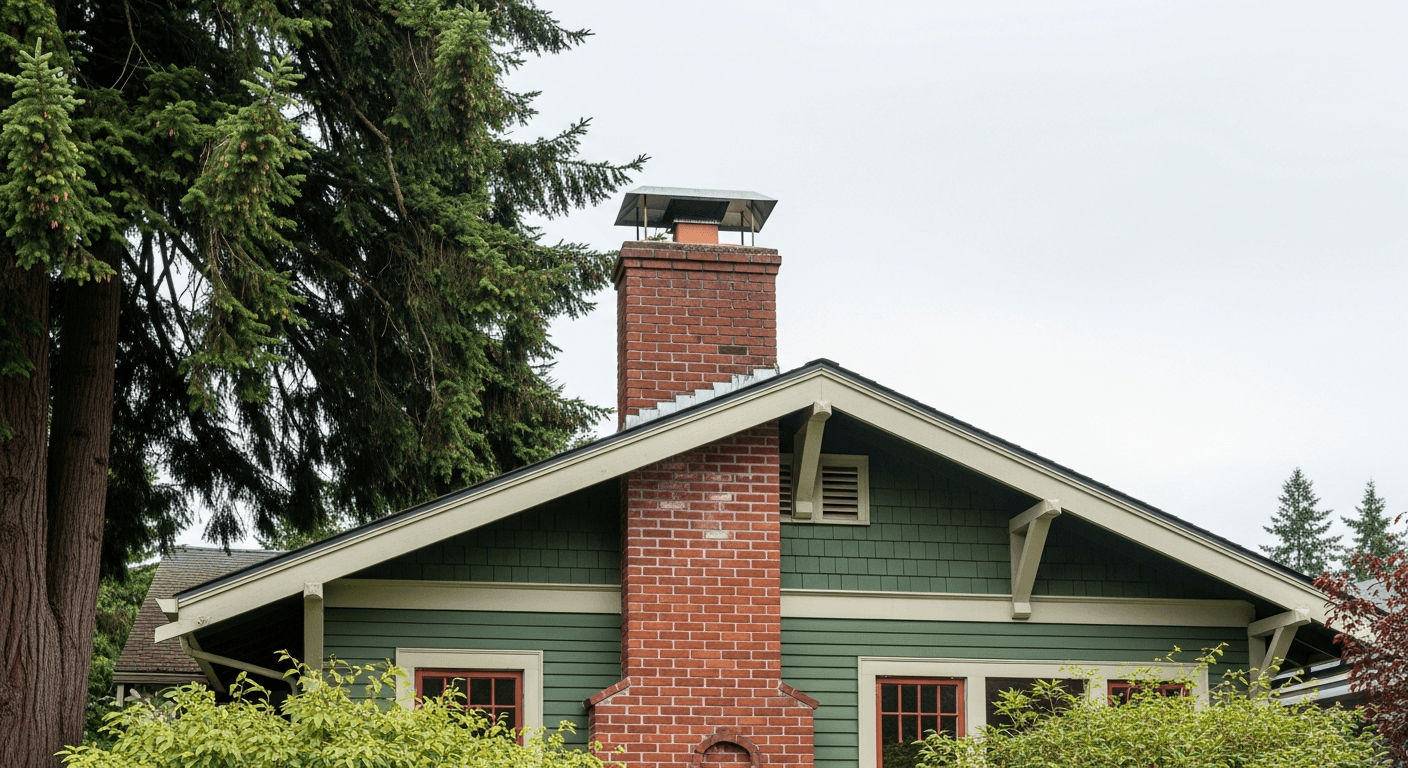
| Cap | Keeps rain, animals and embers out | Missing, rusted or clogged mesh |
| Flashing and cricket | Seal the joint where the chimney meets the roof | Leaks at the roof line |
What Washington's code expects of a chimney
Several of those parts are written into the 2021 Washington State Residential Code, which took effect statewide on March 15, 2024. A masonry chimney has to be lined, with clay flue tile, a listed lining system, a listed factory-built chimney or another approved material able to resist corrosion and cracking at temperatures up to 1,800 degrees Fahrenheit. Interior chimneys need a 2-inch air gap to combustible framing, and exterior ones 1 inch.
On the roof, the stack's top must clear its own roof opening by 3 feet or more, and stand 2 feet taller than any roof or wall closer than 10 feet, a rule that exists partly for draft: wind swirling around a roof ridge can press down on a short chimney. A chimney wider than 30 inches that does not sit on the ridge needs a cricket, a small peaked diverter behind it that sends water around the stack instead of letting it pool.
Tacoma adds its own requirements when an appliance goes in: stoves and fireplaces must be listed by an approved testing agency and meet state or EPA emission standards, and the city asks installers to confirm an existing masonry chimney is lined first.
Why draft changes with Tacoma weather
Draft depends on the difference between the flue and the outdoors, so weather matters. On cold, still winter evenings, cool air settles near the ground and smoke has trouble dispersing; Washington's Department of Ecology identified exactly those evenings as the time when wood smoke used to push the Tacoma-Pierce County area over the federal fine-particle limit.
Wind has the opposite effect in a different way. WeatherSpark reports that Tacoma's wind blows mostly from the south from about September to June, with a windier stretch from mid-October to late April. Gusts across a short or poorly capped chimney can push smoke back down, which is why a fireplace may draw well one night and puff into the room the next.
| What happens | Likely reason | Usual remedy |
|---|---|---|
| Smoke rolls out when lighting | Cold flue, heavy air column | Warm the flue first, crack a window |
| Smoke puffs back on windy nights | Downdraft over a short stack | Cap or wind-directional cap, height check |
| Smoky room with exhaust fans on | House pulling air down the flue | Outside air supply, fans off while burning |
| Weak draw all season | Oversized or blocked flue | Inspection, cleaning or a sized liner |
Old chimneys, new appliances
Census estimates put the median Tacoma home at 1967, and almost two in three of its housing units predate 1980. Many of those chimneys were built for open fireplaces and have since had an insert, a gas appliance or a new furnace connected to them. Each change alters what the flue carries, and NFPA 211 and CSIA treat swapping in a dissimilar appliance as a reason for a Level II inspection before the new one is used.
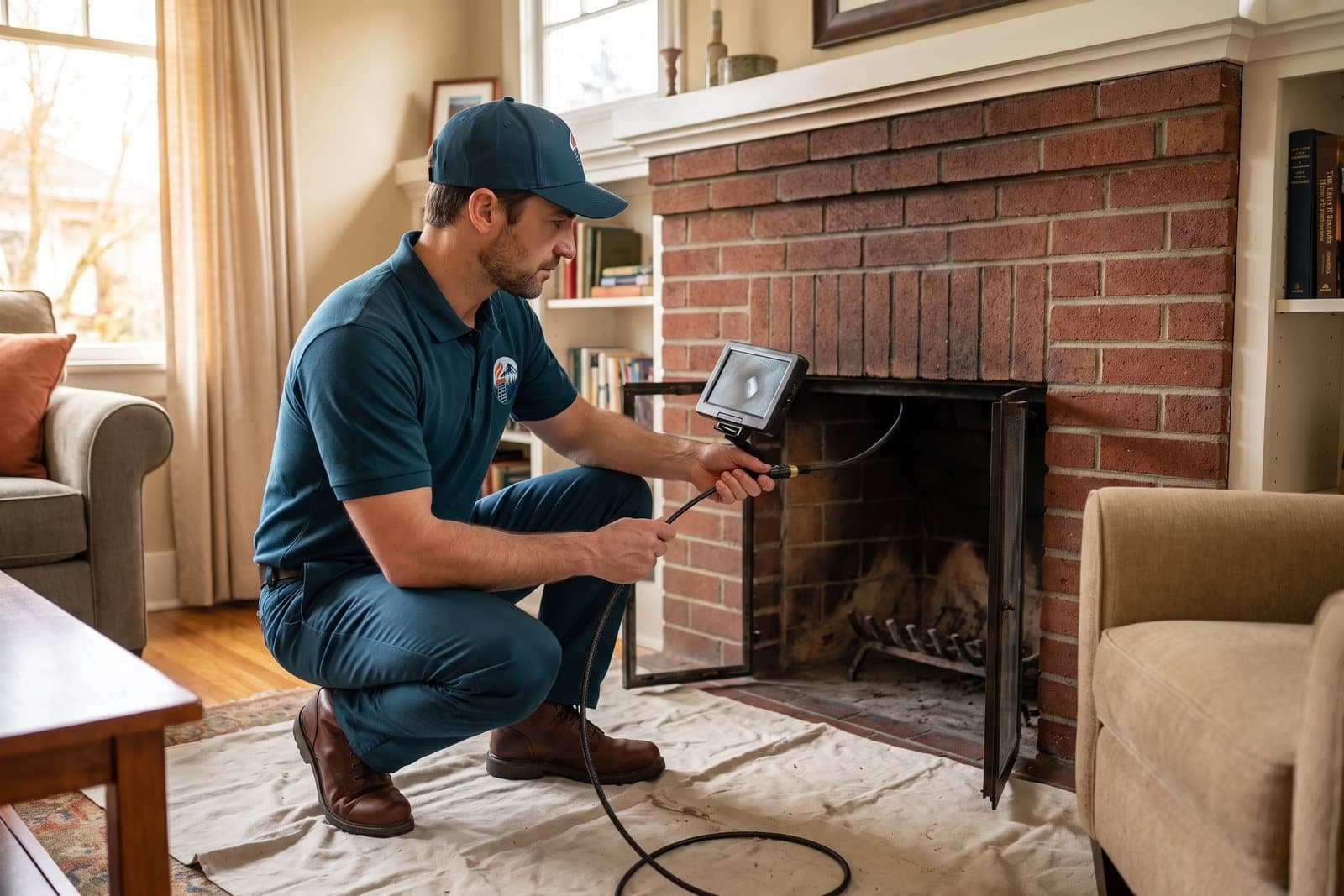
If you are not sure what your chimney has inside it, an inspection answers that question. Ours is $99 plus tax, and that amount comes off the bill for any repair you then approve.
Frequently asked questions
Why does my fireplace smoke only when I first light it?
A cold flue is full of heavy, cool air that has to be pushed out before draft starts. Warming the flue with a small, hot kindling fire, or cracking a window near the fireplace, usually gets it drawing.
Is a taller chimney always better?
Height helps draft up to a point, and the state code sets minimum heights above the roof. Beyond that, a flue sized correctly for the appliance matters more than extra feet of masonry.
What is the difference between a chimney and a flue?
The chimney is the whole structure. The flue is the passage inside it that carries smoke; one chimney can hold several flues, for example a fireplace and a furnace side by side.
Can a house be too airtight for its fireplace?
Yes. Kitchen and bath fans and a tight building shell can pull air down the flue. Supplying some outside air near the fireplace often cures smoke that spills into the room.
Sources
- UpCodes — WA Residential Code, Chapter 10 — accessed September 24, 2026
- WA SBCC — 2021 codes effective date — accessed September 24, 2026
- City of Tacoma — Woodstoves and Fireplaces — accessed September 24, 2026
- WA Ecology — Tacoma-Pierce fine particle progress — accessed September 24, 2026
- WeatherSpark — Tacoma climate — accessed September 24, 2026
- Census Reporter — ACS year built — accessed September 24, 2026
- NFPA 211 — inspection levels input — accessed September 24, 2026
Related services