Gig Harbor, Pierce County
Dryer vent cleaning in Gig Harbor runs $105 to $260. Expect the lower figure for a main-floor laundry venting straight through a wall; a long run to the roof, a second-story laundry or a vent blocked by a nest sits at the top. We clear lint along the whole run, from behind the dryer to the exterior, free the damper flap and measure the airflow before we leave.
Typical investment
$105–$260
Book an inspection
Book your $99 inspection
$99 plus tax, deducted when you approve the repair
Not sure where to start
Pick what you're seeing at your Gig Harbor home — we'll point you to the right fix.
What we do
The same crew, the same written quote — for Gig Harbor homes.
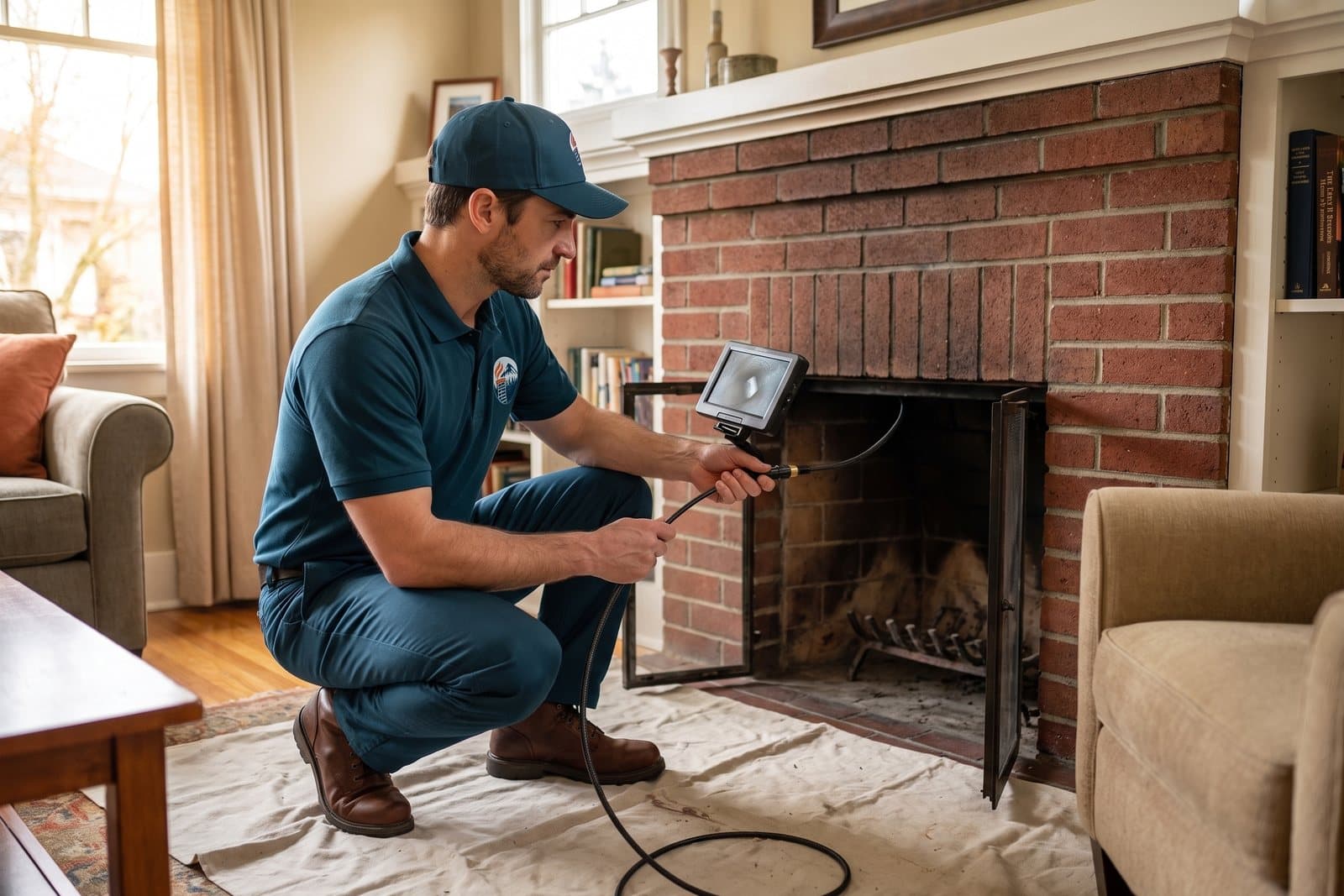
Level 1 or Level 2 as needed; Level 2 includes a camera run through the entire flue
Learn more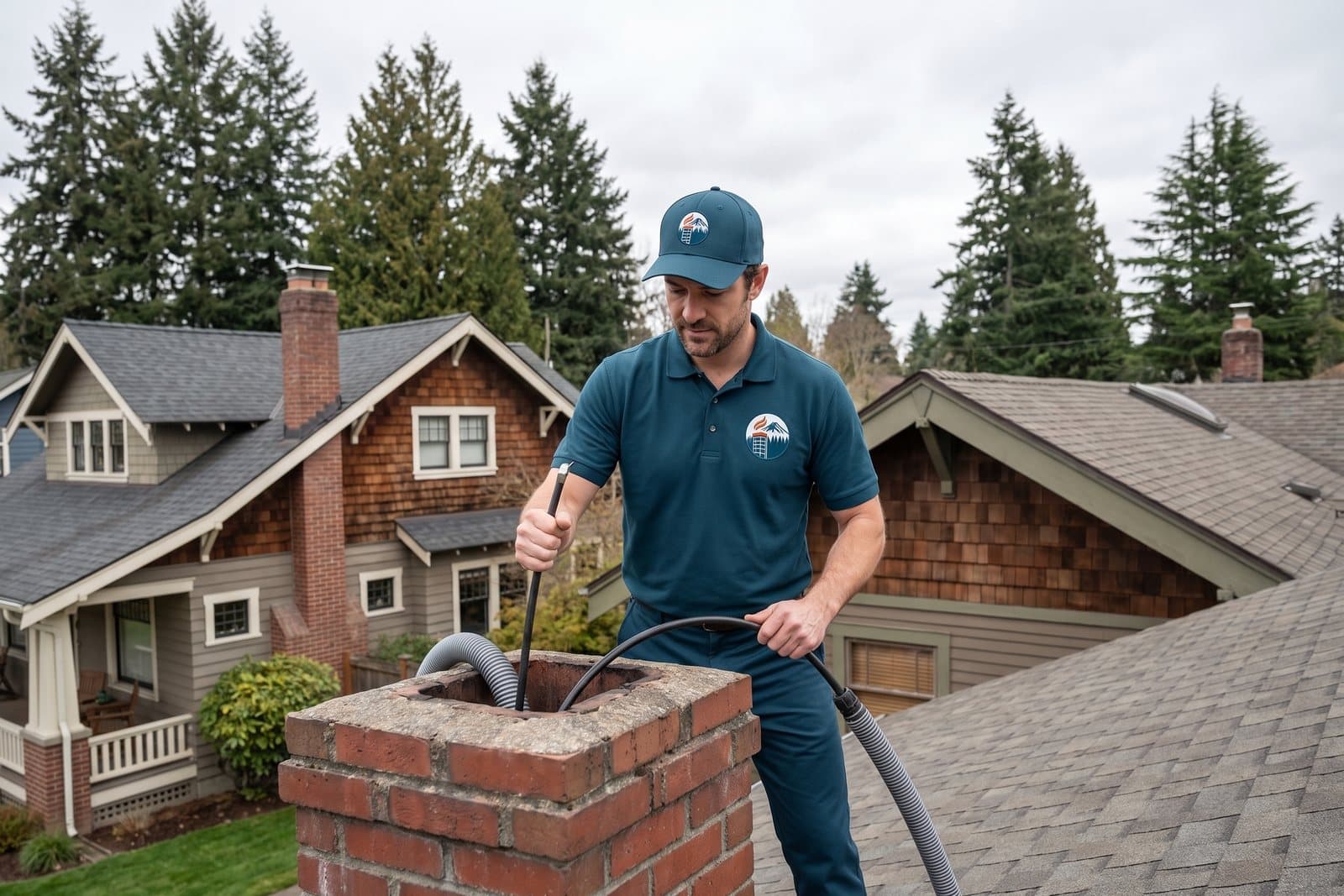
Top-to-bottom brushing of flue and firebox under drop cloths, with a HEPA vacuum pulling the dust
Learn more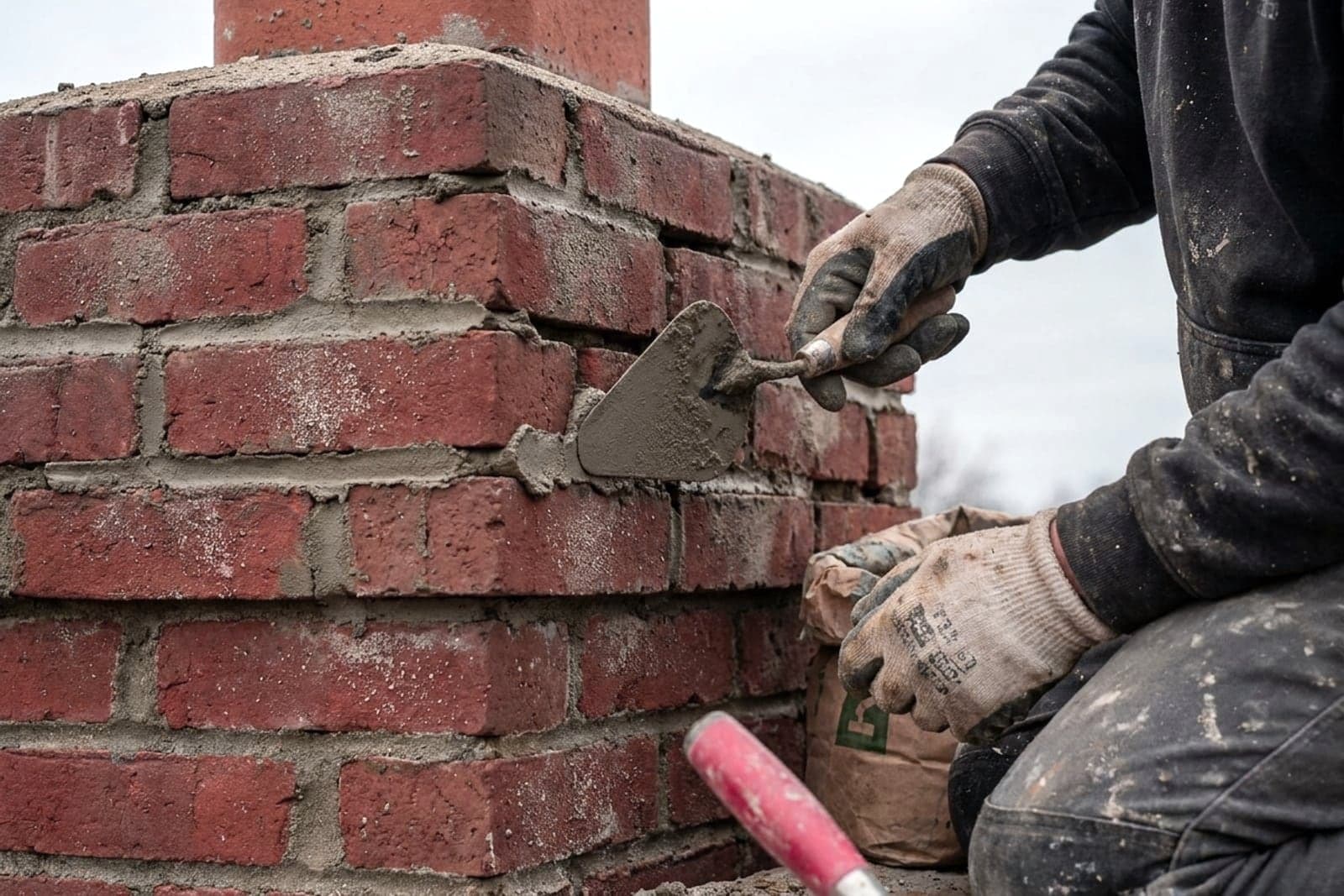
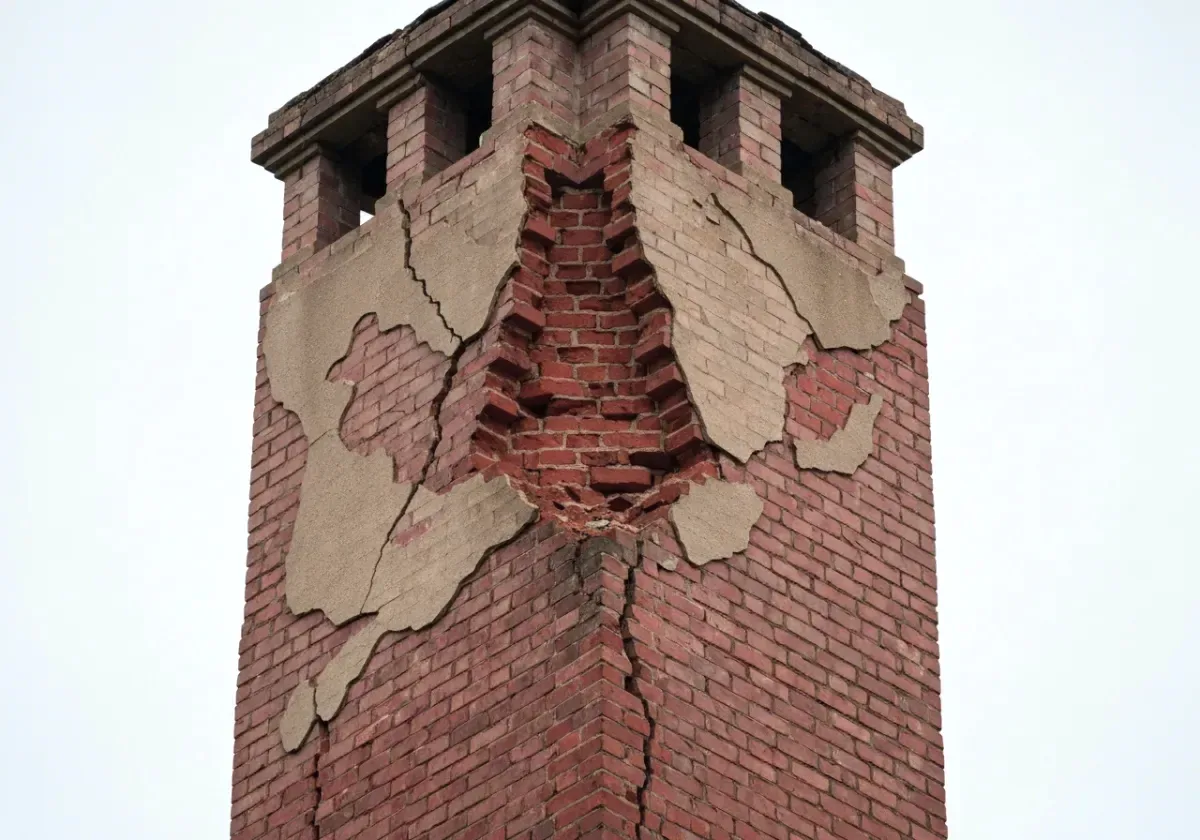
Loose or damaged brick, open joints and firebox panels repaired
Learn more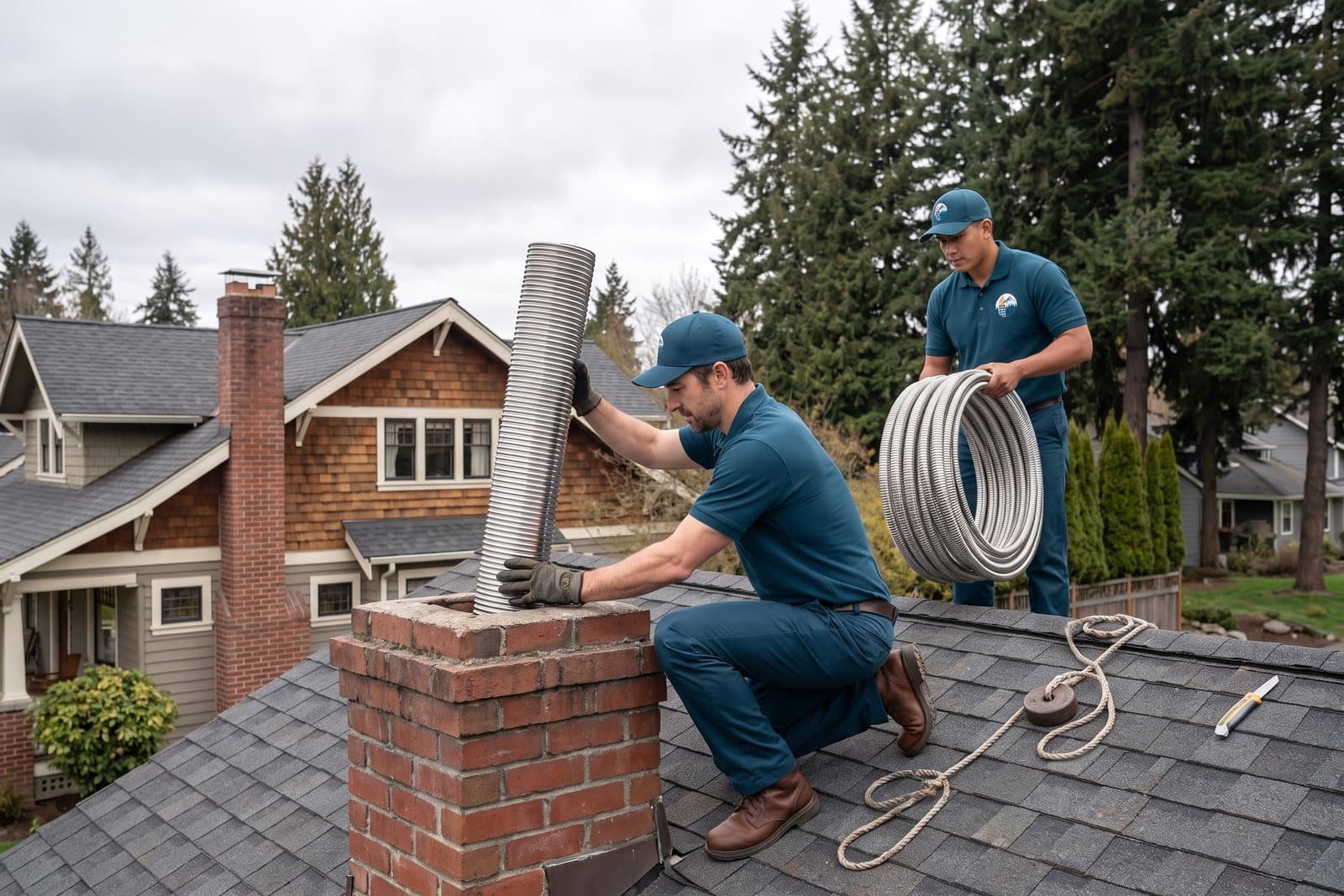
A full-length stainless-steel or cast liner, firebox to chimney top
Learn more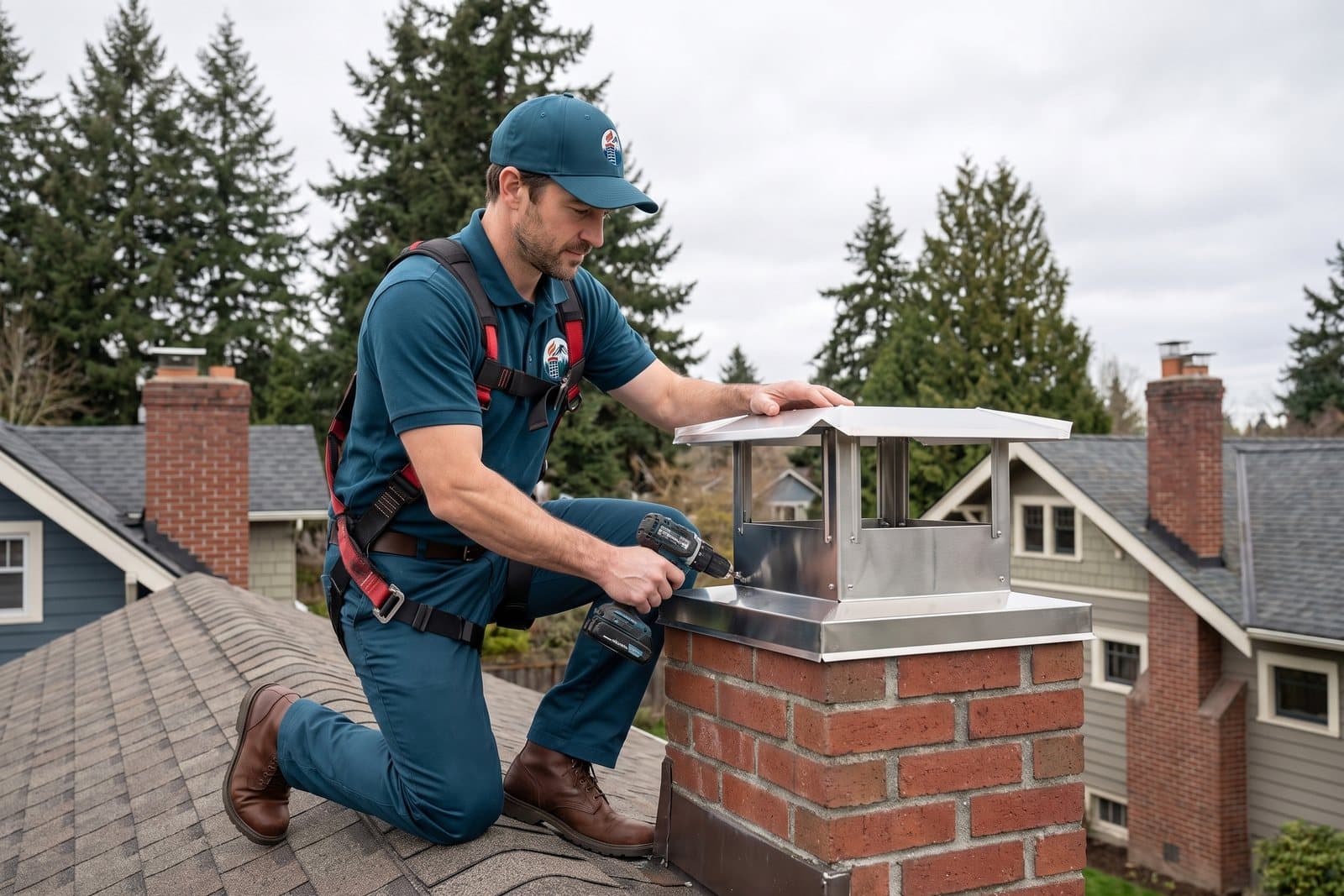
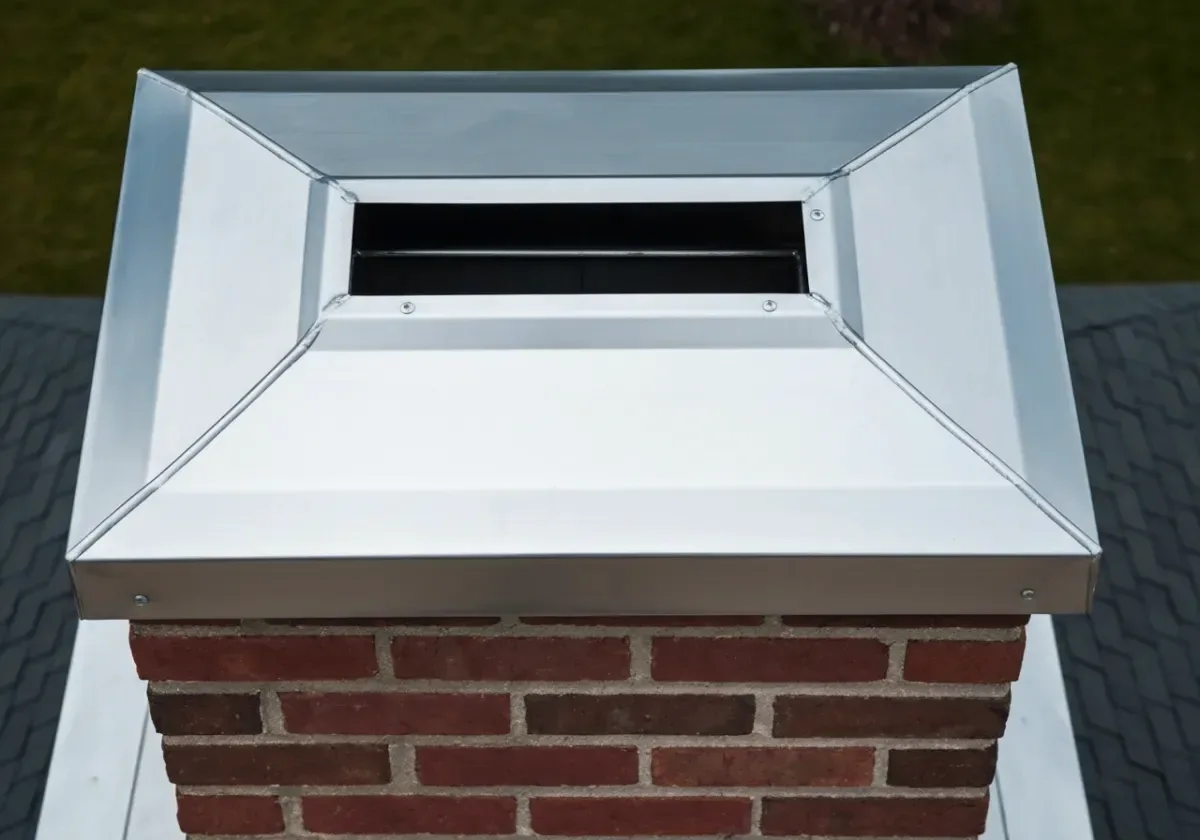
A stainless cap sized to your actual flue dimensions
Learn more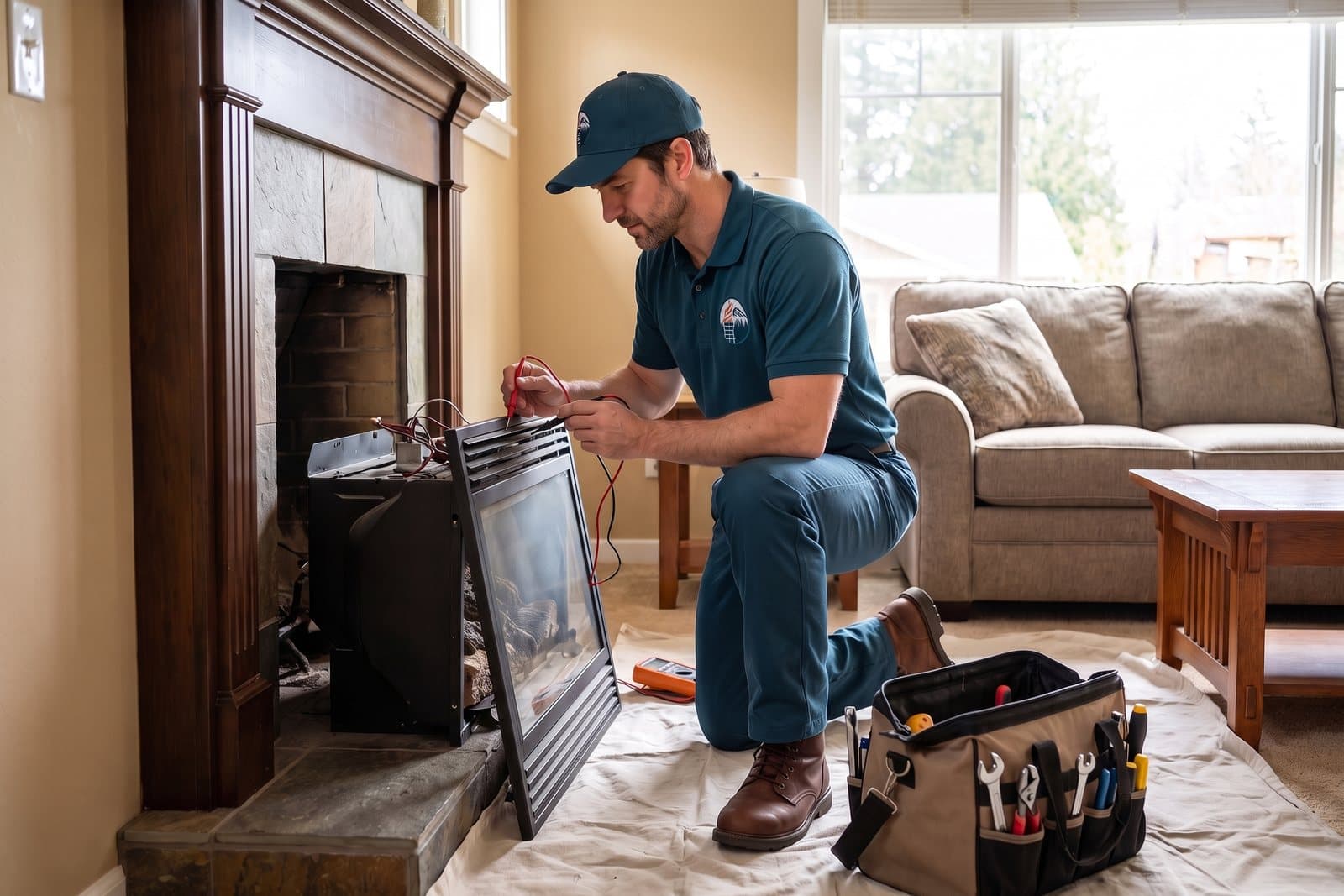
Burner, pilot assembly and valve cleaned and adjusted
Learn moreRanges shown for orientation — the exact figure is written up on-site, after the inspection.
Most Gig Harbor homes were built in 1980 or later, and in a newer two-story house the laundry often sits upstairs or mid-house, which means a long duct with several turns before it reaches the outside, sometimes through the roof. Those runs clog faster and are harder to reach than a short vent through a basement wall.
Gig Harbor is a Puget Sound bay with the city on its shores, on the Gig Harbor Peninsula. On homes that face the water, the dryer hood is often on a wall that takes the wind head-on, and gusts can hold a light flap open or pack wet lint into it.
Washington's 2021 residential code wants the exhaust to leave through a hood with a backdraft damper, placed 3 feet or more from doors, windows and other openings, and it forbids a screen on it. We make sure the flap closes on its own, so cold air and rain stay out between loads.
A dryer that vents through the roof shares that roof with moss, needles and cones. OSU Extension notes that moss holds soil and debris against roofing, and around a roof cap that debris mixes with lint into a damp plug that the dryer's airflow cannot clear.
Roof runs are also the long ones. The state code's length limit for a 4-inch metal run is 35 feet, and each 90-degree turn takes 5 feet off it, so a laundry two floors below a roof vent can be at or past the limit before any lint builds up.
Every dryer vent cleaning we do in Gig Harbor includes:
Smoke coming back into the room, or a smell that won't go? Book the inspection first.
Book nowWhat slows a dryer down here is usually lint packed at the elbows, a crushed foil transition hose behind the machine, or a hood outside whose flap is stuck open or shut. Screened hoods are a problem of their own: lint mats against the screen and the air stops moving. If a load that used to dry in one cycle now needs two, the vent is the first thing to check.
With the dryer running, we measure the air leaving the hood to get a before figure.
We slide the machine out, inspect the connector hose, then brush and vacuum the duct all the way to the hood.
Lint and nests are cleared at the termination and the damper flap is freed to close properly.
The dryer is reconnected, the airflow measured again, and anything that needs fixing is written down.
Dryers work hardest in the wet months, when nothing dries on a line. Nationally, USFA estimates 2,900 home clothes dryer fires every year; failure to clean is the leading factor, in 34% of them, and January is the peak month.
Damp lint clings to the duct walls more than dry lint does, and a flexible foil hose traps it in every ridge. Code limits the exposed transition duct to 8 feet and requires the run itself to be smooth metal, the kind of duct that stays cleanable.
What this work is quoted at for Gig Harbor homes — the exact figure comes from the $99 on-site inspection, credited toward the work.
| Service | Price in Gig Harbor | What that covers |
|---|---|---|
| Dryer Vent Cleaning | $105–$260 | Full run cleaned; roof or upper-floor terminations at the top |
| Chimney Sweep | $189–$449 | Full flue swept, Level 1 inspection included |
| Chimney Inspection | $99 plus tax | Level 1 visual; Level 2 adds a full camera scan |
| Chimney Relining | From $1,900 | Full-length stainless liner, sized to the appliance |
| Chimney Repair | From $375 | Masonry repair — brick and mortar, scoped after diagnosis |
Ranges are what these jobs are quoted at in Gig Harbor. The exact figure is set on site after a $99 inspection (credited toward the job if you go ahead), and you approve it before any work starts.
Gig Harbor is a harbor town incorporated in 1946, settled early by a Croatian fishing community on the west side and Scandinavians at the north end, on the Gig Harbor bay, on Puget Sound, with mostly newer homes — a median build year of 1998, fewer than a quarter built before 1980.
Gig HarborPierce County, WA · 47.329, -122.581
Before and after
Illustrations of what each repair changes on a typical chimney — not photos of a specific job.
 Before
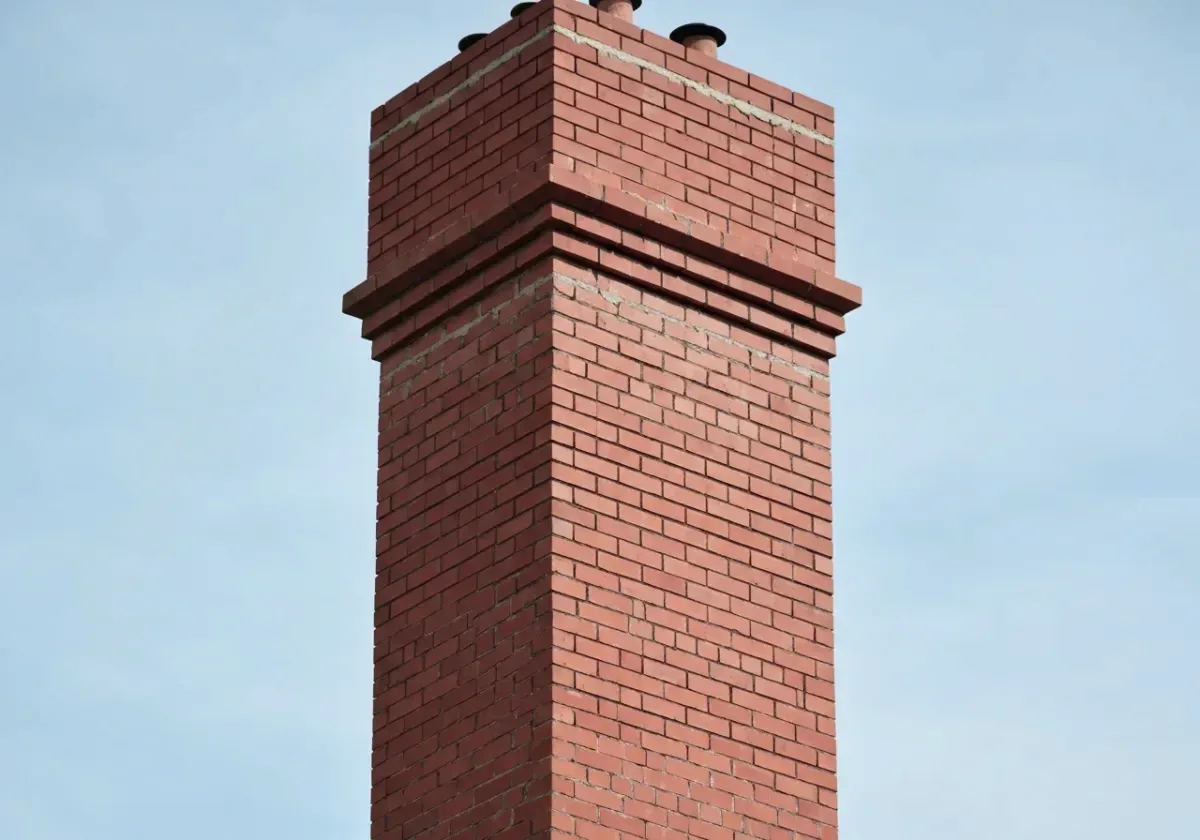 After
After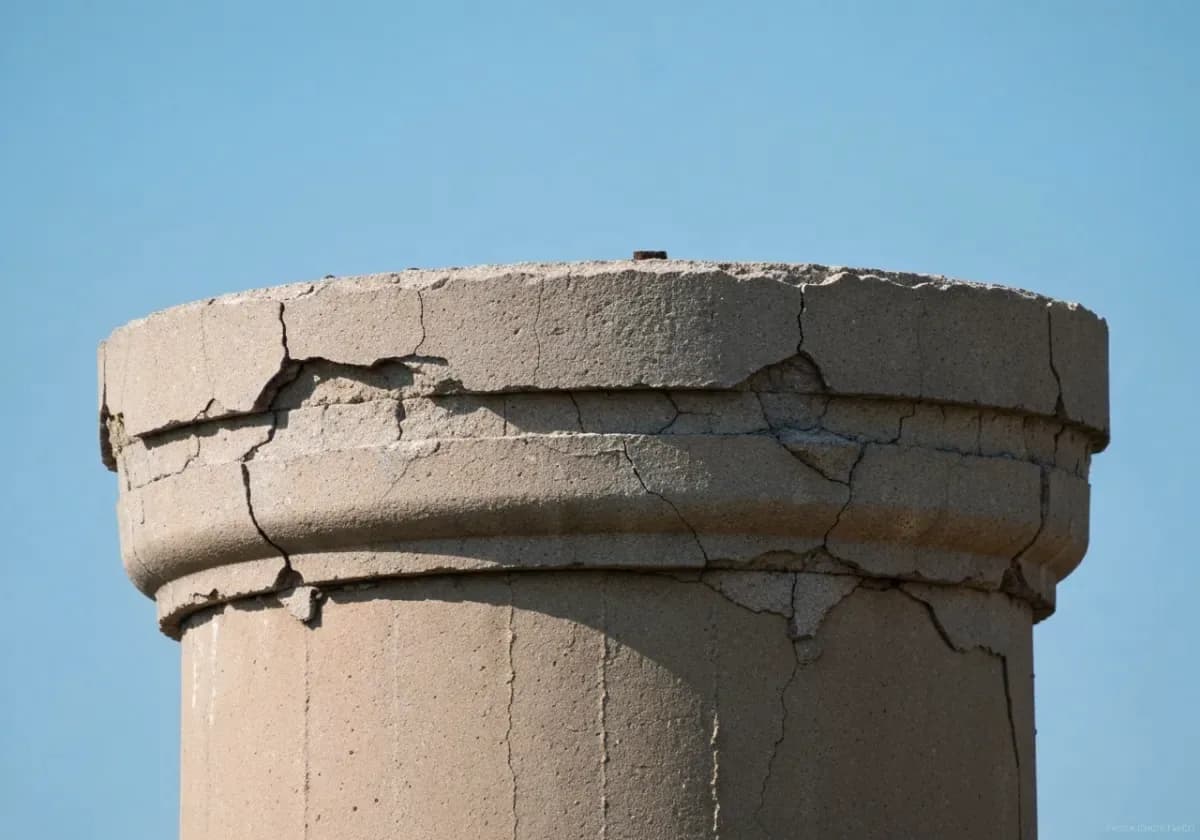 Before
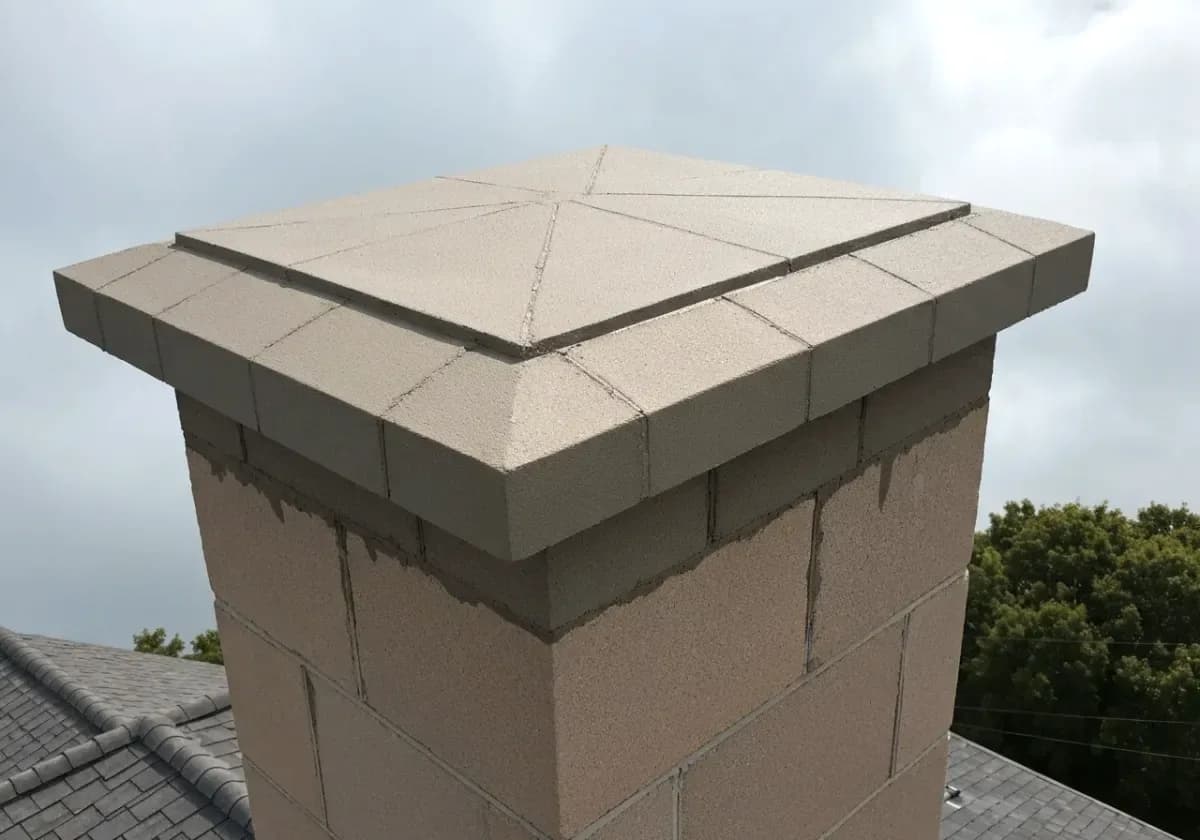 After
After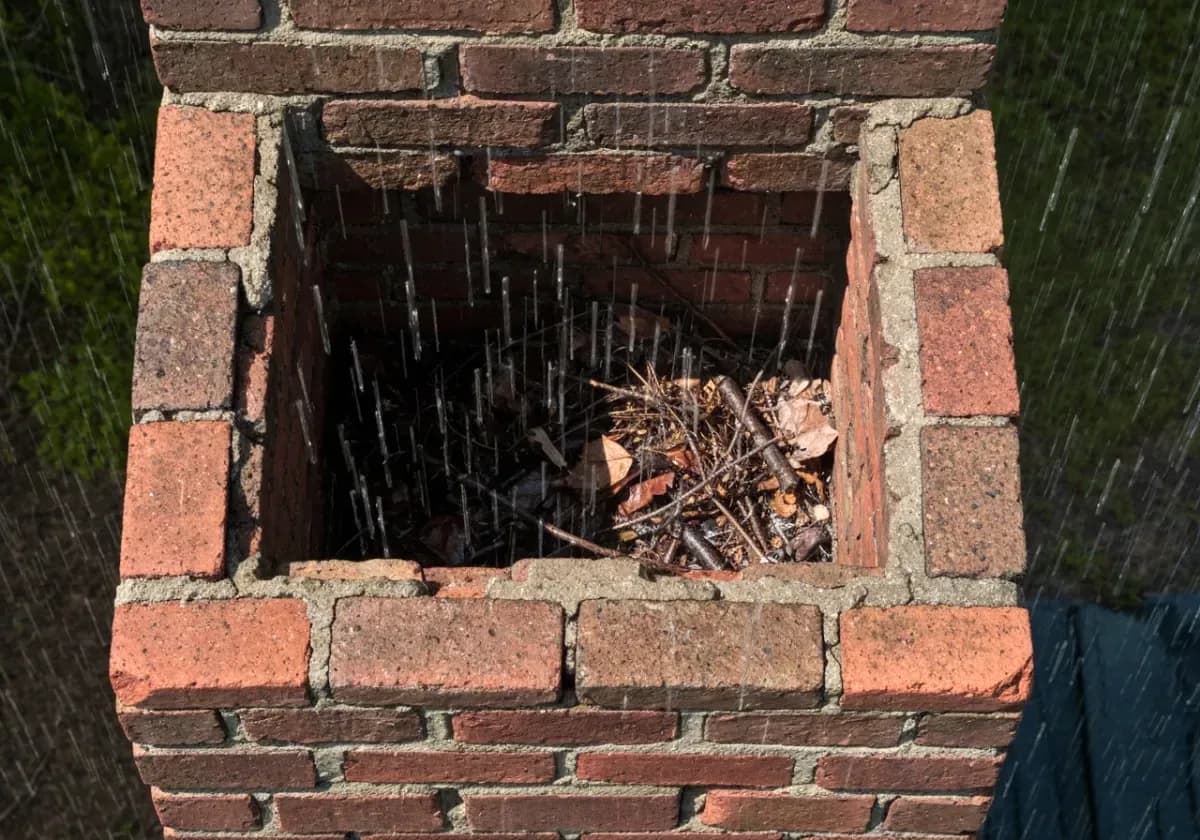 Before
 After
After
Four steps, each one on paper — so you always know what happens next.
Choose a genuine opening on the crew's calendar. Confirmation is immediate.
Liner, crown, cap, flashing and masonry examined in order — each finding photographed.
One document, plain numbers, covering only the work your chimney genuinely needs.
The repair is completed, then handed over with before-and-after photos of every item.
$105 to $260. Short wall vents sit at the bottom; long runs, roof vents and blocked terminations cost more.
Yearly suits a typical household; big families and long runs need it sooner. A drop in drying performance is the signal not to wait.
Yes. We clear it from both ends when we can, and check that the roof cap is not blocked by lint, needles or a nest.
A $99 on-site inspection, a written quote before any work, and photos of every item we touch.