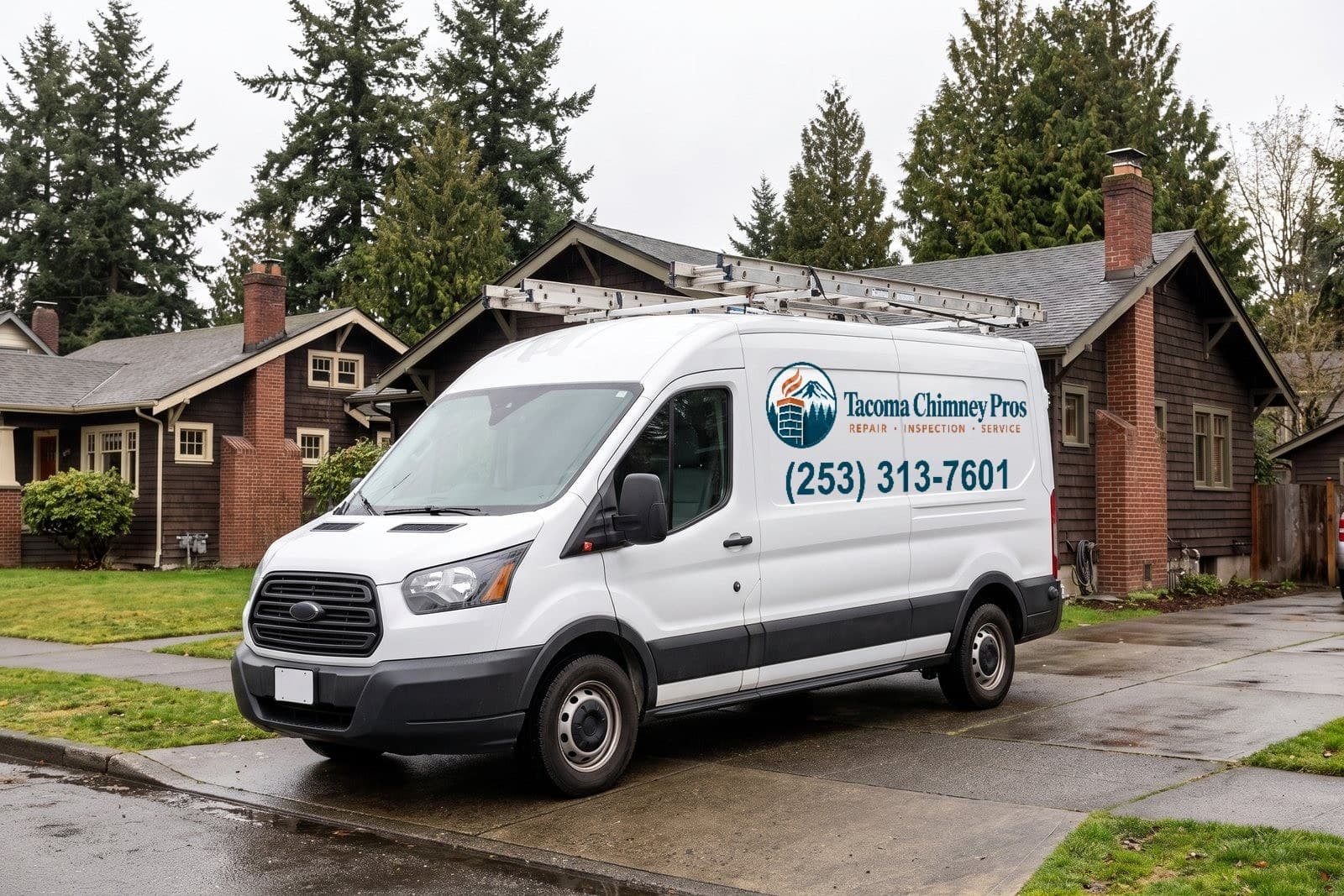
Gig Harbor, Pierce County
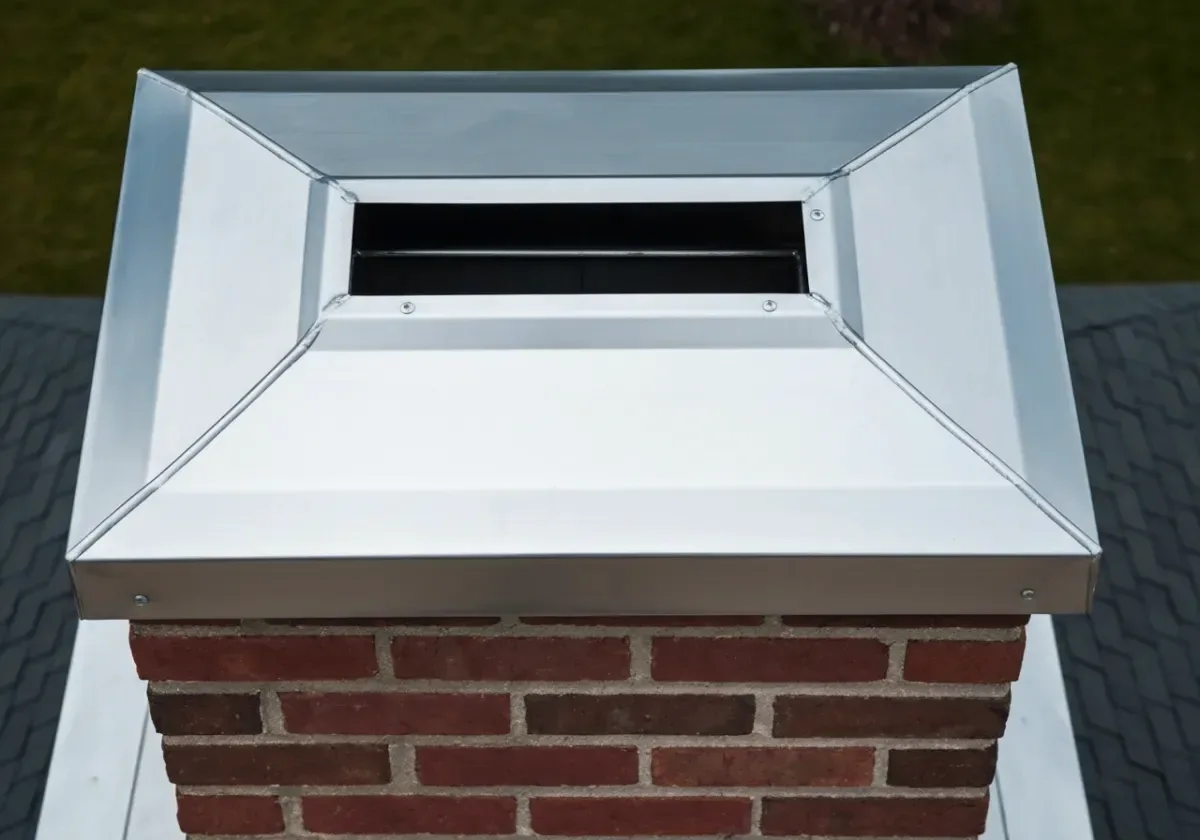
Chimney cap installation in Gig Harbor costs $265 to $750. Where you land depends on the flue: one round or square clay tile takes an off-the-shelf stainless cap near the bottom of that range, while a crown carrying several flues, or an unusual size, calls for a larger or made-to-measure cap near the top. Whatever the size, the cap has three tasks: it keeps rain off the flue, it keeps birds and fir needles out, and its screen catches embers before they reach the roof.
Typical investment
$265–$750
Book an inspection
Book your $99 inspection
$99 plus tax, deducted when you approve the repair
Not sure where to start
Pick what you're seeing at your Gig Harbor home — we'll point you to the right fix.
What we do
The same crew, the same written quote — for Gig Harbor homes.
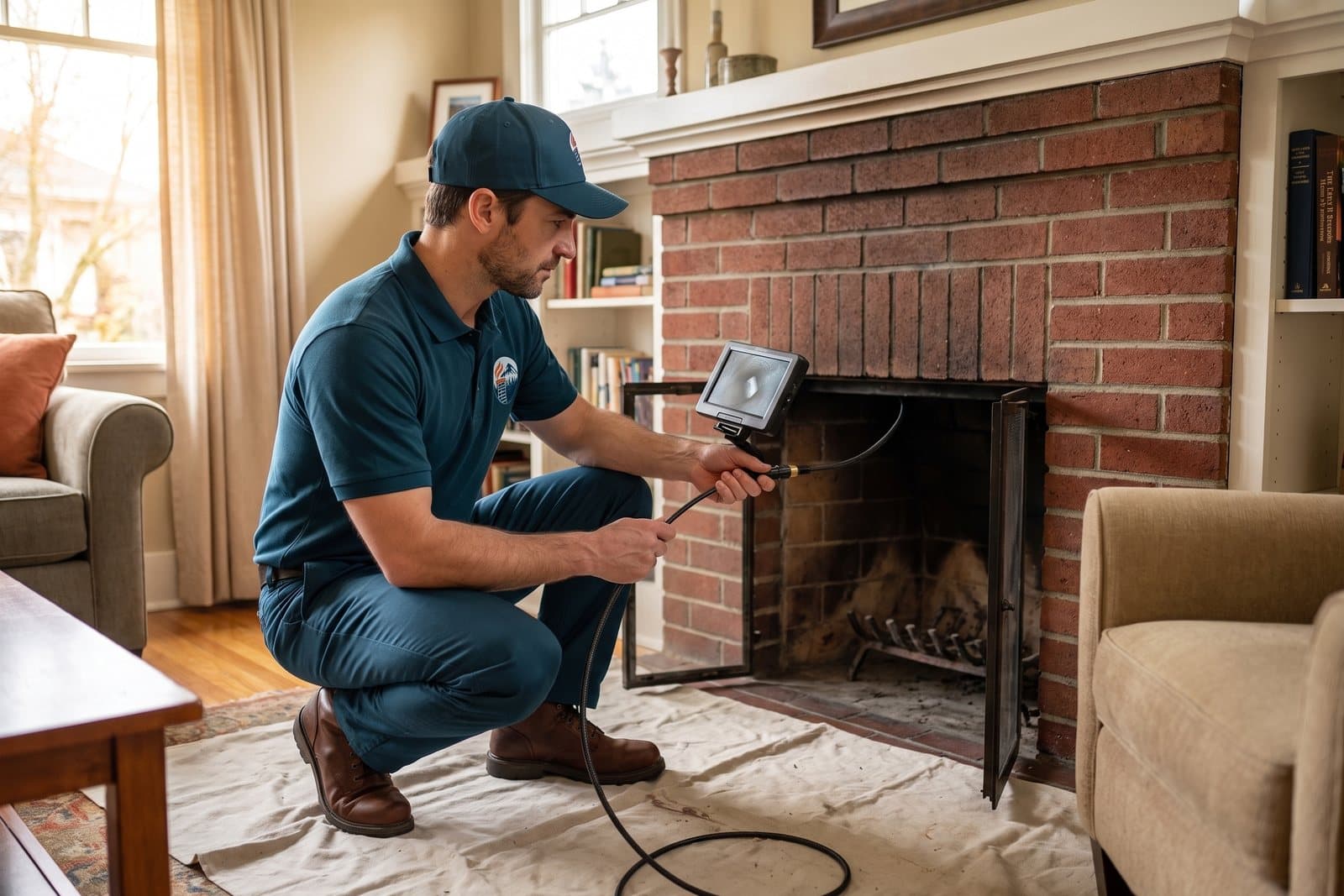
Level 1 or Level 2 as needed; Level 2 includes a camera run through the entire flue
Learn more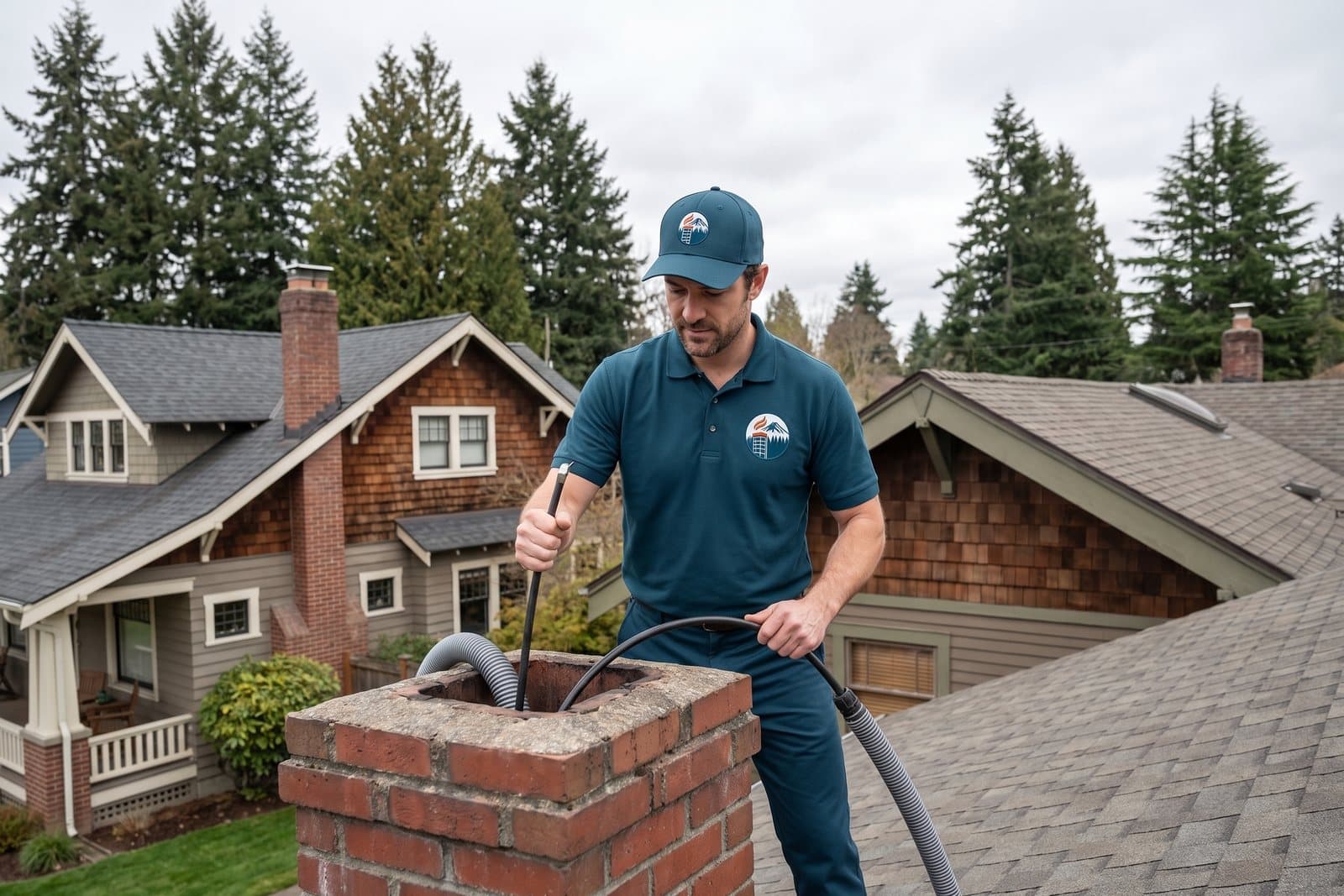
Top-to-bottom brushing of flue and firebox under drop cloths, with a HEPA vacuum pulling the dust
Learn more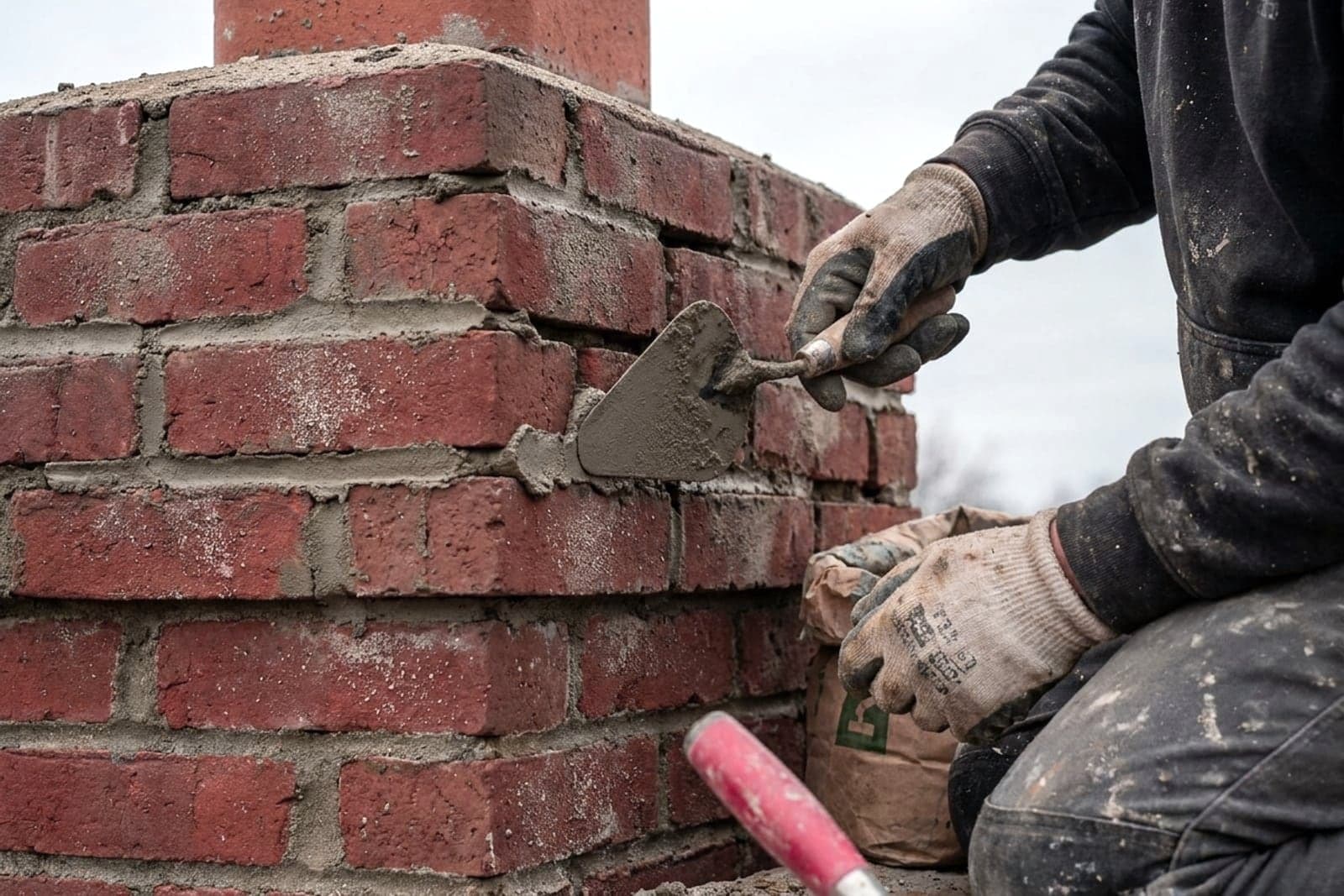
Loose or damaged brick, open joints and firebox panels repaired
Learn more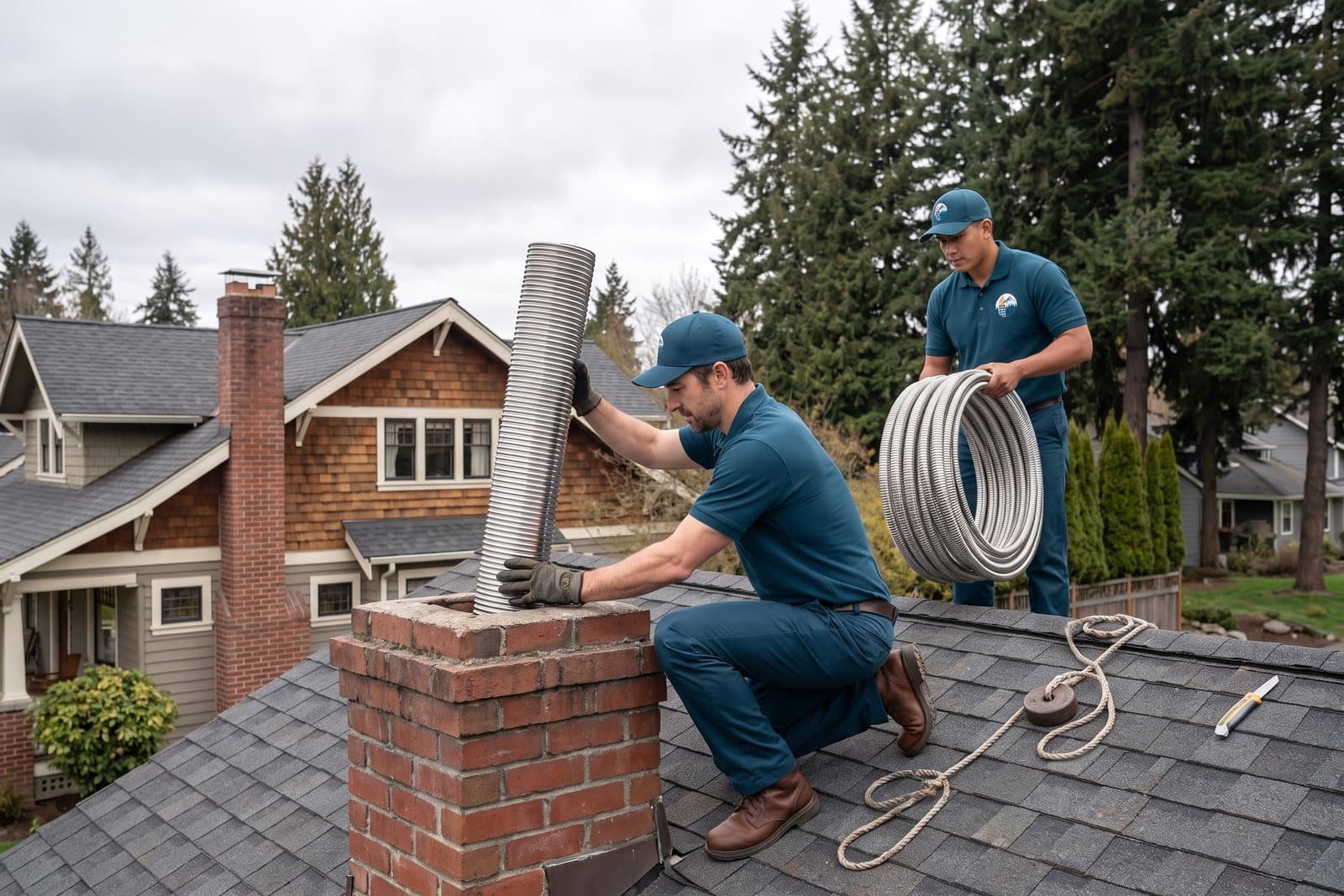
A full-length stainless-steel or cast liner, firebox to chimney top
Learn more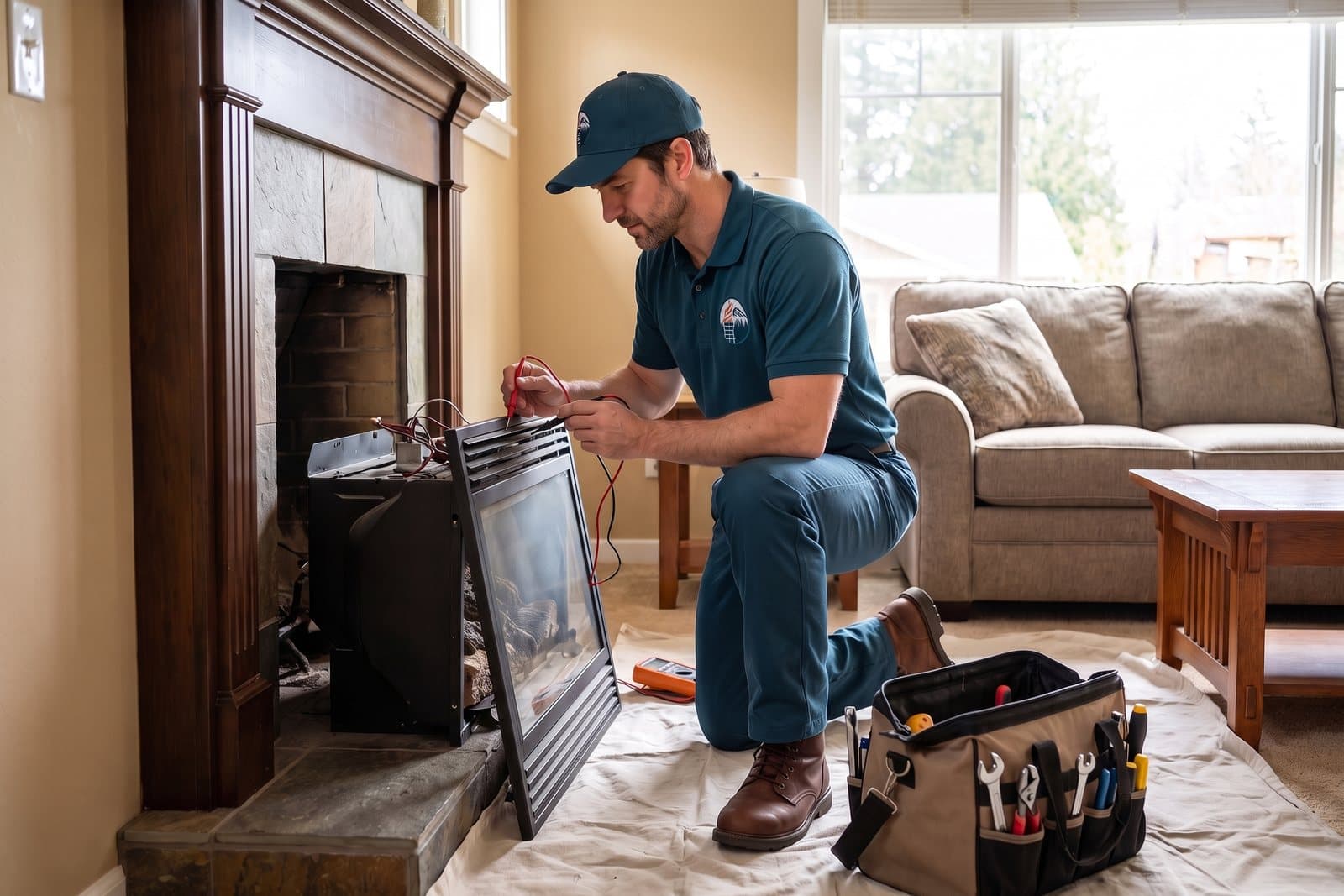
Burner, pilot assembly and valve cleaned and adjusted
Learn more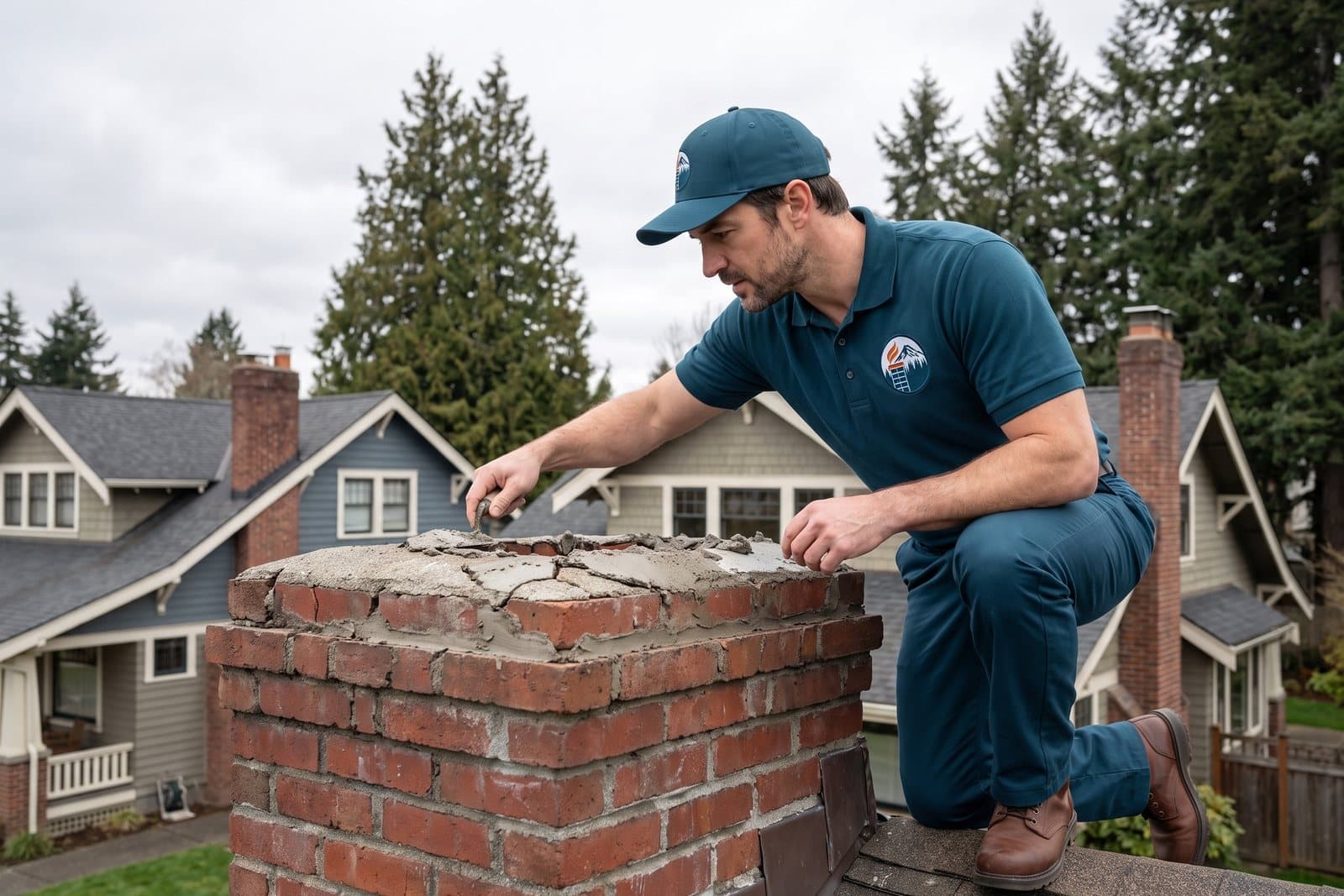
Crown patched, or recast entirely if it can't be saved
Learn moreRanges shown for orientation — the exact figure is written up on-site, after the inspection.
Caps matter more than usual on this side of the Narrows. Many Gig Harbor houses sit under tall evergreens that drop needles and cones all winter, and houses on the slopes above the bay stand where the wind can reach them. A cap that fits loosely, or one held on by a single screw, will not stay put for long in either setting.
Gig Harbor wraps around a bay that opens onto Puget Sound, on a peninsula tied to Tacoma by the Narrows Bridge. Waterfront and bluff-top houses here meet storms with nothing between the chimney and the water.
A cap is on the short list of heating-season advice from the state's Fire Marshal, next to yearly inspection and cleaning. On an exposed stack we fasten it to hold through a winter blow, because a cap sitting in the neighbor's yard protects nothing.
Washington's 2021 residential code sets the mesh for a spark arrestor: openings small enough to stop a half-inch sphere, large enough to let a 3/8-inch one through, and a screen that can be removed for cleaning. Too fine and it clogs; too coarse and embers get out.
Under a canopy of firs, that screen collects needles and moss faster than most. OSU Extension points out that thinning nearby trees to let sun reach the roof is the best long-term moss control, and it also means fewer needles landing on the cap.
Every chimney cap installation we do in Gig Harbor includes:
Smoke coming back into the room, or a smell that won't go? Book the inspection first.
Book nowThe caps we replace here have usually failed in one of four ways: blown off in a storm, rusted through because they were galvanized rather than stainless, screen packed solid with needles and moss, or never sized to the flue in the first place. On houses where squirrels or birds already moved in, we clear the nest and check the flue before the new cap goes on.
We measure the flue tile or liner and the crown, and note whether one cap should cover several flues.
Nests, needles and loose mortar are cleared so the new cap sits on a clean, sound surface.
The cap is set and secured to the flue or crown so it will not lift in a gust.
We send a photo of the finished cap, plus anything worth knowing about the crown or flue we spotted from the roof.
Without a cap, every shower falls straight into the flue. Code requires the liner inside a masonry chimney to resist corrosion and cracking, but rain sitting on the smoke shelf and the damper all winter is what rusts dampers shut and softens mortar.
The State Fire Marshal also reports that fires in chimneys, flues and fuel burners made up 77% of residential heating fires in 2024. A cap is a small part of the answer, next to yearly inspection and cleaning, and it is the cheapest part.
What this work is quoted at for Gig Harbor homes — the exact figure comes from the $99 on-site inspection, credited toward the work.
| Service | Price in Gig Harbor | What that covers |
|---|---|---|
| Chimney Cap Installation | $265–$750 | Stainless cap fitted; multi-flue and custom at the top |
| Chimney Sweep | $189–$449 | Full flue swept, Level 1 inspection included |
| Chimney Inspection | $99 plus tax | Level 1 visual; Level 2 adds a full camera scan |
| Chimney Relining | From $1,900 | Full-length stainless liner, sized to the appliance |
| Chimney Repair | From $375 | Masonry repair — brick and mortar, scoped after diagnosis |
Ranges are what these jobs are quoted at in Gig Harbor. The exact figure is set on site after a $99 inspection (credited toward the job if you go ahead), and you approve it before any work starts.
Gig Harbor is a harbor town incorporated in 1946, settled early by a Croatian fishing community on the west side and Scandinavians at the north end, on the Gig Harbor bay, on Puget Sound, with mostly newer homes — a median build year of 1998, fewer than a quarter built before 1980.
Gig HarborPierce County, WA · 47.329, -122.581
Before and after
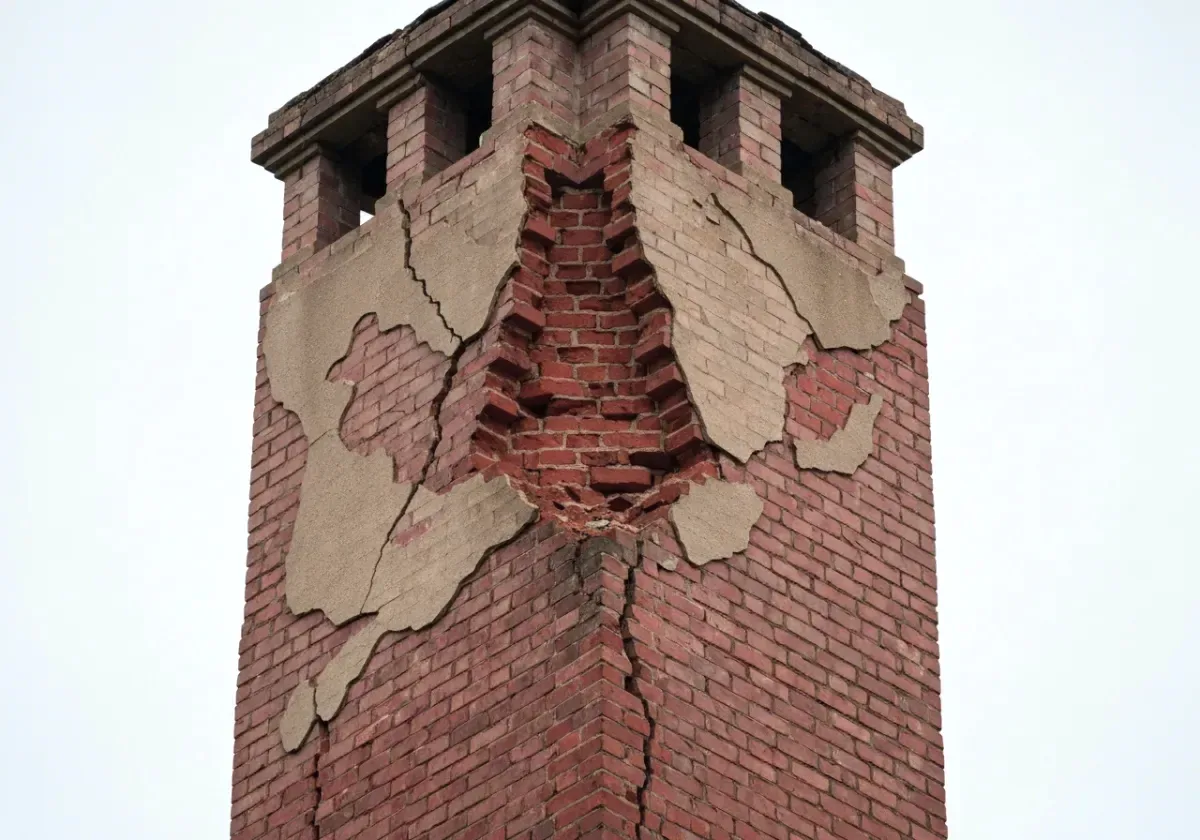
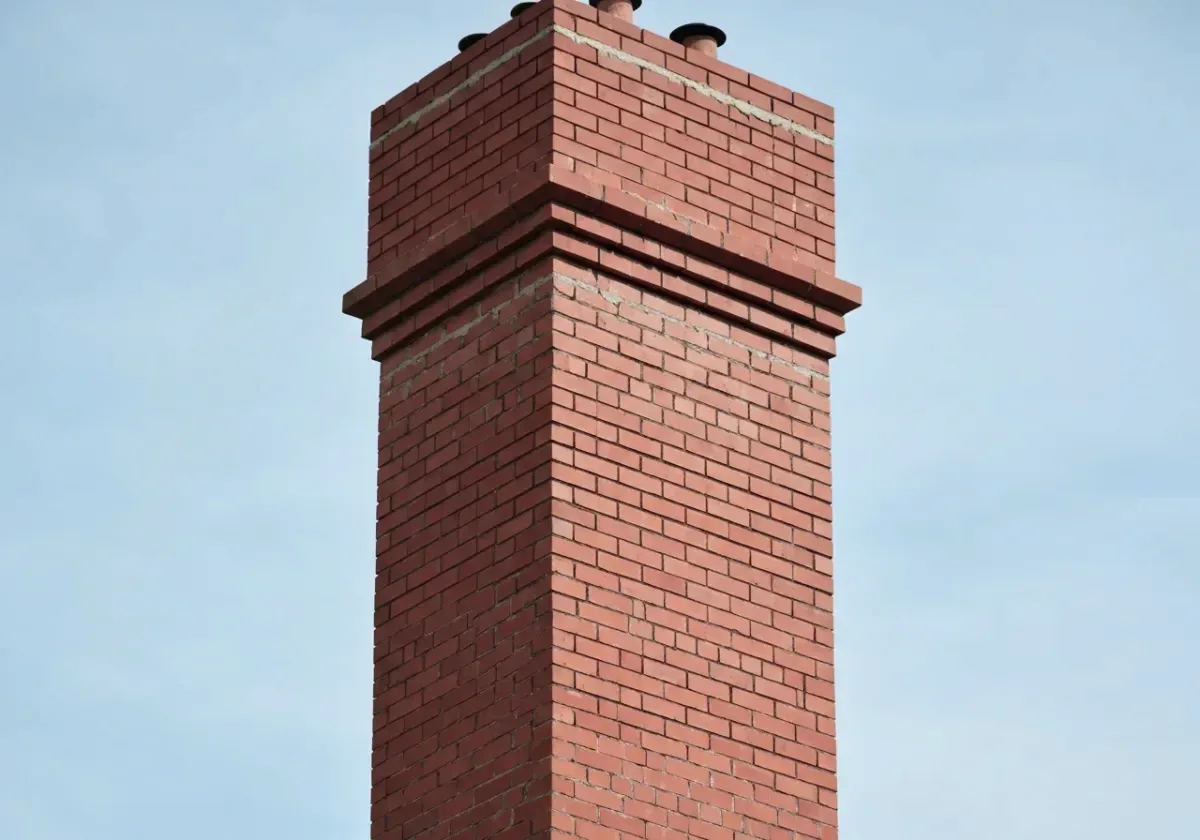
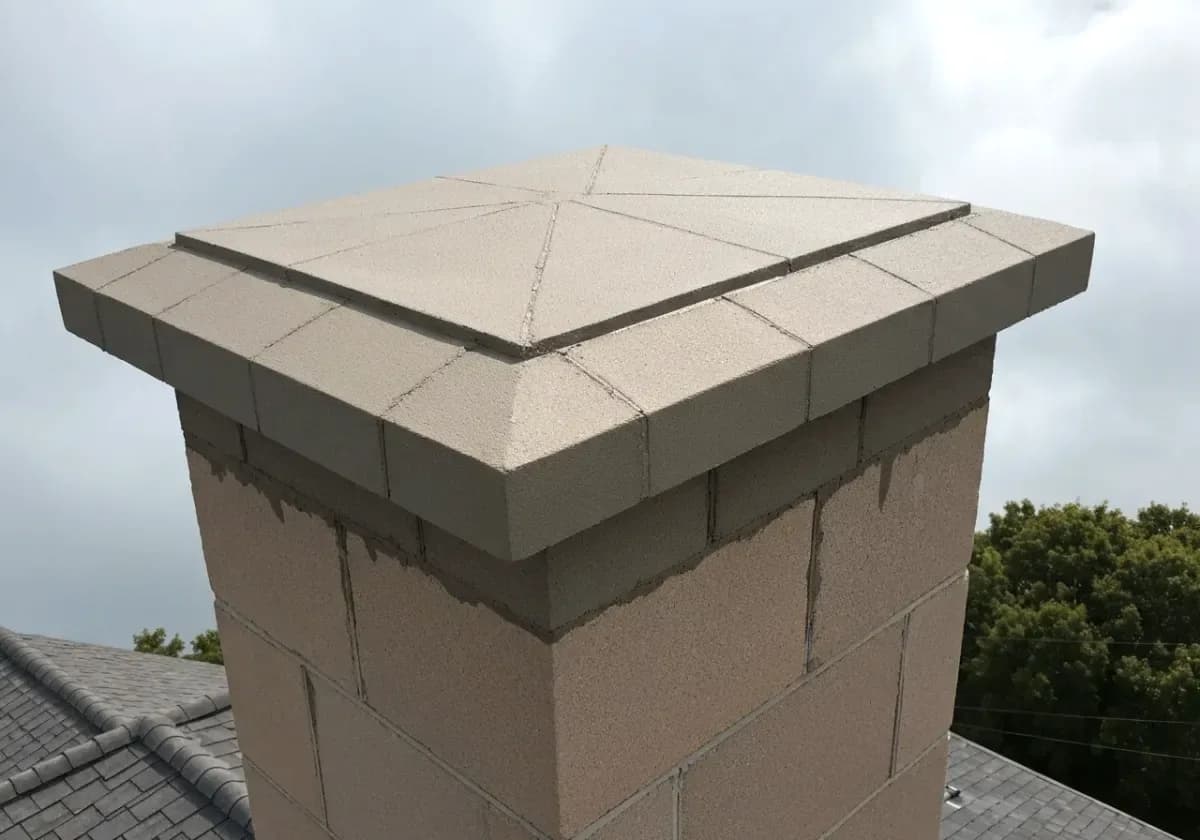
Illustrations of what each repair changes on a typical chimney — not photos of a specific job.
 Before
 After
After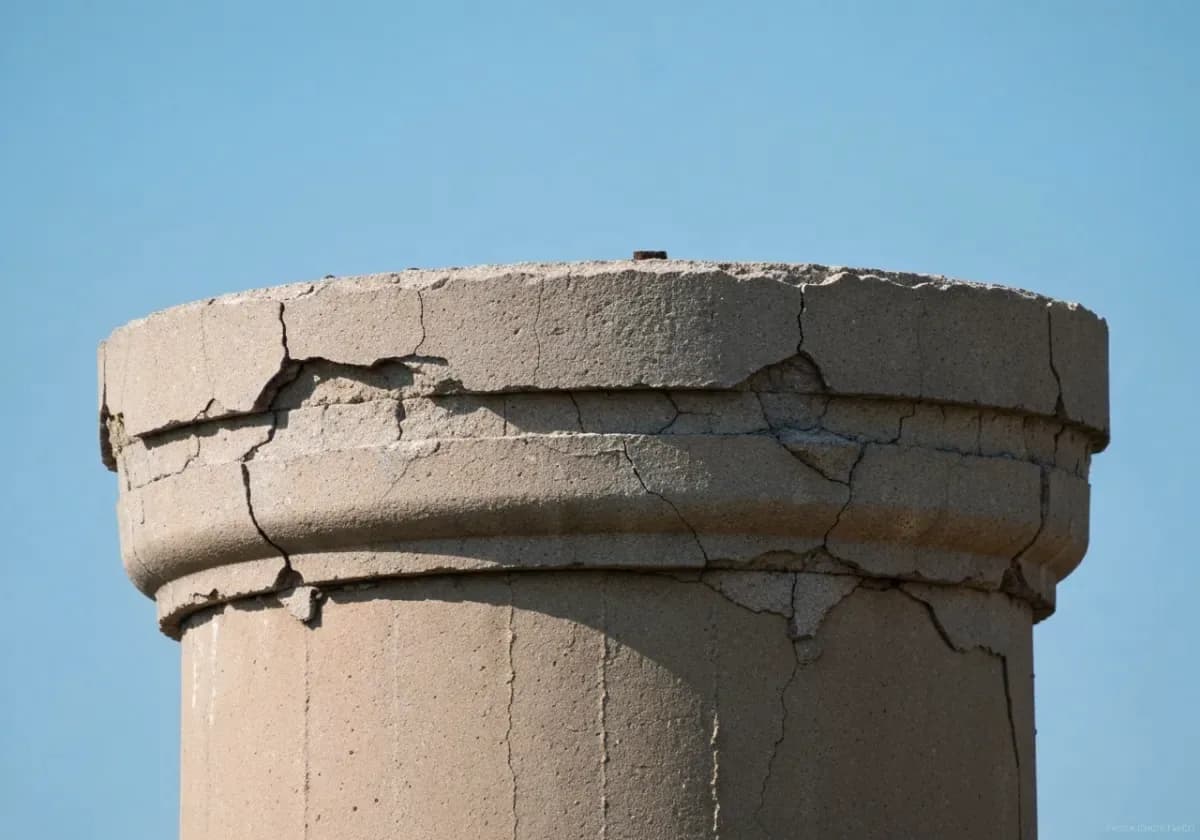 Before
 After
After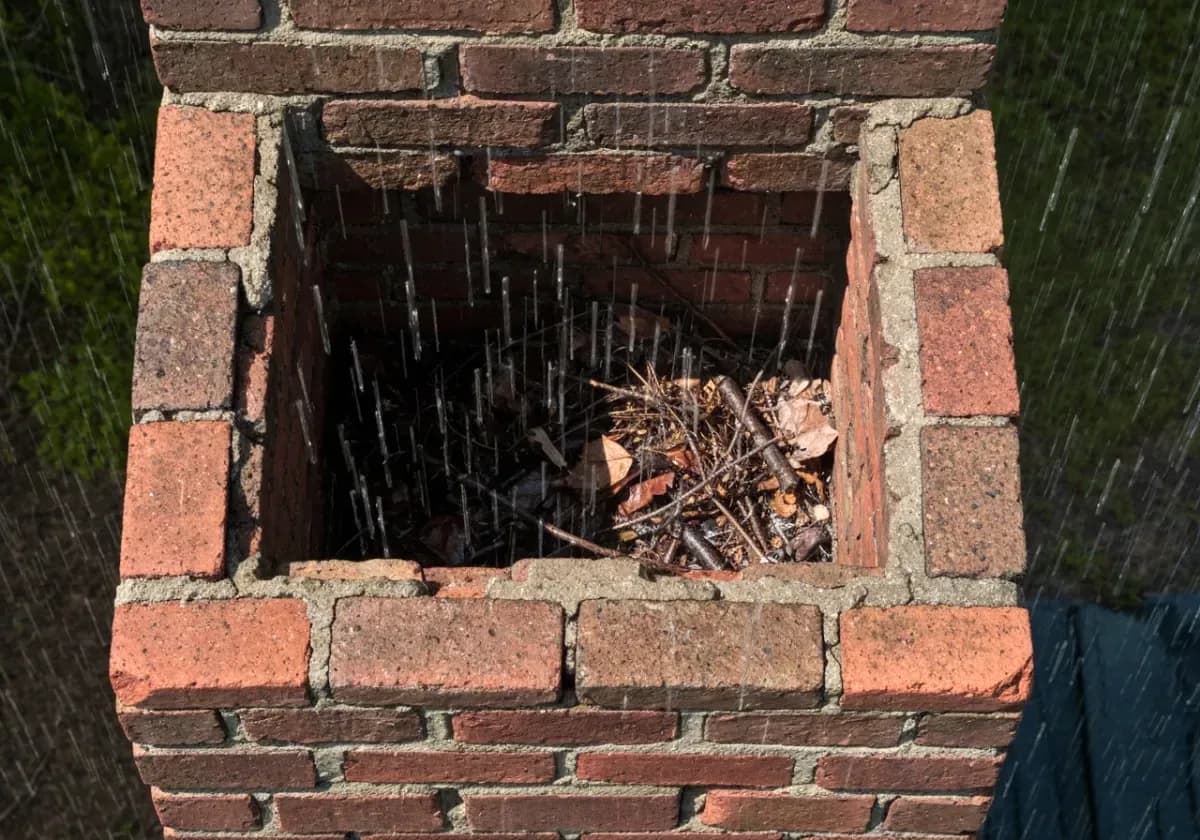 Before
 After
After
Four steps, each one on paper — so you always know what happens next.
Choose a genuine opening on the crew's calendar. Confirmation is immediate.
Liner, crown, cap, flashing and masonry examined in order — each finding photographed.
One document, plain numbers, covering only the work your chimney genuinely needs.
The repair is completed, then handed over with before-and-after photos of every item.
$265 to $750 installed. A single-flue stainless cap sits at the bottom; a cap for several flues or a custom size costs more.
The Washington State Fire Marshal recommends one. It keeps rain, animals and debris out of the flue and stops embers from landing on the roof.
Galvanized caps rust, especially in a wet climate, and a rusted cap stains the brick and eventually lets go. Stainless lasts much longer for a modest difference in price.
A $99 on-site inspection, a written quote before any work, and photos of every item we touch.